
Compost fermentation requires a suitable moisture content—50%-60% is the optimal range for microbial activity. Once the moisture content exceeds 65%, the pores of the compost pile are filled with water, preventing oxygen from entering. Aerobic fermentation immediately turns into anaerobic fermentation, producing foul odors and halting temperature rise. Can a compost turner solve this problem? The following five questions and answers explain how a compost turner achieves moisture control through a “breathing” effect.
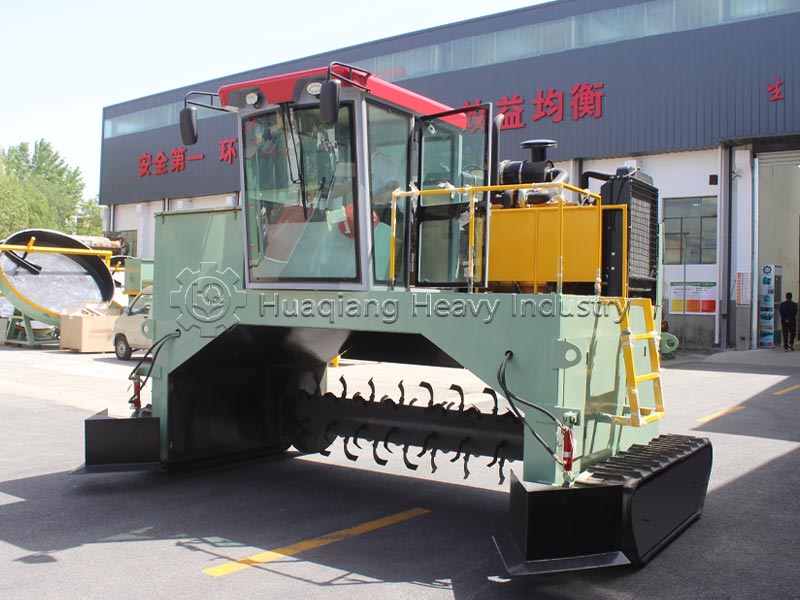
Q1: How does the compost turner dehumidify when the compost moisture content is too high?
A: The compost turner promotes moisture evaporation through a combination of physical turning and forced ventilation. When the turner’s rollers or drums rotate at high speed, they turn the highly moist material inside the pile to the surface, simultaneously breaking up the originally compacted material layer and exposing the internal pores to the air. This process is equivalent to giving the compost a “deep breath”—exhaling the deep, humid air and drawing in dry air from the outside, thereby accelerating the evaporation and loss of free water. Combined with forced ventilation from an aeration system, the moisture removal efficiency is even higher.
Q2: What moisture content is considered “too high”?
A: Hold a handful of material and squeeze it tightly. If water seeps out between your fingers but doesn’t drip, the moisture content is about 55%-60%, which is ideal. If water flows in a line or even drips, the moisture content exceeds 65%-70%, which is too high. At this point, the pores of the compost pile are filled with water, preventing oxygen from entering, and dehumidification measures must be taken. Turning the compost pile 2-3 times with a turning machine can usually reduce the moisture content by 3-5 percentage points.
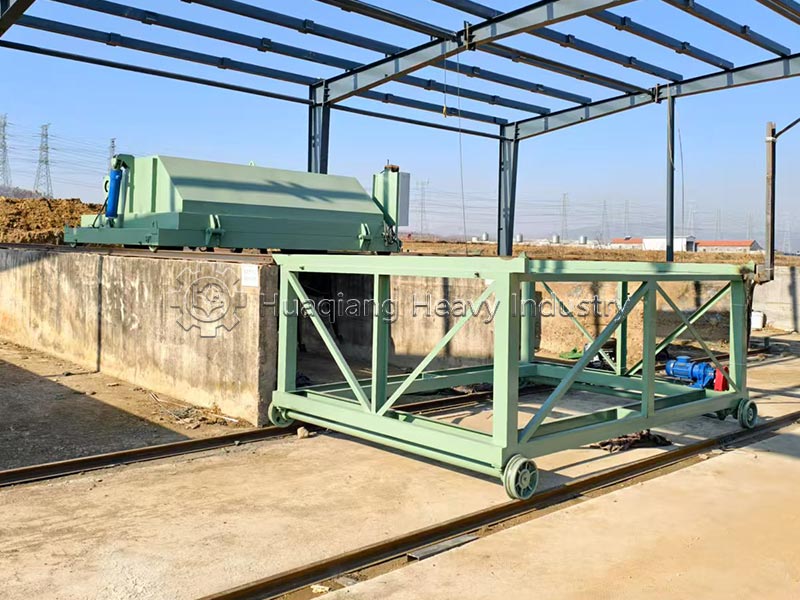
Q3: Why doesn’t overly wet compost “ferment”?
A: Aerobic microorganisms need oxygen to decompose organic matter. When the moisture content is too high, a water film coats the material particles, filling the pores between them, preventing air from entering the compost pile. Aerobic bacteria become dormant or die due to lack of oxygen, while anaerobic bacteria become active, decomposing organic matter into foul-smelling gases such as hydrogen sulfide and ammonia. Even if the thermometer shows heat at this point, it’s mostly anaerobic heat production rather than aerobic fermentation—the essential difference lies in whether sufficient oxygen is involved.
Q4: Can a turning machine replace sun-drying for dehumidification?
A: It cannot completely replace it, but it can significantly shorten dehumidification time. Natural sun-drying relies on sunlight and wind to evaporate moisture, and its cycle is constrained by the weather; a turning machine actively dehumidifies through physical turning and forced ventilation, unaffected by the weather. For fresh manure with a moisture content of over 80%, it should first be pre-dehydrated using a solid-liquid separator or a dewatering machine to reduce the moisture content to below 65% before entering the turning and fermentation stage.
Q5: Can a turning machine still effectively dehumidify during the rainy season or winter?
A: During the rainy season, the ambient humidity is high, and the water evaporation efficiency of simply turning the pile will decrease significantly. At this time, forced ventilation should be combined—the aeration system at the bottom of the trough fermentation tank should be turned on, blowing dry air upwards from the bottom of the pile to remove moisture from the surface. In winter, low temperatures and dry air actually help turn the compost pile to absorb moisture using the cool, dry air. However, after turning, the surface layer should be compacted appropriately to prevent excessive heat loss.

Practical Checklist for Dehumidification with a Compost Turning Machine
Turning Frequency: Turn the pile at least 1-2 times per week; for excessively wet materials, increase to 3 times per week.
Turning Timing: Choose the afternoon when temperatures are higher, as the relative humidity is lower and moisture evaporation efficiency is highest.
Turning Depth: No less than 1.2 meters to ensure that deep materials are also brought to the surface and exposed to air.
Auxiliary Methods: Before turning, add 10%-20% dry auxiliary materials (straw powder, sawdust, rice husks, etc.) to the pile. The compost turner can evenly mix these with the wet materials, increasing porosity while absorbing water.
Aeration Linkage: Immediately after turning, turn on the bottom fan for forced ventilation for 20-30 minutes, which can further reduce the moisture content by 1-2 percentage points.
The compost turner is the most practical tool for tackling overly wet compost, but it works best when combined with proper turning frequency, timing, depth, and auxiliary materials. Mastering these dehumidification techniques is a critical part of fermentation composting turning technology, transforming the animal manure compost turner from a simple turning device into a smart moisture‑management system. Whether you are processing poultry litter or crop residues, the fertilizer composting turning machine equipment ensures that aerobic conditions are restored quickly, allowing the fertilizer production process to proceed without interruption. When integrated with forced aeration and dry bulking agents, the turner effectively drives moisture down to the optimal 55‑60% range, revitalizing microbial activity and eliminating odors. This practical knowledge is essential for any producer applying bio-organic fertilizer production technology, as consistent moisture control directly impacts product maturity, nutrient stability, and final quality. Remember: a well‑operated turner does more than mix—it breathes life back into your compost pile.

If you still have any questions about fertilizer production equipment or processes, or would like to learn more about customized solutions, please feel free to contact us. Whether it’s equipment selection and pricing, installation, commissioning, and operation training, or after-sales maintenance and process upgrades, we can provide you with professional and timely answers and support to help your project be implemented efficiently.