
Compost turning machines are essential equipment for organic fertilizer production, as they promote the fermentation of raw materials like livestock manure and crop straw, ensuring the production of high-quality, harmless organic fertilizer. For small and medium-sized organic fertilizer plants, understanding the types, selection criteria, and maintenance tips of compost turning machines is key to improving production efficiency and reducing operational costs. This guide covers all you need to know about these vital machines.
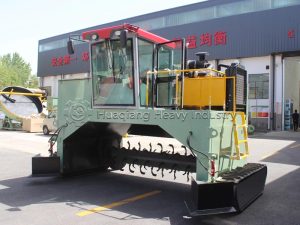
First, let’s explore the main types of compost turning machines available. The most common types include chain plate compost turners, crawler-type compost turners, and groove-type compost turners. Chain plate turners are compact and suitable for small-scale plants, with easy operation and low energy consumption. Crawler-type turners are ideal for large piles of raw materials, as they can move flexibly and turn compost evenly. Groove-type turners are designed for continuous fermentation, perfect for plants looking to scale up production gradually. All these types are available at Huaqiang, a professional organic fertilizer equipment manufacturer.
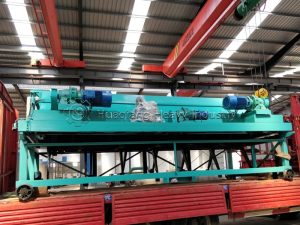
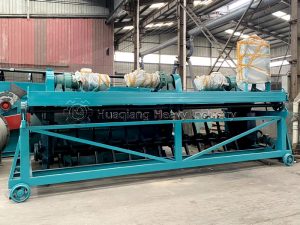
When selecting a compost turning machine, consider three key factors. First, your production scale: small plants (500kg/h to 1T/h) can choose chain plate turners, while larger plants may opt for crawler or groove-type models. Second, raw material characteristics: if you use high-moisture raw materials like fresh livestock manure, a turner with strong aeration capacity is essential to speed up fermentation. Third, site space: compact models like chain plate turners are suitable for plants with limited space, while crawler-type turners require more room to operate.
Proper maintenance is crucial to extend the service life of your compost turning machine. Regularly clean the machine after use to remove residual compost, which prevents corrosion and blockages. Check the chain, gear, and bearing parts regularly, and add lubricating oil to ensure smooth operation. Inspect the electrical system to avoid short circuits, and replace worn parts in a timely manner. Following these maintenance tips can reduce downtime and ensure the machine operates stably for long periods.
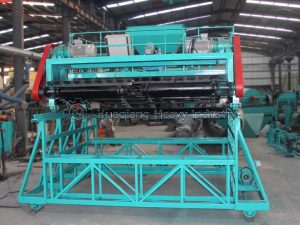
In summary, choosing the right compost turning machine and maintaining it properly are essential for efficient organic fertilizer production. By selecting a model that fits your production scale and raw materials, and following regular maintenance practices, you can maximize the machine’s performance and your plant’s productivity. Huaqiang offers high-quality compost turning machines with custom solutions, helping you achieve smooth and efficient fermentation processes.
The types of compost turners described—chain plate, crawler, and groove-type—represent distinct implementations of fermentation composting turning technology. For larger-scale operations with expansive open-air sites, a large wheel compost turner (or large wheel compost turning machine) provides immense processing power. A windrow composting machine offers flexible, tractor-towed aeration for windrows. For controlled, intensive environments, trough-type aerobic fermentation composting technology is the standard, utilizing a trough-type compost turner (or trough type composting turner) that runs on fixed rails. A chain compost turning machine is a robust option for these trough systems. The selection criteria—production scale, raw material moisture, and site space—are universal. Whether choosing a large wheel compost turner for its capacity or a trough-type compost turner for its process control, the principles of regular cleaning, chain and bearing lubrication, and electrical system inspection apply to all. Mastering the selection logic and maintenance habits for these diverse implementations of fermentation composting turning technology is the key to maximizing equipment lifespan and ensuring efficient, reliable organic fertilizer production.