
There is no unified “standard value” for the turning depth of a compost turner, but there are clearly defined effective and golden ranges. The industry standard range is 0.8-2.5 m, with the most stable golden range in actual production being 1.0-1.8 m. Below 0.8 m, the bottom material cannot be turned, significantly increasing the risk of anaerobic fermentation and nitrogen loss; above 2.5 m, a deep-trough specialized machine is usually required, as forcibly pressing down with conventional equipment will lead to soaring energy consumption and overload. The primary basis for depth selection is the fermentation tank depth/winding height, and the secondary basis is the moisture content and viscosity of the material.
I. Why 0.8 m is the lower limit: What is lost when the turning depth is too shallow?
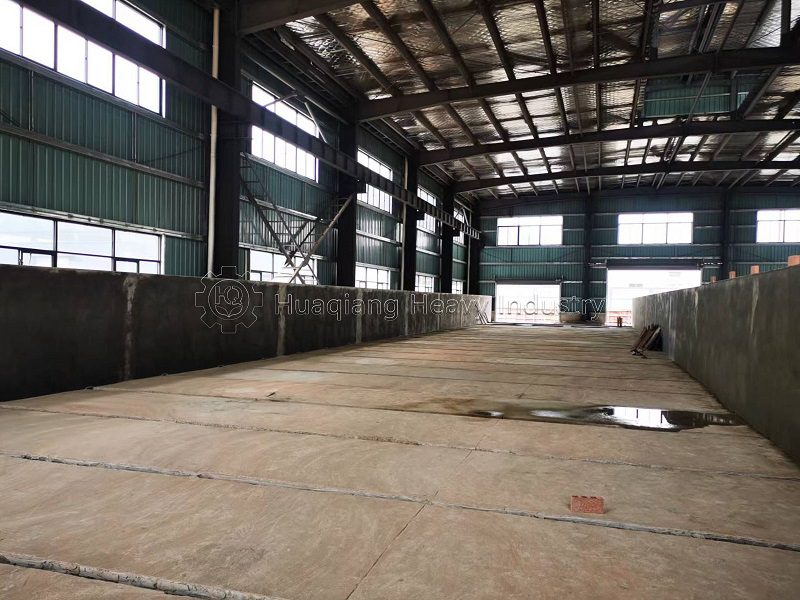
The core function of the turning depth is not “turning the material up,” but rather delivering oxygen to the bottom of the pile and breaking up material stratification. When the turning depth is less than 0.8 m, the turning device can only disturb the surface layer, leaving the middle and lower layers in a compacted state for an extended period, preventing oxygen penetration and creating an anaerobic zone.
This consequence manifests in three quantifiable losses:
Decreased nitrogen retention. Under anaerobic conditions, denitrification and ammonia volatilization are intensified, leading to nitrogen losses of 30%–40%, directly reducing the nutrient value of the finished organic fertilizer.
Incomplete sterilization. Aerobic fermentation relies on maintaining the compost pile above 55°C for a sufficient time for sterilization. Shallow turning results in suboptimal bottom temperatures, allowing pathogens and insect eggs to survive, posing a risk of secondary contamination to the finished product.
Passively prolonged fermentation cycle. Anaerobic metabolism is only 1/10–1/5 of aerobic metabolism. Under shallow turning conditions, the fermentation cycle may be extended by 10–15 days, and the difference in maturity between upper and lower layers increases, leading to a decrease in product qualification rate.
The direct implications for selection and operation: If your fermentation tank or windrow design depth is less than 0.8 m, the problem isn’t “changing to a different turner,” but rather the process design; even the most powerful equipment cannot establish effective oxygen penetration in a shallow material layer.
II. Why 1.0–1.8 m is the golden range: the optimal intersection of oxygen supply, temperature control, and energy consumption
The golden range is not determined by a single indicator, but by the intersection of oxygen supply efficiency, temperature stability, and equipment load.
From an oxygen supply perspective, a depth of 1.0–1.8 m ensures that the entire layer of turned material is exposed to air, maintaining aerobic microbial activity within the suitable temperature window of 55–65°C, increasing organic material decomposition efficiency by more than 30% compared to shallow turning. From a temperature control perspective, this depth range, combined with daily or every other day turning, allows the pile temperature to remain stable above 55°C for 7–10 days, meeting the temperature and time requirements for harmless treatment. From an equipment load perspective, 1.0–1.8 m falls within the power design range of conventional trough-type and tracked compost turners, without triggering overload protection, and the unit energy consumption is at a reasonable level.
It should be noted that 1.8 m is the upper limit of the golden range, not an absolute upper limit. Deep-trough chain plate or wheel disc models can cover 2.0–2.5 m, but this depth range requires a larger motor power and a heavier structural design, belonging to “dedicated deep-trough operation” rather than a general choice.
III. Depth is not a fixed value: Three judgments for dynamic adjustment based on material and temperature control
Setting the turning depth to a fixed number is the most common improper operation during the operation phase. Trough-type compost turners usually have hydraulic lifting devices, and tracked turners can also adjust the cutter shaft height through a hydraulic system. The actual operating window for the depth should move with the material and temperature control signals.
Adjust according to material. For high-moisture, high-viscosity materials such as chicken and cow manure, it is recommended to increase the depth towards the upper part of the turning area (1.5-2.0 m) to utilize the shearing force of the turning device to break up clumps and increase porosity. For loose, low-moisture materials such as straw and sawdust, the depth should be towards the lower part (0.8-1.2 m) to avoid excessive scattering and heat loss.
Adjust according to temperature. When the center temperature of the pile exceeds 65℃, adjust the depth to a shallower level to accelerate heat dissipation; when the temperature is below 45℃ and the temperature rises slowly, increase the depth to bring the bottom material to the surface and increase oxygen contact. Here, depth acts as a temperature control actuator, not a fixed process parameter.
Adjust according to current. If the motor current increases significantly or the speed decreases during turning, it indicates that the current depth exceeds the carrying capacity of the material and equipment under the current conditions. The turning device should be immediately increased to reduce resistance; blindly lowering the depth to pursue higher single-batch processing volume is strictly prohibited.
IV. Matching the Depth Window to Different Turning Equipment and Systems
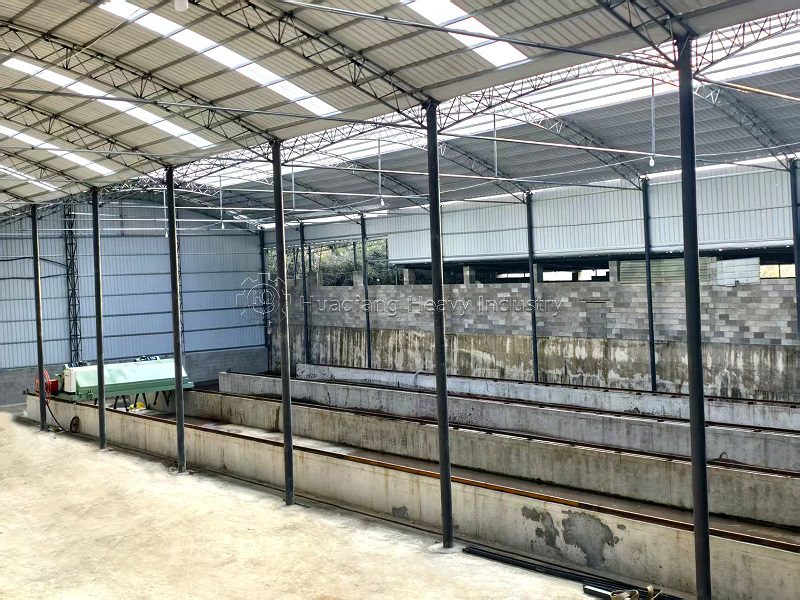
The 1.0–1.8 m golden range should be implemented through the right equipment and system design. Fermentation composting turning technology determines whether depth is used mainly for oxygen supply, heat dissipation, or material mixing; a trench-type compost turner is suited to deeper, fixed-trench operation, while a trough-type compost turner fermentation system relies on hydraulic lifting and PLC scheduling to adjust depth according to material and temperature. For open windrows, a windrow composting machine must match its working height to the actual windrow height rather than forcing a fixed depth, and a large wheel compost turner can provide deeper turning and aeration for wider, higher windrows. The common rule is that depth should be selected according to equipment design limits, tank or windrow height, and material resistance, rather than copied from another machine type. In this way, the golden range remains an operating window, not a fixed number.
V. FAQ: Frequently Asked Questions about Turning Depth
Q1: Is turning depth the same as fermentation tank depth?
No. The fermentation tank depth is a civil engineering parameter, while the turning depth is an equipment operating parameter. The tank depth usually needs to be slightly greater than the turning depth to allow for material loosening and the raising and lowering of the turning device; the turning depth should not be aimed at “touching the bottom.”
Q2: Does deeper turning depth mean faster fermentation?
No. Continuing to deepen the tank beyond the equipment’s design limits will cause the weight of the upper material to compact the lower layer, creating a three-layer imbalance: “deep anaerobic, middle anoxic, and surface aerobic,” increasing energy consumption but decreasing fermentation uniformity.
Q3: What is the maximum depth a tracked compost turner can achieve?
The turning depth of conventional tracked compost turners is mostly in the range of 0.6-1.8 m. The actual achievable depth is constrained by both the cutter shaft lifting height and the windrow height. For a stable depth above 2.0 m, a deep-tank type or chain-plate type should be used, rather than forcibly adjusting to a tracked type.