
In today’s booming global organic fertilizer industry, the resource utilization of agricultural waste has become a crucial part of the green circular economy. However, many producers encounter difficulties in the fermentation process when faced with raw materials with vastly different characteristics, such as straw, sawdust, rice husks, and fruit and vegetable waste: high-fiber raw materials face significant turning resistance, high-moisture raw materials are prone to clumping and anaerobic digestion, and fruit and vegetable waste ferments too quickly, leading to temperature control issues. The root of the problem lies in the fact that different raw materials require different turning equipment and pretreatment processes. This article analyzes the equipment adaptation logic and practical techniques for agricultural waste fermentation.
Agricultural waste can be categorized into three main types based on its physical properties: high-fiber waste (straw, rice husks, sawdust) has a high fiber content and loose structure, but good air permeability, requiring vigorous turning during fermentation to promote mixing and breaking up the material; high-moisture waste (fresh fruit and vegetable waste, kitchen waste) often has a moisture content exceeding 70%, easily compacting and forming anaerobic zones, requiring frequent turning and leachate drainage; and mixed waste (livestock manure + straw) is a common combination, requiring a balance of carbon-nitrogen ratio and moisture to achieve synergistic fermentation.
For high-fiber raw materials (straw, sawdust), large-scale wheeled compost turners are the optimal choice. Their large-diameter wheels easily crush long fibers, and the spiral blade assembly lightly cuts the material while turning, effectively breaking up the entangled fiber structure. The equipment operates across rows, with a turning width of 4-8 meters, and a daily processing capacity of thousands of tons, making it particularly suitable for large-scale straw composting projects.
For high-moisture raw materials (fruit and vegetable waste, fresh manure), trough-type compost turners offer significant advantages. Fixed fermentation tanks, coupled with track-mounted equipment, allow for precise control of turning depth and frequency. A leachate collection system can be installed at the bottom of the tank to promptly drain excess moisture and prevent material from becoming too wet and clumping. Sealed tanks can also be equipped with exhaust gas collection devices to address the odor problems easily generated during the fermentation of high-moisture raw materials.
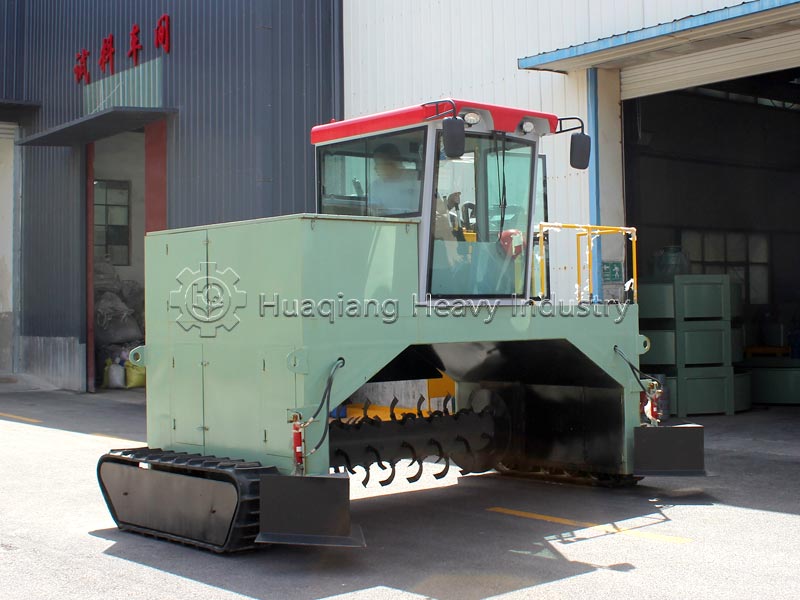
For mixed raw materials (livestock manure + auxiliary materials), chain-plate turners are the preferred choice for small- to medium-scale production due to their flexibility and adaptability. Their chain-type turning blades are widely adaptable to various materials, efficiently handling both wet, sticky manure and loose straw. The equipment is also compact and lightweight, allowing for direct use on muddy ground.
Regardless of the type of turning equipment chosen, proper raw material pretreatment is a prerequisite for successful fermentation. The fineness of the crushing must be controlled according to the characteristics of the raw materials: straw and rice husks need to be crushed to 2-5cm; excessively long materials are prone to tangling in the equipment. Fruit and vegetable waste needs to be crushed to below 5cm to release intracellular moisture. Moisture control is crucial: high-fiber raw materials require additional water to reach 55%-65%, which can be achieved using wastewater treatment plant effluent or biogas slurry; high-moisture raw materials require the addition of dry auxiliary materials (such as sawdust or rice husks) to reduce the moisture content to 60%-65%. The carbon-to-nitrogen ratio should follow a 25-30:1 principle. High-carbon raw materials (straw C/N 60-80) require the addition of high-nitrogen materials such as livestock and poultry manure, while low-carbon raw materials (chicken manure C/N 10-15) require supplementation with straw or rice husks.
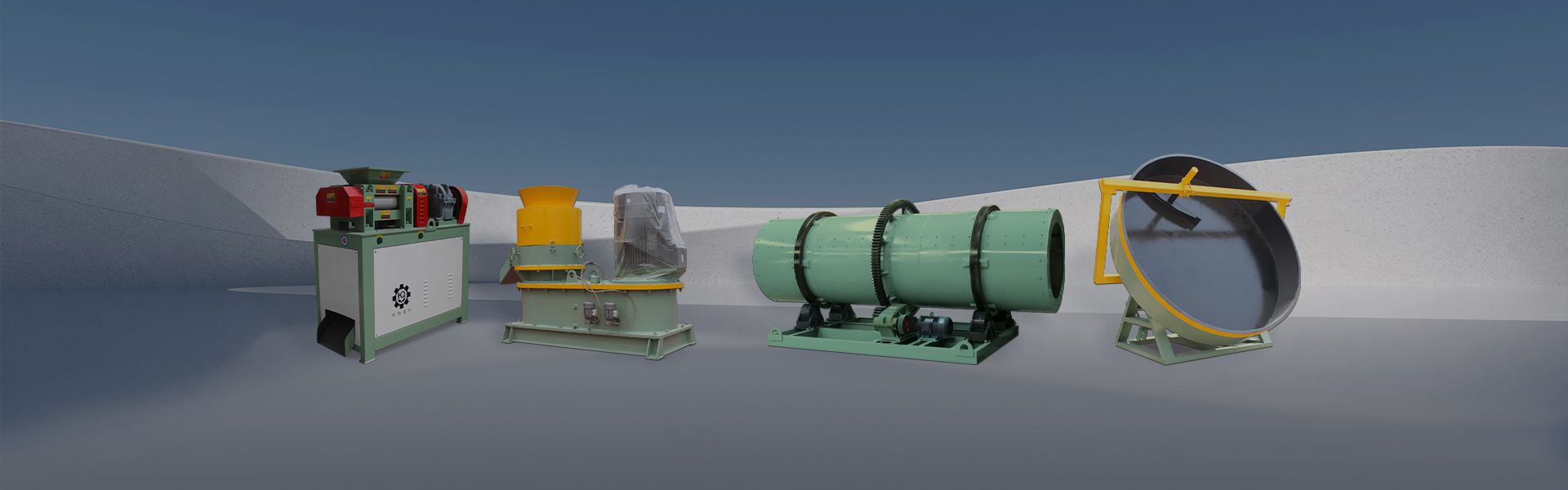
Our turning and turning equipment features several optimized designs for complex agricultural waste: large wheeled turning machines can be equipped with reinforced blade sets to easily handle the entanglement of high-fiber raw materials; trough-type turning machines come standard with a leachate collection system and variable frequency speed control, precisely adapting to the fermentation needs of high-moisture materials; chain-plate turning machines use wear-resistant alloy chains and replaceable blades, resulting in low maintenance costs and wide material compatibility. Supporting raw material processing equipment such as semi-wet material crushers and horizontal mixers enable seamless integration from pretreatment to turning and turning. From straw to fruit and vegetable waste, from sawdust to livestock and poultry manure, by understanding the characteristics of raw materials, selecting the right core equipment, and optimizing pretreatment processes, agricultural waste can be truly transformed into high-value organic fertilizer resources.
The successful fermentation of diverse agricultural wastes hinges on matching the right fermentation composting turning technology to the material’s characteristics. For high-fiber materials like straw, a large wheel compost turner acts as a powerful agriculture waste compost fermentation machine, its robust design capable of breaking down entangled fibers. For high-moisture wastes, the controlled environment of a trough-type compost turner with its integrated leachate collection system is often the optimal choice. For flexible, small to medium-scale operations, a chain compost turner or a mobile self propelled compost production machine offers excellent adaptability across mixed feedstocks. These machines, whether a massive windrow composting machine for open fields or a precise trough-type compost turner for enclosed systems, are all essential agriculture waste compost fermentation machines. The cured, stable compost produced by this carefully matched fermentation composting turning technology becomes a high-quality organic base. This material can then be seamlessly integrated into a larger npk fertilizer line or an organic fertilizer granulation system, transforming raw agricultural waste into a valuable resource for soil health and sustainable crop production.