
A: Turn the pile immediately to cool it down; otherwise, microorganisms will be inhibited.
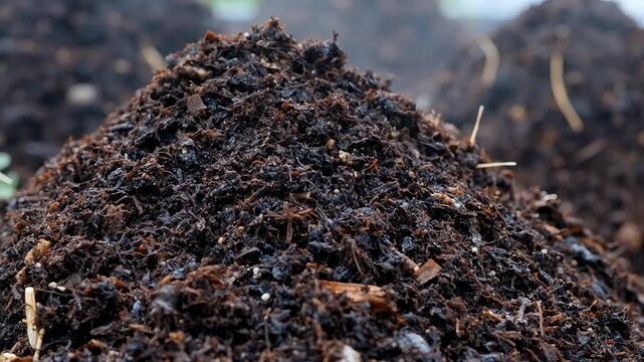
What if the pile temperature exceeds 70℃? The answer is to turn the pile immediately to cool it down. Otherwise, sustained high temperatures will inhibit or even kill aerobic microorganisms, leading to fermentation stagnation, significant nitrogen loss, increased odor, and ultimately incomplete decomposition and reduced fertilizer efficiency. The optimal temperature range for aerobic fermentation of organic fertilizer is 55℃–65℃. Once the pile temperature exceeds 70℃, decisive intervention is necessary.
I. Why is 70℃ a dangerous threshold?
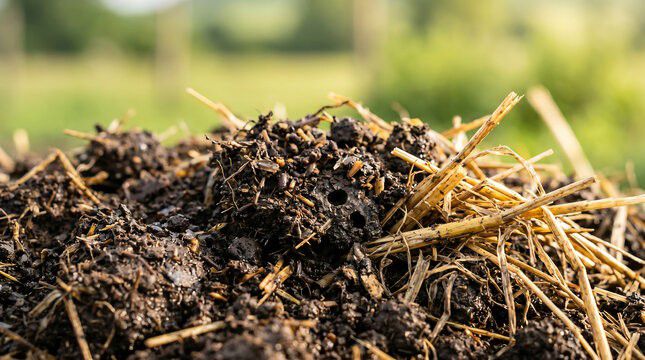
Thermophilic aerobic bacteria in compost are most active and decompose organic matter most efficiently at 55℃–65℃. When the temperature exceeds 70℃, the enzyme activity of most microorganisms begins to decline, and the metabolic rate decreases sharply. If the temperature continues to exceed 75℃, beneficial bacteria such as Bacillus and Actinomycetes will die in large numbers, forcing the fermentation process to stop. At this time, the inside of the pile is prone to “burning”—the material turns white, dry, and compacted, organic matter is excessively consumed, nitrogen volatilizes in the form of ammonia, and the fertilizer efficiency of the finished product is greatly reduced.
II. Immediate Turning and Cooling Procedures
If the pile temperature exceeds 70℃, start the turning machine as soon as possible. When turning, move the hot material from the center of the pile to the outer layer, and move the less fermented material from the outer layer to the interior to achieve temperature equilibrium. The turning depth must be sufficient; do not only turn the surface layer, ensuring the entire pile is exposed to fresh air. After turning, the pile temperature will typically drop by 10℃–20℃, returning to the ideal range of 55℃–65℃. If the temperature remains high after turning, turn the pile again after several hours, or add appropriate moisture to aid evaporation and heat dissipation.
III. Temperature Management After Turning
Turning and cooling is not a one-time event; close monitoring is necessary. It is recommended to measure the pile temperature twice a day, once in the morning and once in the afternoon, at points 30 cm, 60 cm from the surface, and at the center of the pile. If the pile temperature stabilizes at 55℃–65℃ after turning, turn the pile every 1–2 days; if it rises above 70℃ again, increase the turning frequency to once a day. During periods of high temperature, moisture evaporates quickly. If the material is too dry, a small amount of water can be sprayed during turning, but avoid direct spraying of large amounts of water to prevent localized anaerobic conditions.
IV. Matching Emergency Turning to Equipment and Fermentation Technology
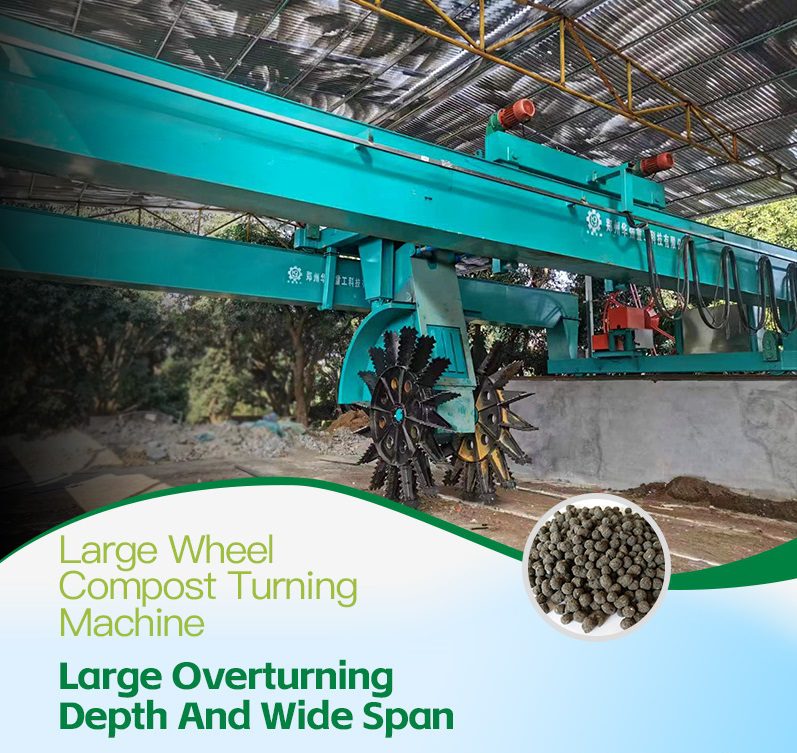
The emergency response to over-temperature should be matched to the equipment and the overall fermentation composting turning technology. A trough-type compost turner with hydraulic lifting and PLC scheduling can quickly adjust turning depth and transfer between troughs, which is suitable for controlled, multi-trough fermentation; a windrow composting machine is more flexible for open windrows and can increase turning frequency when the pile temperature exceeds 70℃. For wider and higher windrows, a large wheel compost turner can provide deeper turning and stronger aeration, helping to move hot center material to the surface. The equipment choice should follow the temperature curve and material resistance, not a fixed turning schedule. In this sense, the over-temperature response is not only “turn immediately” but also a decision about which machine, at what depth, and with what turning frequency. Matching the turner to the fermentation system is what makes repeated over-temperature events controllable.
V. How to prevent the pile temperature from exceeding the standard again?
The key to prevention is controlling fermentation conditions. Maintain the material moisture content at 50%–60%, the carbon-to-nitrogen ratio at 25–30:1, and ensure good ventilation by avoiding excessive height and width of the pile. When using a trough-type or tracked compost turner, the turning timing should be dynamically adjusted according to the temperature curve, rather than mechanically operating on a fixed number of days. In the hot summer months, the pile height can be appropriately reduced, and the turning frequency increased; in winter, an insulating film should be used to prevent excessive heat loss.
VI. Summary What to do if the pile temperature exceeds 70℃?
Turn the pile immediately to cool it down; otherwise, microorganisms will be inhibited. This is an ironclad rule for organic fertilizer fermentation management. By mastering the closed-loop operation of “temperature measurement – turning the pile – re-temperature measurement”, and coordinating with the control of moisture and carbon-nitrogen ratio, the pile can always be kept in the optimal state of aerobic fermentation, achieving the production goal of rapid maturation, harmless and thorough decomposition, and stable fertilizer effect.