

Uneven color in finished granules not only affects the product’s visual appeal but may also indicate uneven nutrient distribution or improper process parameters. Color variations typically manifest as mottled surfaces, streaks of varying shades, or localized spots. The causes and corresponding solutions are outlined below:
Cause Analysis:
Inadequate mixing: Insufficient mixing of organic raw materials (brown/black) and inorganic salts (white/gray) results in spotted color variations after granulation. This is particularly common when adding trace elements (such as zinc sulfate or borax) without pre-dilution, which can lead to the formation of localized dark clumps.
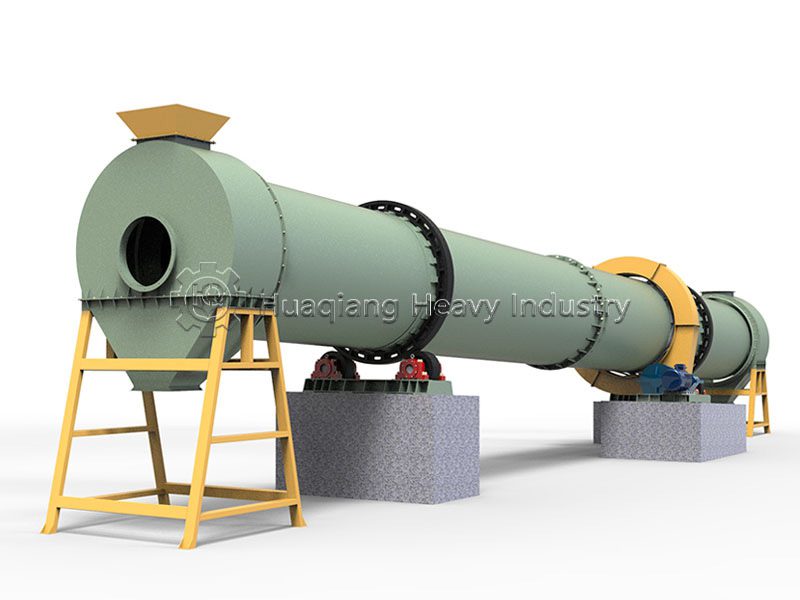
Excessive or localized overheating during drying: After granules exit the rotary drum granulator and enter the drum dryer, uneven hot air distribution can cause the surfaces of some granules to scorch and darken due to excessive heat, while the granule interiors remain normal, resulting in color inconsistency within the batch.
Raw material batch fluctuations: Variations in the degree of decomposition and sources of organic fertilizer across different batches result in inconsistent base colors, leading to non-uniformity in the finished product.
Solutions:
Optimize the mixing process: Before granulation, extend the mixing time to 5–8 minutes using a high-efficiency horizontal fertilizer mixer or double-screw mixer to ensure macroscopic uniformity of all components. For trace additives, a “stepwise scaling-up” method is recommended: pre-mix trace elements with a small amount of the main ingredients before adding them to the large mixer to prevent localized concentration.
Regulate the drying process: Stabilize the dryer’s inlet air temperature within the range of 120–160°C for organic fertilizer and 180–220°C for NPK fertilizer. Additionally, ensure the layout of the lifting flights is reasonable (fan-shaped flights are recommended to ensure a uniform material curtain within the drum). Install an online temperature monitoring system with 3–4 temperature sensing points along the axis of the dryer drum to ensure the temperature difference across the line remains ≤10°C. Standardized raw material management involves recording the color and testing the maturity of each batch of fermented organic material; batches showing significant color differences are stored separately, and formula ratios are adjusted to ensure color consistency in the final mixture. If color deviation is detected in the finished product, the material can be graded using a screening machine; dark-colored granules may undergo surface spraying, or be mixed with light-colored granules and re-processed through a disc granulator for coating and coloring. Finally, it is recommended to establish a standard color reference chart and perform comparative sampling every two hours, adjusting the mixing ratio or drying parameters promptly if deviations are observed.