
In organic fertilizer production, compost turners are the core equipment for aerobic fermentation—they mechanically turn and mix materials to provide oxygen, dissipate heat, and shorten the traditional composting cycle of several months to 15-25 days. Currently, the mainstream models on the market are divided into three main categories: trough compost turners, wheeled compost turners, and self-propelled (tracked) compost turners. These three types of equipment differ significantly in price, efficiency, footprint, and operational difficulty. Choosing the wrong model can lead to wasted investment or even fermentation failure. This article, based on the actual needs of farms, helps you make an accurate decision.
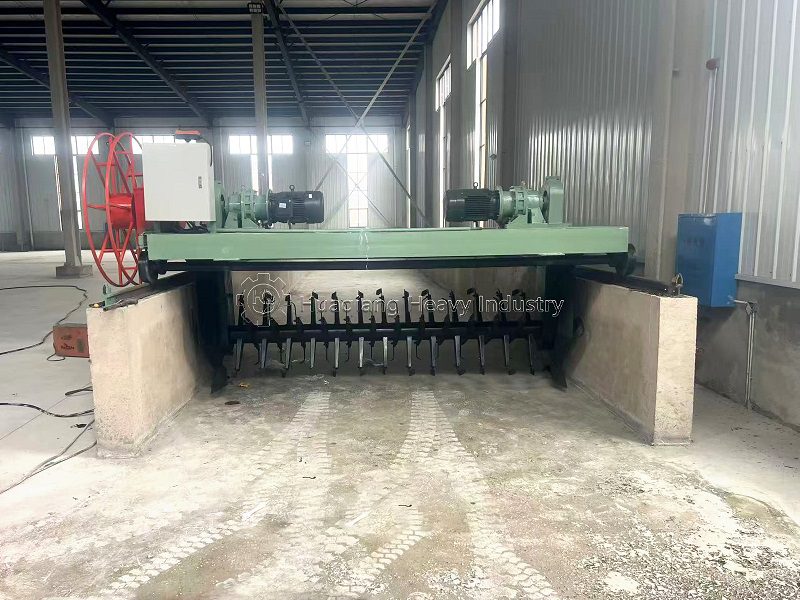
Trough-Type Compost Turner: A Stable Choice for Large-Scale Production
Trough-type compost turners require the use of concrete fermentation troughs and guide rails on both sides. The turning gear shaft moves along the trough to complete the operation. Its turning depth can reach 1.5-3 meters, and it can process 20-50 tons of material per hour, making it the preferred model for large-scale, standardized organic fertilizer plants.
The core advantage lies in its high operational stability—the equipment runs on fixed tracks, unaffected by the flatness or hardness of the material pile. The tank design minimizes external environmental interference, preventing nutrient loss due to rainwater erosion. It can also be equipped with a PLC automatic control system to monitor temperature, humidity, and oxygen in real time, automatically adjusting the turning frequency.
Limitations include the need for pre-construction of fermentation tanks (concrete foundation, rectangular plot), resulting in higher initial construction costs. Tank width is generally ≤5 meters, limiting site availability. It is not suitable for factories with an annual production capacity of less than 5000 tons or those requiring relocation due to limited space.
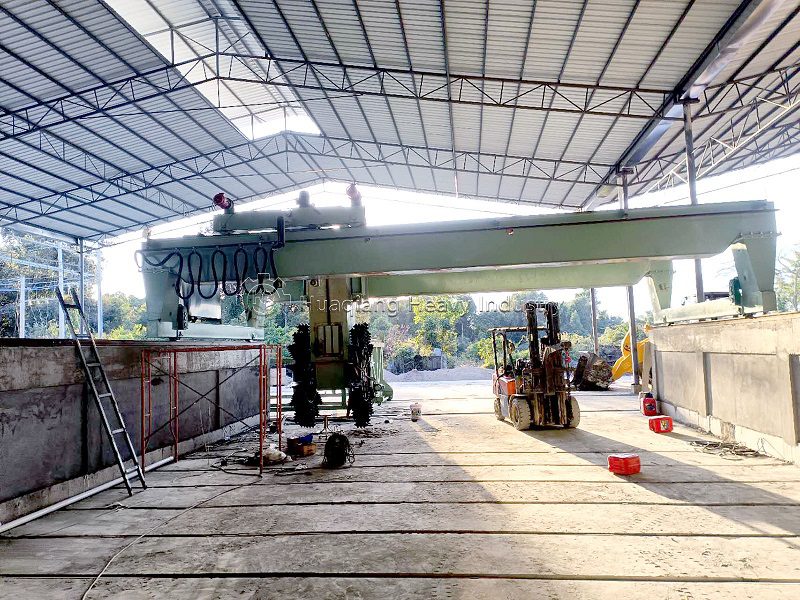
Large Wheeled Compost Turner: A Flexible and Economical Small-Scale Option
Large Wheeled compost turners (such as tractor-trailer or small self-propelled models) have a simple structure, relying on tires for movement and straddling the ground pallets for turning. Their core value lies in the elimination of the need for tank construction and track laying, allowing for flexible relocation and low investment costs.
Applicable Scenarios: Turning depth is typically ≤1 meter, with lower processing efficiency (3-10 tons per hour), suitable for small farms, family farms, or startups with an annual production capacity of 1000-5000 tons. This type of machine is particularly suitable for scenarios with small material volumes and flexible fermentation periods.
Limitations: Shallow turning depth, limited processing capacity, and frequent manual adjustments are required. Its processing capacity for highly viscous materials with high moisture content is relatively limited.
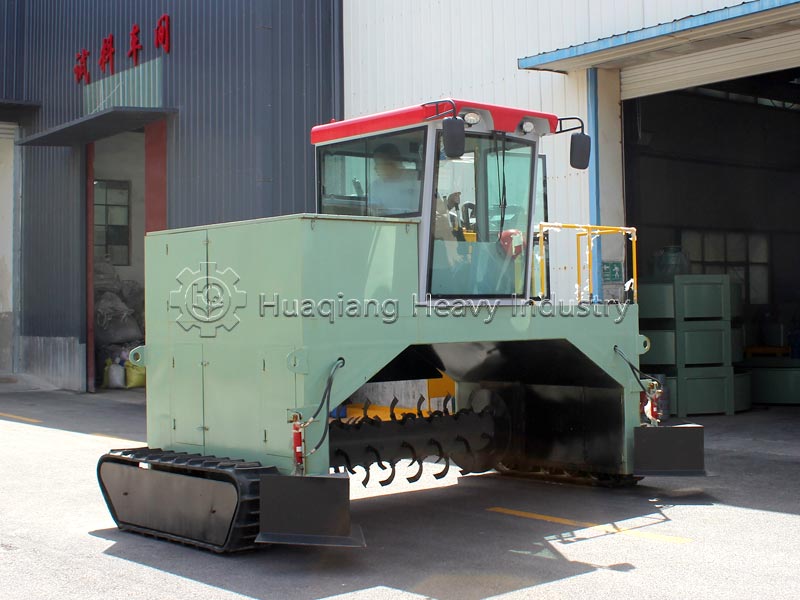
Self-propelled (tracked) compost turner: An all-rounder for complex terrain. Tracked compost turners use rubber tracks for movement, eliminating the need for fixed tracks and allowing operation in open-air areas or simple fermentation sheds. Their turning width can reach 2-5 meters, depth 1-2 meters, and processing 10-30 tons of material per hour.
The core advantage lies in its strong mobility—low ground pressure and strong climbing ability, enabling stable operation in muddy and uneven open-air areas. One person can operate it to move forward, backward, and turn. The turning depth and width are adjustable, combining flexibility with strong processing capacity.
Limitations: Requires a certain degree of ground flatness; muddy sites may affect operating efficiency. The equipment cost is higher than wheeled models.

Decision Matrix: Quick Comparison Across Four Dimensions
Price: Wheeled (20,000-50,000 RMB) < Trench (30,000-80,000 RMB) < Tracked (50,000-100,000+ RMB)
Processing Efficiency: Wheeled (3-10 tons/hour) < Tracked (10-30 tons/hour) < Trench (20-50 tons/hour)
Site Footprint: Trench (requires trench construction, lowest footprint) < Tracked (open-air operation, no infrastructure required) < Wheeled (most flexible, almost no footprint)
Operational Difficulty: Trench (highest automation) < Tracked (one-person operation) < Wheeled (requires frequent manual adjustments)
Expert Selection Recommendations
Daily processing capacity below 5-10 tons, limited space or temporary operation → Choose wheeled or small trench
Daily processing capacity 10-50 tons, simple site or outdoor pallets → Choose tracked
Daily processing capacity above 50 tons, long-term fixed location, pursuit of automation → Choose trench (chain plate or wheel disc type)
Three Questions for Selection: ① What is the annual processing capacity? (<5000 tons → wheeled; 5000-10,000 tons → tracked; >10,000 tons → trough type) ② Is the site fixed? (Fixed → trough type; Not fixed → wheeled/tracked) ③ What is the budget? (Limited → wheeled; Sufficient → trough/tracked)
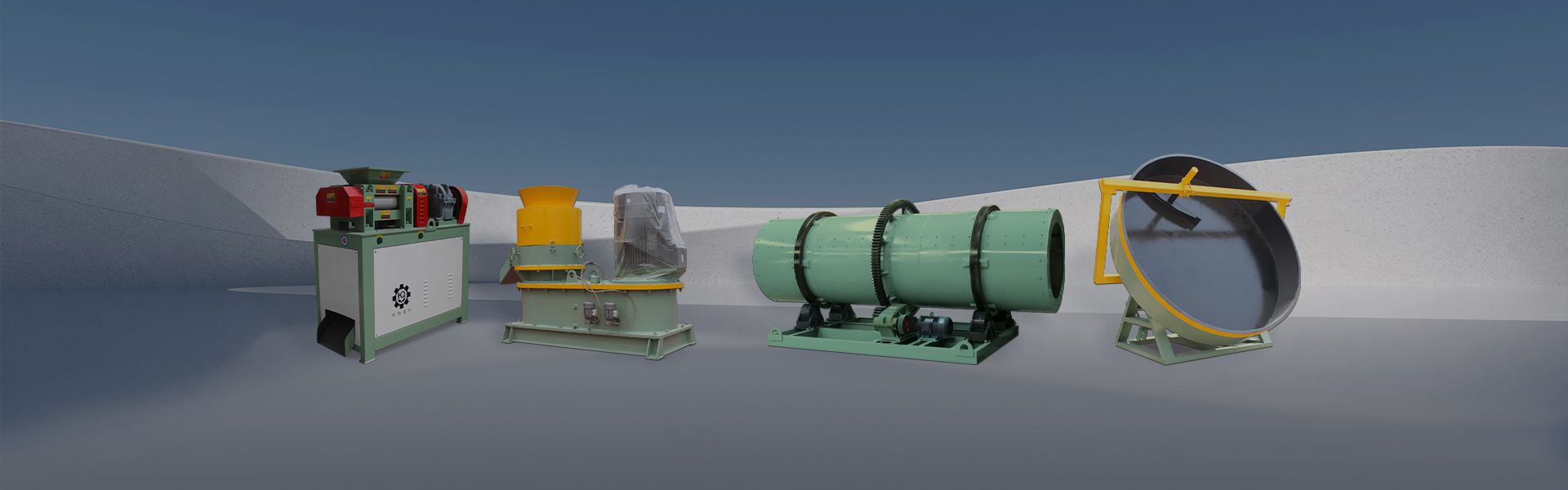
Choosing the right compost turner is the cornerstone of efficient fermentation composting turning technology—whether you need the high‑capacity stability of a trough-type compost turner for fixed, large‑scale plants, the mobility of a windrow composting machine for open‑air operation, or the terrain‑adaptability of a large wheel compost turning machine for deep‑turning requirements. Each model directly influences the composting process for animal manure and the chicken manure fermentation turning process, which are critical stages in the overall fertilizer production process. For farms processing poultry litter, integrating a chicken manure fertilizer machine upstream and an animal manure compost turner as the core turning unit ensures rapid heating, pathogen elimination, and odor control. The right choice also impacts downstream operations—well‑fermented material feeds smoothly into a rotary drum granulator or other granulation equipment, reducing wear and improving pellet quality. Ultimately, aligning your turner selection with your annual throughput, site conditions, and budget ensures that the entire fertilizer composting turning machine equipment system operates at peak efficiency, transforming raw manure into stable, nutrient‑rich organic fertilizer with minimal downtime and maximum return on investment.