
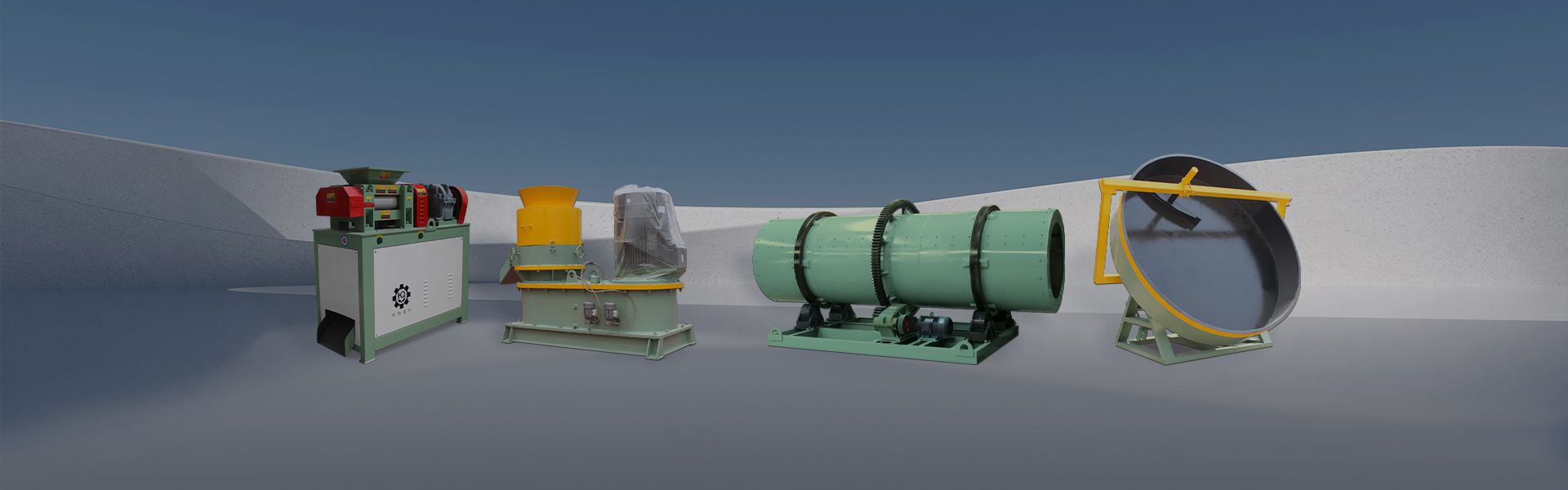
In the fertilizer industry, environmental impact assessment (EIA) approval is often viewed as a make-or-break hurdle, with odor and dust emissions frequently serving as grounds for automatic rejection. For large-scale fertilizer enterprises utilizing wet granulation processes, the ability of the rotary drum granulator to operate in a fully enclosed, odor-free manner directly determines whether the project passes the EIA on the first attempt—and retrofitting for full enclosure is the key to solving this challenge.

The granulation process within a rotary drum granulator naturally lends itself to enclosure. By installing labyrinth seals and air seals at the feed and discharge ends, and adding a negative-pressure suction hood at the top of the drum, the entire granulation process can be contained within a sealed chamber. Malodorous gases—such as ammonia and hydrogen sulfide—released as materials tumble and agglomerate inside the drum are promptly extracted by the negative-pressure system and routed to spray-scrubbing or biological deodorization units for centralized treatment. Similarly, dust generated inside the drum is captured by the negative-pressure system and discharged in compliance with standards after passing through a bag-type dust collector. The core value of this system lies in transforming “fugitive emissions” into “organized emissions”: waste gases follow a defined collection path and treatment protocol, providing reliable data to support the EIA report.
An enclosed rotary drum granulator delivers not only EIA compliance but also simultaneous improvements in production efficiency. While traditional open workshops suffer from pungent ammonia fumes and pervasive dust, the implementation of an enclosed system significantly improves the on-site working environment. Furthermore, the water vapor and dust extracted by the negative-pressure system undergo recovery and treatment; a portion of the condensate can be recycled back into the granulation system, thereby conserving process water and reducing raw material loss.
Ultimately, upgrading the rotary drum granulator to a fully enclosed system transforms granulation from an “open, high-pollution process” into a “closed, clean production flow.” This ensures that passing the EIA is no longer a matter of chance, but the inevitable result of reliable engineering measures. Once every stream of exhaust gas generated within the stack is brought under organized treatment, passing the environmental impact assessment on the first attempt becomes a natural outcome.