
What is Bio-organic Fertilizer?
Bio-organic fertilizer refers to a new type of fertilizer that combines specific functional microorganisms (such as nitrogen-fixing bacteria, phosphate-solubilizing bacteria, potassium-solubilizing bacteria, and antagonistic bacteria) with well-rotted organic fertilizer carriers, processed in a factory setting. Its essential difference from ordinary organic fertilizer lies in that it not only provides organic matter and trace elements, but also continuously improves the soil microecology, inhibits soil-borne diseases, and activates fixed mineral nutrients through the metabolic activities of active microorganisms.
my country’s agricultural industry standard (NY/T 884-2012) clearly stipulates that bio-organic fertilizer must have an organic matter content ≥40%, an effective live bacteria count ≥0.2 billion/gram, and a miscellaneous bacteria rate ≤30%. This means that simply having good organic fertilizer raw materials is not enough; the problem of how to successfully “marry” the “bacteria” and “fertilizer” on the production line must be solved.
Four Mainstream Methods for Adding Functional Microbial Agents to Production Lines
Because functional microorganisms are extremely sensitive to high temperature, high pressure, and strong shear, the timing and process of addition directly determine the final survival rate of live bacteria in the product. The following four methods have been proven effective in actual production:
- Post-fermentation inoculation (mixing microorganisms in the later stage of fermentation)
During the cooling stage of organic fertilizer fermentation (when the pile temperature drops below 40℃), liquid or powdered microbial agents are evenly sprayed or mixed into the material, and then piled for 2-3 days for “post-fermentation.” At this stage, the high temperature is no longer present, and the microorganisms can gradually colonize the organic carrier.

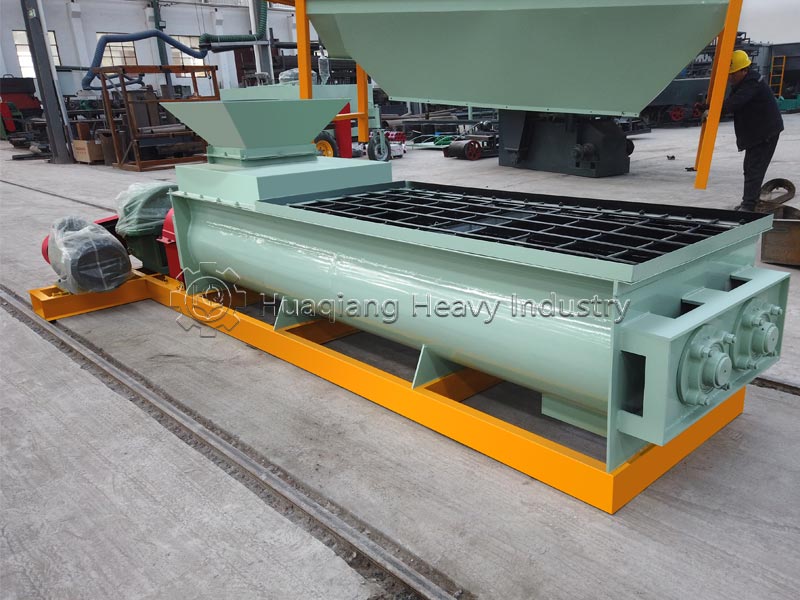
Applicable equipment: Tracked compost turner with a spray system, or twin-shaft mixer.
Advantages: The microorganisms and carrier are fully integrated, and the survival rate can reach over 85%.
- Low-temperature mixing before granulation
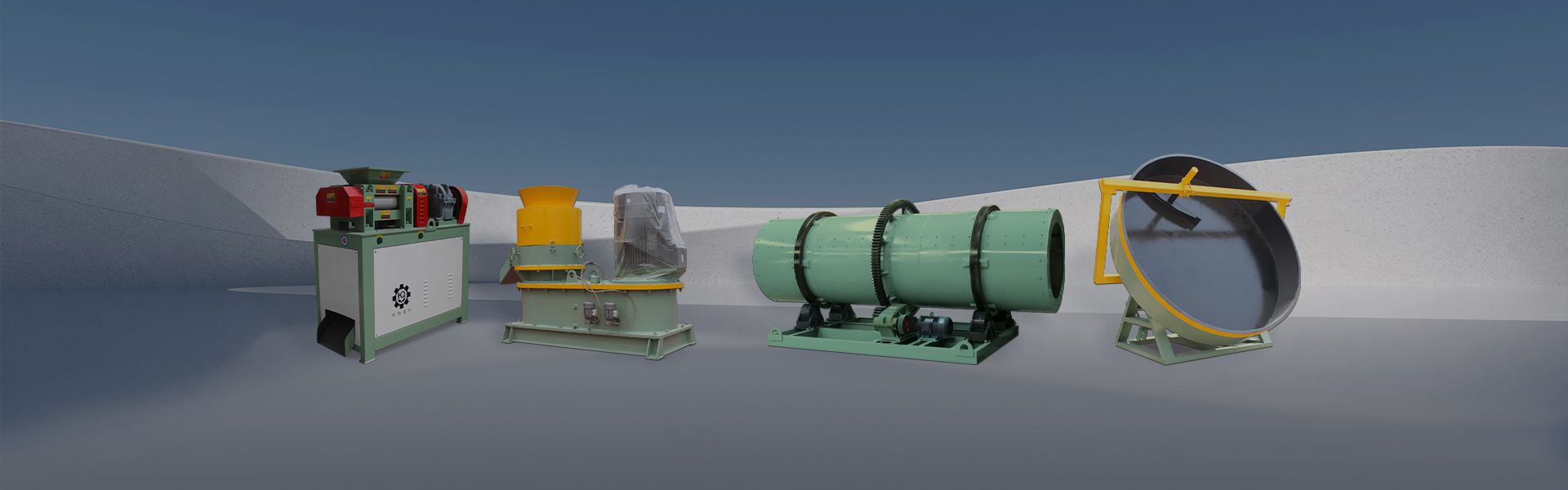
For manufacturers that need to produce granular bio-organic fertilizer, the granulation process is the biggest risk point. A normal temperature or low-temperature physical granulation process (disc granulation or roller extrusion granulation) must be used, and the microbial agent and powder must be evenly mixed before the granulator.
Key control points: Mixer chamber temperature ≤45℃; premix the microbial agent with bran, rice husk powder, or other “protective carriers” at a ratio of 1:5-10 to absorb frictional heat.
Precautions: Do not use steam or high-temperature drying. Allow the granules to air dry naturally or dry in a fluidized bed at low temperature (≤50℃) after granulation.
- Post-coating process (most reliable): After granule cooling and sieving, and before packaging, a post-coating process is implemented. Liquid microbial agent is evenly sprayed onto the granule surface using a high-pressure atomizing nozzle, followed by mixing with a low-speed roller to coat the granules with the microbial solution.
Equipment configuration: Spraying roller (8-12 rpm), microbial storage tank (with stirring and temperature control to prevent sedimentation), metering pump.
Advantages: Completely avoids heat damage during granulation and drying; survival rate can reach over 95%. Disadvantages: The microbial cells adhere to the surface; moisture protection is necessary after packaging.
- Direct Mixing of Powdered Products
For powdered bio-organic fertilizer, the process is the simplest: Mix the fermented, decomposed, pulverized, and sieved organic powder with the microbial agent in a double-shaft paddle mixer or ribbon mixer at room temperature for 15-20 minutes. The powder moisture content should be ≤20%, and the coefficient of variation for mixing uniformity should be <10%.
III. Summary and Recommendations for Process Routes
Regardless of the method used, three “ironclad rules” must be followed:
Avoid high temperatures: The temperature of all materials in contact with the microbial agent must be below 50℃.
Avoid strong light and ultraviolet radiation: Packaging bags should be made of light-blocking material.
Avoid chemical inhibition: The microbial agent must not be added simultaneously with high-concentration chemical fertilizers or fungicides.
For newly constructed production lines, a combination scheme of “decomposed organic fertilizer + powdered mixing or post-spraying granulation” is recommended: First, produce high-quality organic fertilizer base material, then flexibly add different functional microbial strains (such as rhizobia for legumes, antagonistic bacteria for continuous cropping obstacles) according to order requirements to achieve flexible production of small batches and multiple varieties.
Engineering Living Fertilizers Through Integrated Production Systems
The commercial viability of bio-organic fertilizer hinges on the seamless fusion of microbial viability preservation with robust manufacturing infrastructure, making advanced bio-organic fertilizer production technology indispensable for modern agricultural input enterprises. At the fermentation stage, deploying precision fermentation composting turning technology—such as a windrow composting machine with integrated temperature monitoring and controlled aeration—ensures complete organic matter decomposition while creating an optimal microbial carrier matrix with stable porosity and balanced carbon-nitrogen ratios. The entire fertilizer manufacturing process must be architected as a low-temperature, low-shear ecosystem where live bacteria inoculation timing, protective carrier blending, and gentle granulation or coating are orchestrated to maintain survival rates above 85%-95%. For enterprises scaling production, establishing a dedicated bio organic fertilizer production line with modular post-fermentation inoculation zones, low-temperature mixing stations, and surface-coating capabilities enables flexible switching between functional strains—such as nitrogen-fixing rhizobia for legumes or antagonistic bacteria for continuous cropping systems—without cross-contamination risks. Ultimately, the factories that will lead the bio-fertilizer market are those that treat every gram of product not as inert chemistry, but as a living ecosystem engineered to thrive in the soil rhizosphere.
Bio-organic fertilizer is not simply an addition of “organic fertilizer + bacteria,” but a systematic project that runs through raw materials, fermentation, granulation, and packaging. Mastering the correct way to add microbial agents in the production line is essential to ensuring that every gram of fertilizer becomes a vibrant “miniature factory” in the soil.