
What is Rapid Fermentation?
Rapid fermentation refers to a technical system that compresses the natural fermentation cycle of livestock and poultry manure from 60-90 days to 15-25 days by adjusting parameters such as the carbon-to-nitrogen ratio, moisture content, oxygen supply, and microbial population. Its core objectives are to achieve harmlessness (killing insect eggs and pathogens), stabilization (reducing ammonia and odor emissions), and humification (forming stable organic matter), providing qualified raw materials for subsequent organic fertilizer production.
- Carbon-to-Nitrogen Ratio Adjustment: Optimizing the Microbial Diet High nitrogen content and insufficient carbon in manure, resulting in an imbalanced carbon-to-nitrogen ratio, is the primary reason for slow aerobic fermentation. The ideal initial carbon-to-nitrogen ratio is 25:1 to 30:1. Fresh chicken manure has a carbon-to-nitrogen ratio of approximately 10:1, requiring adjustment by adding 80-120 kg of chopped straw (carbon-to-nitrogen ratio approximately 60:1) or 150-200 kg of rice husks (carbon-to-nitrogen ratio approximately 70:1) per ton. The carbon-to-nitrogen ratio of cow manure is approximately 20:1, so the amount added should be halved. The calculation method is: Target addition amount = Manure mass × (Target carbon-to-nitrogen ratio – Manure carbon-to-nitrogen ratio) / (Additive carbon-to-nitrogen ratio – Target carbon-to-nitrogen ratio). After adjustment, the fermentation start-up time of the material can be shortened from 5-7 days to 24-36 hours.
- Moisture Control: The Activity Medium for Aerobic Bacteria. Microbial activity is inhibited when the moisture content is below 40%, and above 70%, the pores are filled with water, leading to oxygen deficiency. The optimal range is 55% to 65%. Fresh chicken manure has a high moisture content of 75% to 80%, requiring adjustment in three ways: adding straw additives with a moisture content of 10% to 15% (100-150 kg per ton of manure); spreading it out in the sun for 3-5 hours to reduce the moisture content to around 65%; or using a solid-liquid separator to reduce the moisture content to 60% to 65%. Judgment criteria: The material should clump together when squeezed in the hand, with moisture between the fingers but not dripping, and naturally disperse upon landing. For every 5 percentage points above the optimal range, the fermentation cycle is extended by approximately 3 to 5 days.
III. Forced Ventilation: From Passive to Active Oxygenation
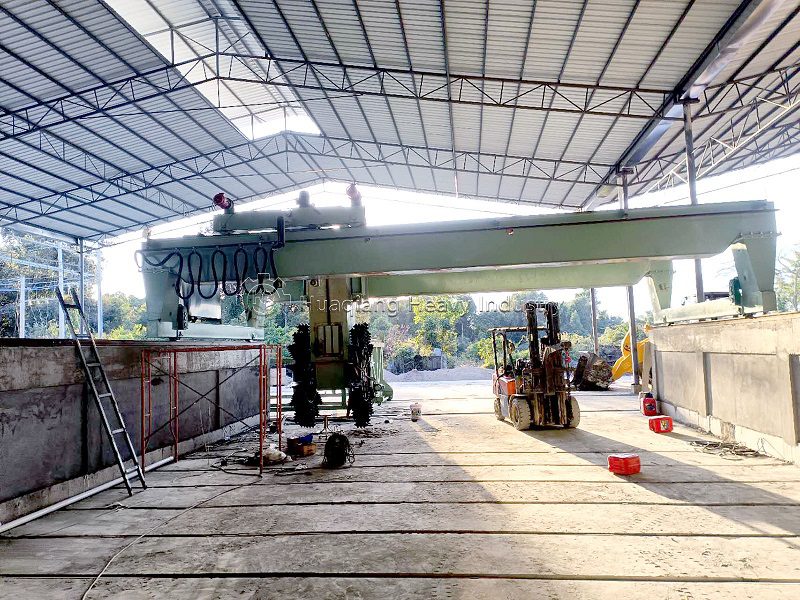
Traditional windrow composting relies on natural convection and turning for oxygen supply, with an oxygen diffusion depth of only 30 to 50 centimeters, easily leading to an anaerobic zone in the center of the pile. Forced ventilation delivers oxygen to the core of the pile. The bottom of the trough-type fermentation system is equipped with perforated PVC pipes (5 to 10 mm diameter, 15 to 20 cm spacing), and the blowers operate intermittently—ventilating for 30 minutes and then pausing for 60 minutes, with an airflow of 0.2 to 0.5 cubic meters per minute per cubic meter of material. Forced ventilation can bring the high-temperature period forward by 3 to 5 days, reducing the pile temperature uniformity from ±8 degrees Celsius to within ±3 degrees Celsius.
Fermentation tanks (drum or vertical) offer the most efficient oxygen supply, as the material continuously tumbles within the sealed container and comes into contact with the forced airflow. Ventilation can be increased to 1.0 to 1.5 cubic meters per minute per cubic meter of material, compressing the fermentation cycle to 7 to 12 days. However, the equipment investment is 2 to 3 times that of a trough system.
- Exogenous Microbial Inoculation: Targeted Enhancement of Functional Microbiota Natural fermentation relies on the existing microorganisms in the feces, requiring 3 to 7 days to establish a population. Inoculating with exogenous fermentation agents can shorten this adaptation period to within 24 hours. Commercial fermentation agents typically contain: thermophilic bacteria (accelerate organic matter degradation), actinomycetes (decompose cellulose), yeast (produce enzymes), and lactic acid bacteria (inhibit putrefactive bacteria). The inoculation amount is 0.5 to 1 kg per ton of material (with a viable bacterial content of no less than 1 billion per gram). The effect is reflected in three indicators: the onset time is shortened from 72 hours to 24 hours, the maximum temperature is increased from 55 to 60 degrees Celsius to 65 to 70 degrees Celsius, and the duration of the high-temperature period is extended by 2 to 3 days—which is precisely the optimal window for killing insect eggs and pathogens.
- Turning Frequency: A Lean Accelerator in Traditional Methods
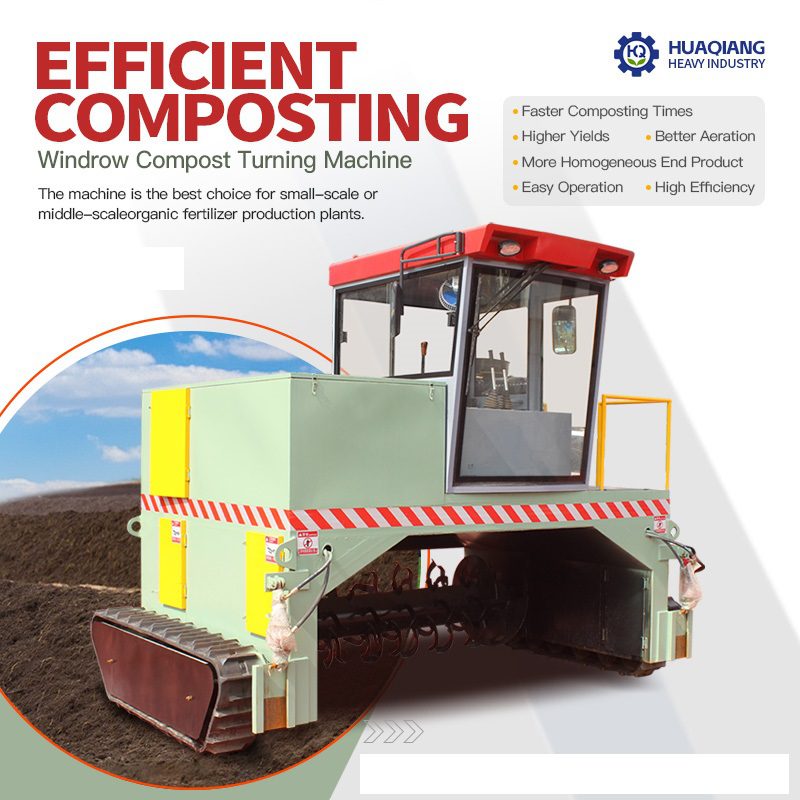
Increasing the turning frequency is the most direct way to accelerate fermentation without increasing equipment investment. In windrow composting, the conventional turning frequency is once every 5 to 7 days. A rapid fermentation program adjusts this to: turning once a day from days 1 to 3 (to promote temperature rise), turning once every 2 days from days 4 to 10 (to maintain high temperature), and turning once every 3 to 4 days from days 11 to 20 (to cool and mature the compost). A self-propelled compost turner can process 200 to 500 tons of material per hour, with a turning depth of 1.2 to 1.8 meters. Each ton of material consumes approximately 0.5 to 0.8 kWh of electricity during turning, but can shorten the overall fermentation cycle by 30% to 40%.
Quality Verification Indicators for Rapid Fermentation
After fermentation, the material must meet the following four standards before entering the organic fertilizer production stage: Temperature drops to ambient temperature plus or minus 5 degrees Celsius and does not rise again; color is dark brown or blackish-brown, without the original manure color; odor is earthy or slightly ammonia-like, without putrid or fecal odor; seed germination index is not less than 70% (using the fermented material extract to cultivate cucumber or radish seeds, comparing germination rate and root length after 48 hours). It is recommended to take 3 to 5 samples from each batch to test the above indicators. If any indicator fails to meet the standard, extend the fermentation period by 5 to 7 days and retest.
We provide a complete set of rapid fermentation equipment and auxiliary material solutions, including a trough-type compost turner, forced ventilation system, and exogenous fermentation agents. We can also customize the carbon-nitrogen ratio, turning frequency, and ventilation parameters free of charge according to your manure type and site conditions, helping you reduce the fermentation cycle from 60 days to 15 to 25 days and stably reach the decomposed standard.
Accelerating the Biological Conversion Pipeline
Rapid fermentation compresses the natural decomposition cycle from months to weeks through disciplined control of C:N ratio, moisture, oxygenation, and microbial inoculation—yet its commercial value is fully realized only when seamlessly integrated into downstream fertilizer manufacturing process infrastructure. Advanced fermentation composting turning technology serves as the biological engine, whether deployed via a high-throughput large wheel compost turning machine for massive industrial yards, a versatile windrow composting machine for open-field operations, or a precision animal manure compost turner managing poultry-specific nitrogen loads. For nitrogen-dense streams, a dedicated chicken manure fertilizer machine workflow ensures that thermophilic phases proceed efficiently without ammonia volatilization losses. Once the fermented material passes quality verification—temperature stability, dark brown coloration, earthy odor, and seed germination index ≥70%—it transitions into a disc granulation production line for pelletization and packaging. By treating rapid fermentation not as an isolated biological step but as the calibrated front end of a vertically integrated production chain, operators transform livestock waste from an environmental liability into a standardized, market-ready soil amendment within a predictable 15–25 day cycle.