
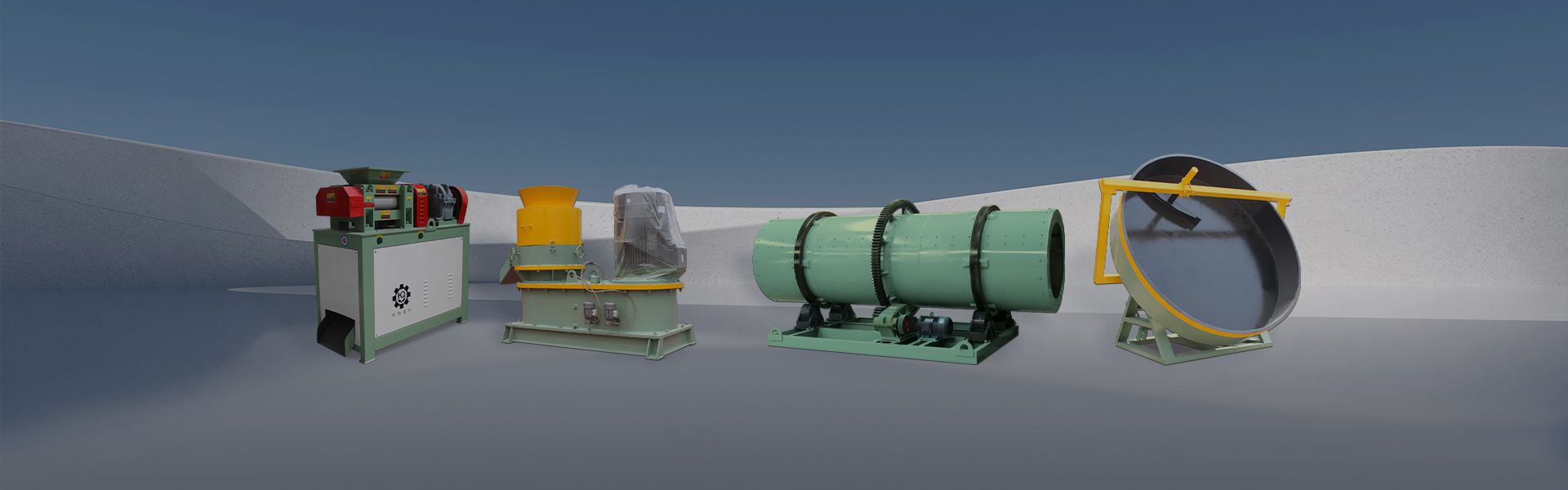
Fertilizer trough turners are standard fermentation equipment in large and medium-sized organic fertilizer production and centralized manure treatment projects. They must be used with standard fermentation tanks. With their high degree of automation, excellent fermentation effect, and suitability for continuous mass production, they have become the mainstream choice for large-scale fertilizer enterprises.
The fertilizer trough turner is mounted on dedicated tracks on both sides of the fermentation tank, allowing it to move smoothly back and forth along the tracks. The core turning mechanism uses a chain plate or rotary tillage structure to deeply turn the materials in the tank, achieving multiple functions such as aeration, heat dissipation and cooling, and material mixing. Timed turning ensures that the compost remains in an aerobic fermentation state, resulting in stable temperature rise, uniform maturation, and suppression of odorous gas generation from the source, highlighting its environmental friendliness.
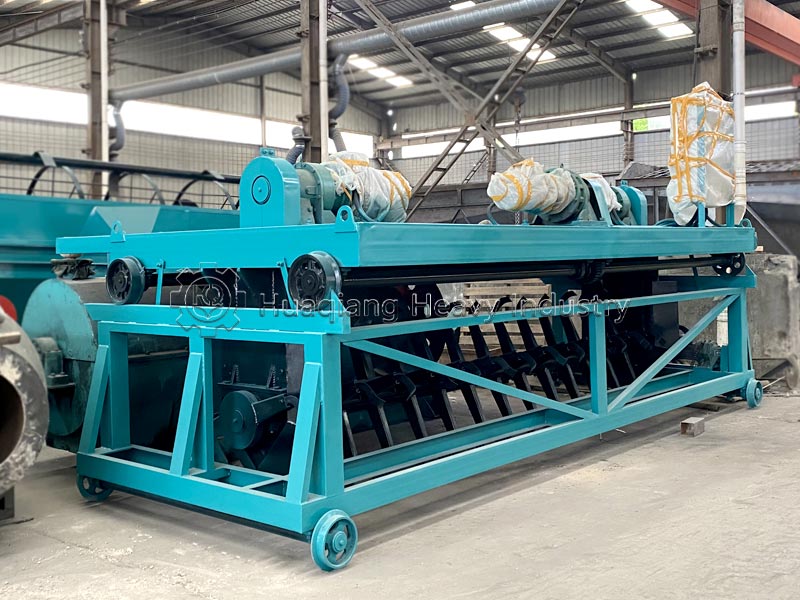
Fertilizer trough turners are adaptable to fermentation tanks of various widths, such as 3 meters, 4 meters, and 6 meters, supporting multi-tank configurations. With a shifting device, it can switch between multiple fermentation tanks, significantly improving equipment utilization and effectively reducing overall equipment investment. The entire machine adopts a centralized electronic control system, which can be freely switched between manual and automatic modes, enabling unattended, timed turning of the compost, suitable for continuous industrial production.
The equipment operates smoothly, with a large turning depth and uniform mixing, eliminating fermentation dead zones and ensuring consistent compost quality. Compared to windrow fermentation, the trough process is more standardized and easier to pass environmental impact assessments, making it suitable for standardized production and use in organic fertilizer plants with an annual output of over 10,000 tons, county-level manure treatment centers, and large-scale livestock industrial parks.