
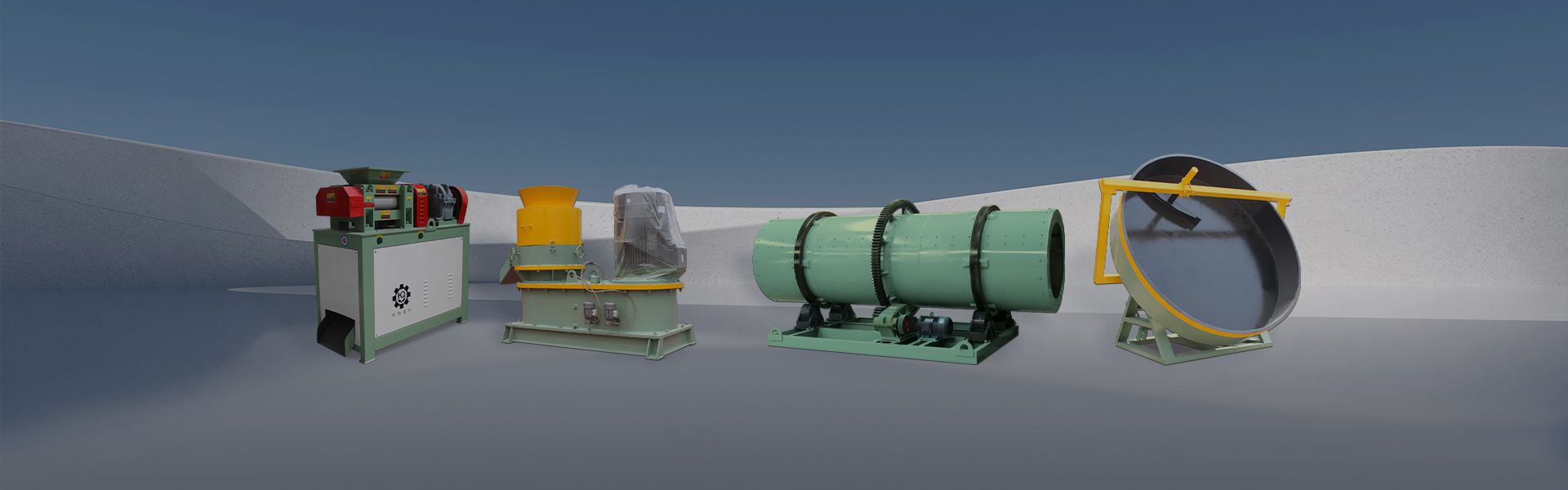
What if you could turn fine powder into sturdy, uniform granules without adding a drop of water, without running a massive dryer, and without the mess of wet processing? That is exactly what a roller press granulation line delivers. It is a dry, compact, and energy-smart system built around one core principle: compression. When every piece of equipment works in sync, the result is a steady stream of high-quality granules produced with minimal waste and remarkable efficiency.
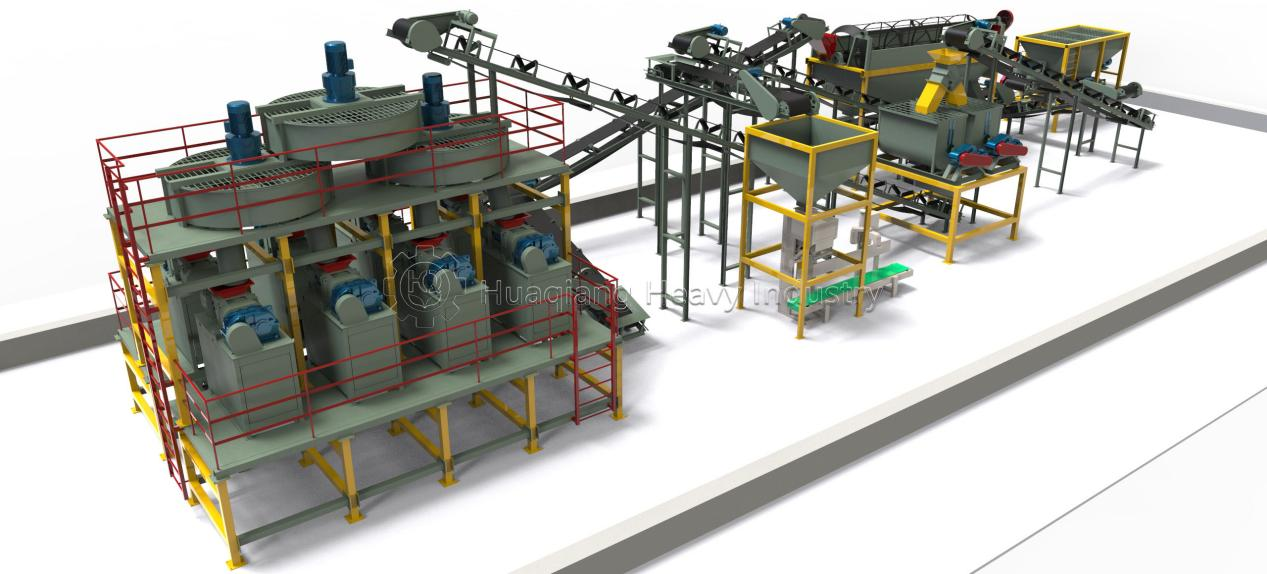
The line begins with preparation. Raw materials—whether compound fertilizers, or industrial byproducts—are first weighed by an automatic batching system. Accuracy here is not optional. A slight deviation in the mix will affect granule strength, nutrient content, and uniformity. Once weighed, the ingredients move to a horizontal mixer. Inside, paddles or ribbons tumble the material until every particle is evenly distributed. Without thorough mixing, the granules that follow will separate, crumble, or vary in composition.
After mixing, the material is lifted by a bucket elevator into a buffer silo positioned directly above the roller press. This silo ensures a continuous, stable feed—no surges, no starved rollers. From there, the powder is force-fed between two counter-rotating rollers. One roller is fixed; the other is driven forward by a hydraulic system capable of generating tremendous linear pressure, often exceeding thirty kilonewtons per centimeter. In the gap, the powder is instantly compressed into dense sheets or strips. The density can double or even triple, turning loose dust into a solid, handleable form.
But those sheets are not the final product. They fall into a crushing and sizing machine, where rotating blades break them into irregular fragments. This step determines the particle size range. Next, a rotary screening machine classifies the material into three streams. On-size granules proceed to the next stage. Oversized pieces are sent back to the crusher for another pass. Fine dust returns via a screw conveyor to the roller press, where it blends with fresh feed and gets another chance. Nothing is discarded; the line operates in a closed loop, maximizing yield and minimizing waste.
One of the most compelling advantages of this dry granulation method is what it omits. There is no dryer, no cooler, no binder, and no water. Because the granules are formed purely by mechanical pressure, energy consumption is significantly lower than in wet granulation lines. This also makes the system ideal for heat-sensitive materials—bio-organic fertilizers, humic acid products, or formulations containing live microbes—that would not survive a drying drum.
For applications that require a polished finish or controlled release, a coating drum can be added after screening. This machine applies a thin layer of oil, wax, or functional powder to each granule, improving appearance and adding performance features. A dedusting system can also be integrated to capture fine particles, keeping the workspace clean and recovering valuable material.
From high-concentration compound fertilizers to organic blends and specialty soil conditioners, the roller press granulation line handles a wide range of materials with consistency and low operating cost. It is a system built on pressure—nothing more, nothing less—and it proves that sometimes the most elegant way to shape something better is to simply squeeze.