
With surging global demand for bio-organic fertilizers, producers are scaling up production to meet the needs of modern agriculture. However, handling thousands of tons of raw materials—from livestock manure to crop residues—presents significant logistical challenges. For large producers, the solution lies not in increasing the workforce or using simple tools, but in powerful, specialized machinery. Large wheel compost turners have become the industry standard for large fermentation, providing a robust and efficient solution to the complexities of large-volume composting.
This equipment is designed specifically for windrow composting, a method of piling organic material into long, parallel stacks. Unlike smaller equipment that struggles to handle dense, heavy windrows, large wheel compost turners are built to handle large volumes of material. A key feature is the large, rotating steel drum equipped with specialized teeth. Mounted on a robust, self-propelled chassis with large wheels, this drum traverses and directly rolls over the compost windrows. As the drum rotates at high speed, the teeth lift, aerate, and turn the material, ensuring thorough mixing between the outer layers and the high-temperature decomposition core.
The core advantage of this machine lies in its ability to easily handle large materials. Its working width ranges from 4 to 8 meters, and its digging depth can reach nearly 2 meters, processing hundreds of cubic meters of material per hour. A single unit can meet the fermentation needs of a fertilizer plant producing tens of thousands of tons annually, easily shortening the natural fermentation process from 60 days to a controlled cycle of 20-25 days. This significant time reduction allows producers to increase output, reduce storage needs, and accelerate return on investment.
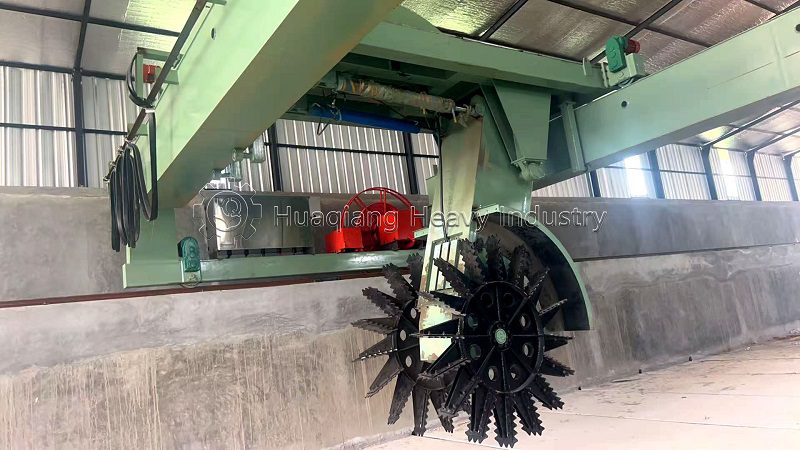
Beyond speed, the large dumper ensures consistently high final product quality. Powerful mixing ensures every part of the material pile receives sufficient oxygen, eliminating anaerobic zones that lead to odors and pathogen growth. Through homogenization, the equipment ensures the final compost decomposes evenly and is rich in beneficial microorganisms—a key characteristic of high-quality bio-fertilizer. Its robust design also provides exceptional operational flexibility. It can operate on simple mud or concrete platforms without the need for expensive tracks or infrastructure, lowering the barrier to entry for large producers.
In fact, these machines are invaluable assets for large agricultural centers. For example, a fertilizer plant producing 100,000 tons annually might only need two of these wheeled compost turners to complete the entire fermentation process. These machines are equipped with user-friendly cabs and increasingly utilize intelligent control systems for automated operation, requiring only one operator, thus maximizing output while minimizing labor costs.
Ultimately, the large wheeled compost turner is more than just a piece of equipment; it is a cornerstone technology for the industrial production of bio-organic fertilizers. It transforms the biological complexity of composting into a predictable, manageable, and efficient industrial process, making it an indispensable asset in meeting the world’s growing demand for sustainable soil solutions.
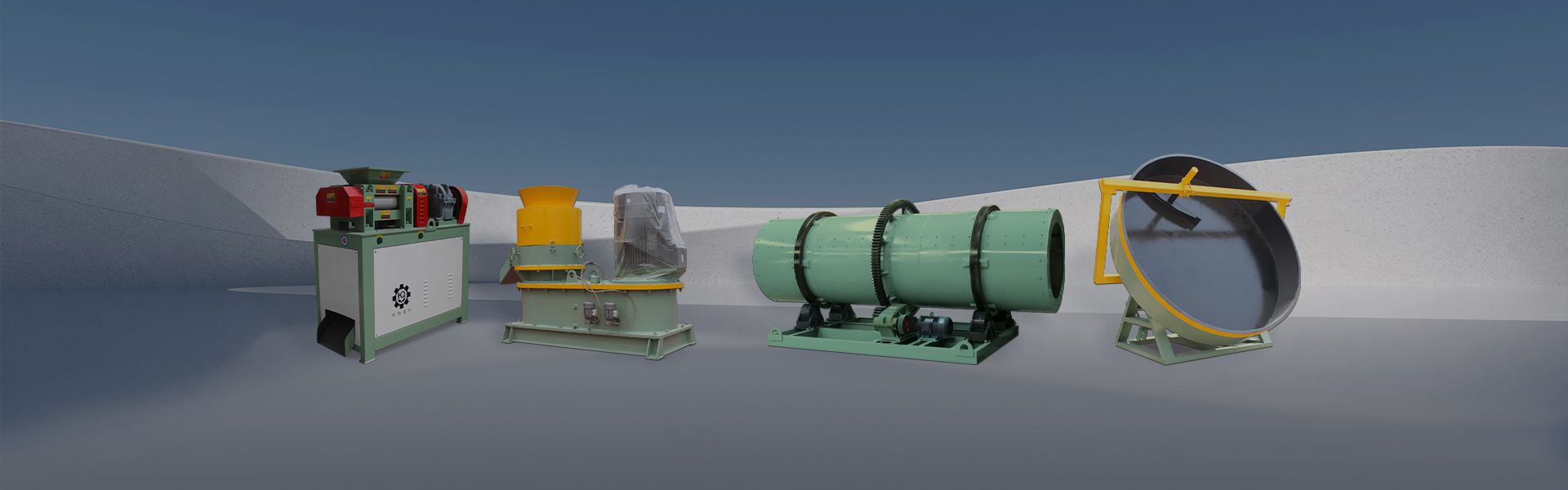
The large wheel compost turner exemplifies the power of specialized fermentation composting turning technology for industrial-scale biofertilizer production. This specific large wheel compost turning machine is designed for the immense scale of modern windrow operations, efficiently processing massive material piles. However, it represents just one key technology within a broader ecosystem of composting solutions. For operations prioritizing a controlled, continuous process, trough-type aerobic fermentation composting technology is often employed, utilizing a trough-type compost turner that moves along concrete channels, offering a more enclosed and automated system. For flexibility in smaller-scale or outdoor settings, a tractor-towed windrow composting machine provides a mobile and adaptable option. Another robust choice for trough systems is the chain compost turner, known for its durability and effective material lifting action. The choice between a large wheel compost turner for vast windrows, a precise trough-type compost turner for controlled environments, or a flexible windrow composting machine depends on the specific scale, site, and desired level of process control. Each technology, in its own way, applies the core principles of fermentation composting turning technology to transform organic waste into a valuable agricultural resource.