
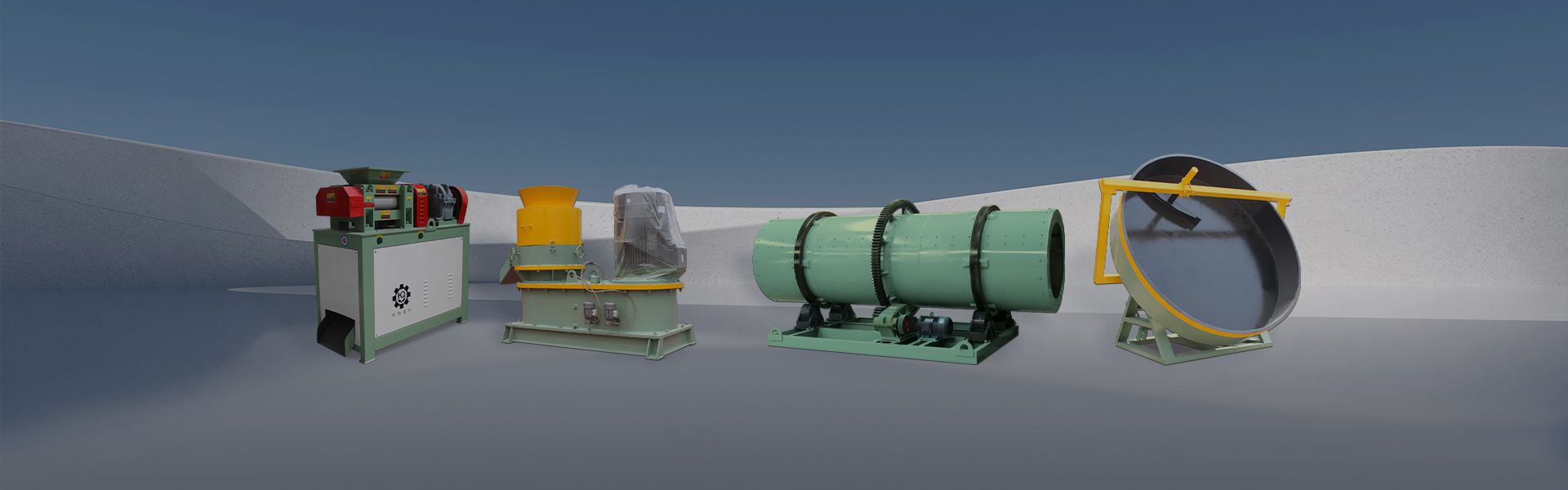
In multiple industrial fields such as fertilizers, chemicals, and minerals, the granulation of powdered materials has long faced challenges like high energy consumption and complex processes. The emergence of roller press granulator production lines has completely changed this landscape. This innovative dry granulation technology can transform powder into high-strength granules through high-pressure physical compression alone, without adding binders or requiring drying processes, ushering in a new era of granulation technology.
Dry Powder Feeding
No water or binders needed
High-Pressure Compression
Forming under 100-200 MPa pressure
Finished Granules
High-density, high-strength solid granules
Roller Press Granulation: The Miracle Created by Pressure
The core principle of roller press granulation technology is to apply extremely high mechanical pressure (typically 50-200 MPa) to powdered materials using two parallel, counter-rotating press rolls. Under immense pressure, the distance between material particles is forcibly reduced, causing plastic deformation. Atoms and molecules on particle surfaces form strong bonds under pressure, creating dense, solid sheet or strip products, which are then crushed and sized to obtain granules of the required specifications.
This purely physical granulation method offers numerous unique advantages: no liquid binders needed, avoiding subsequent drying processes; no introduction of foreign impurities, ensuring high product purity; capability to handle heat-sensitive materials without damaging active components due to high temperatures; high granule density and strength, facilitating storage and transportation.
Compared to traditional wet granulation, roller press granulation production lines can reduce energy consumption by 50-70%, water consumption by 100%, and dust emissions by over 90%. This “green granulation” technology is becoming an important choice for sustainable development.
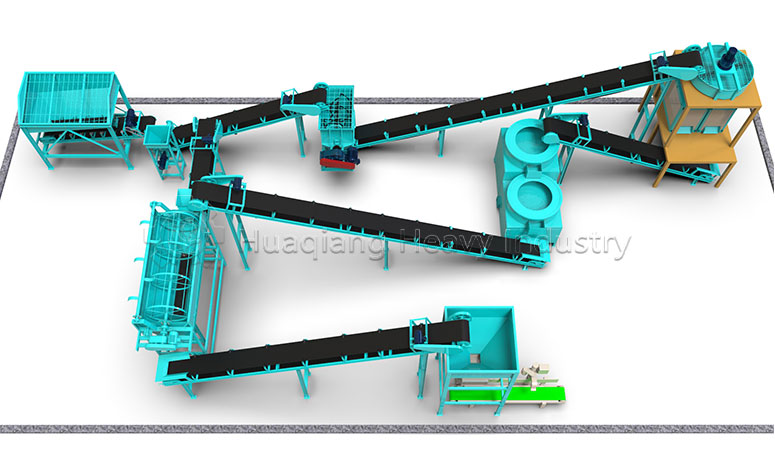
Complete Production Line Configuration and Process Flow
Raw Material Pretreatment System
Equipped with vibration screener machine, magnetic separators, and crushers to remove impurities and metals from raw materials, controlling particle size between 80-200 mesh. Micro-moisture control system ensures raw material moisture content below 2%, creating optimal conditions for high-pressure compression.
Key Equipment: feeders, chain crushers,screens, hot air dryers (optional)
Precise Batching and Mixing
Multi-component raw materials are precisely metered through loss-in-weight feeders and enter high-efficiency mixers for uniform mixing. Mixing uniformity can exceed 98%, ensuring consistent final product composition. System equipped with online detection devices for real-time mixing quality monitoring.
Key Equipment: Loss-in-weight feeders, twin-shaft mixers, micro-additive systems, online detectors
Core Roller Press Unit
Uniformly mixed dry powder enters the roller press, subjected to immense pressure between two high-strength alloy press rolls, forming dense sheet materials. Roller surfaces can be engraved with different-shaped grooves to produce specific-shaped sheets.
Key Equipment: Hydraulic roller press, roll temperature control system, pressure monitoring system, automatic lubrication device
Crushing and Sizing System
Compressed sheet materials enter crushers, broken into small pieces, then formed into uniform granules through sizing machines. Granule size can be adjusted by changing screens, typically ranging from 1-8 mm.
Key Equipment: Hammer crushers, sizing machines, vibrating screens, particle size analyzers
Screening and Grading
Sized products are graded through multi-layer vibrating screens. Qualified products proceed to next process; oversized granules return to crushing; overly fine powder returns to compression process. Closed-loop circulation design achieves over 99% raw material utilization.
Key Equipment: Multi-layer vibrating screens, air classifiers, return conveying systems, dust removal devices
Finished Product Processing and Packaging
Qualified granules can undergo surface polishing, anti-caking treatment, or functional coating. Final products complete weighing, bagging, sealing, and palletizing through fully automatic packaging lines, achieving unmanned production.
Key Equipment: Coating machines, automatic packaging machines, robotic palletizing systems, metal detectors
Roller Press vs. Traditional Granulation: Revolutionary Advantage Comparison
Roller Press Granulation (Dry Method)
Process Flow: Simple and direct, only requires compression-crushing-screening
Energy Consumption Level: Extremely low, no drying process needed
Water Resource Consumption: Zero water usage, completely dry production
Product Characteristics: High granule density, great strength, controllable dissolution
Environmental Performance: No wastewater discharge, simple dust control
Investment Payback Period: 1-2 years, significant economic benefits