
Premium WordPress theme for construction companies, contractors, builders, and a variety of other construction-related businesses.
-
28238 Kelsie Lane Apt. 451,
Port Annabelport
-
Call Us: (210) 451-123
(Sat - Thursday)
-
Monday - Friday
(10am - 05 pm)
Vibration Screener Machine
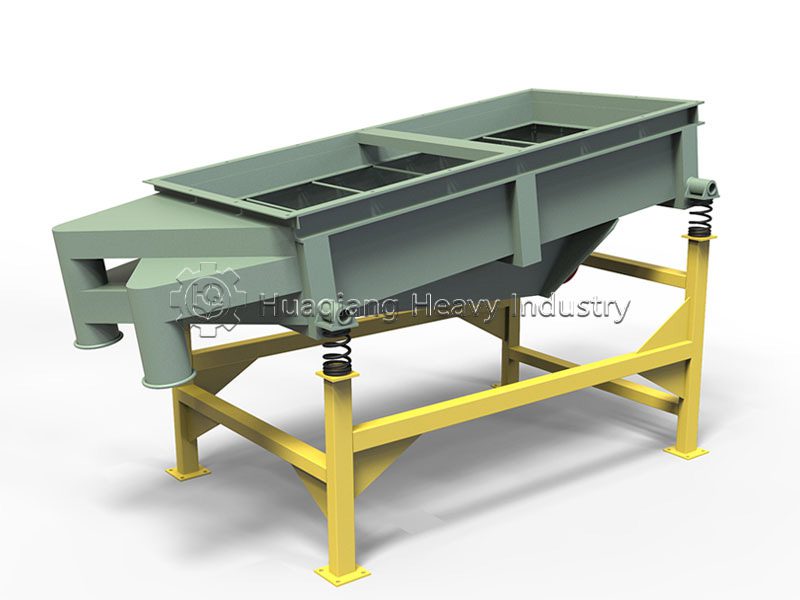
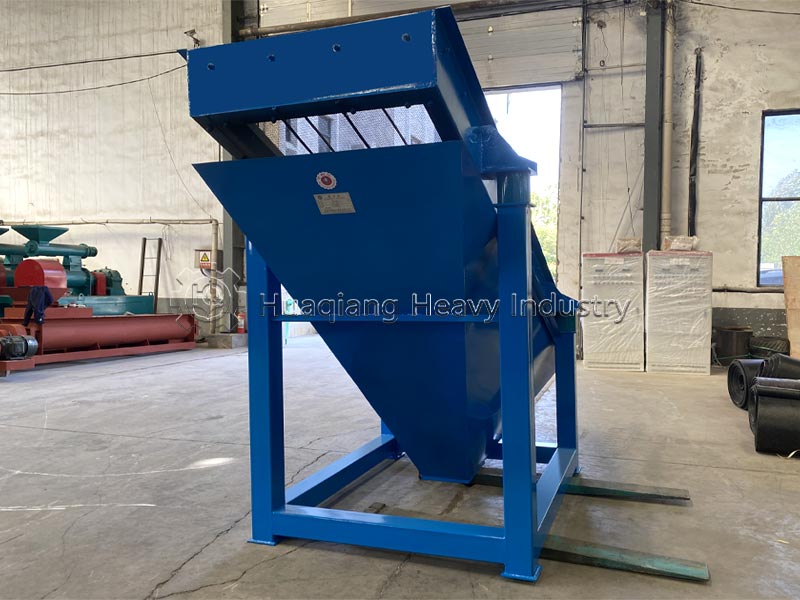
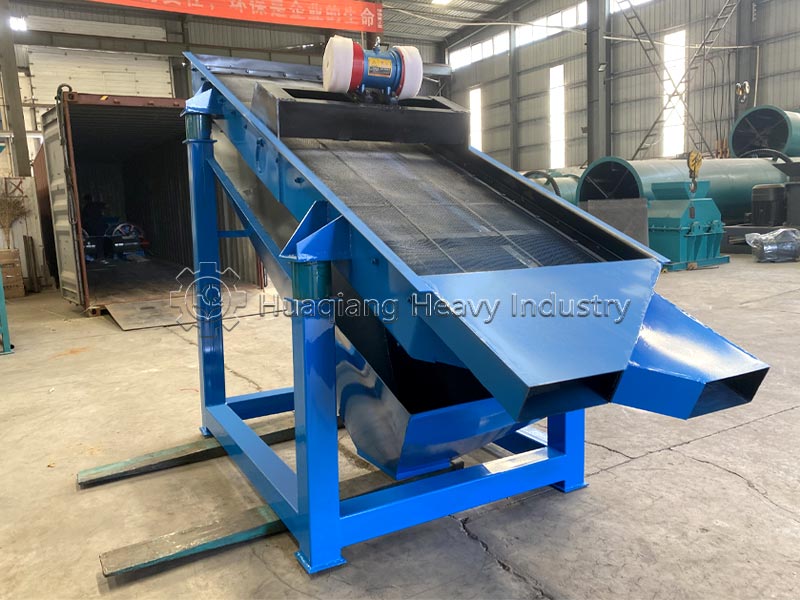
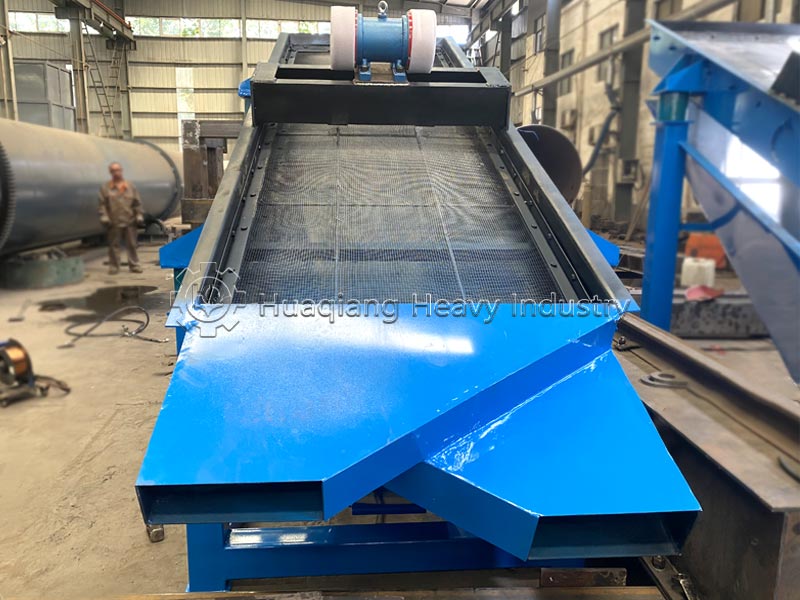
Equipment Overview
Vibrating screens utilize high-frequency vibrations generated by exciters or vibrating motors to cause materials to throw, jump, or slide on the screen surface, thereby achieving grading by particle size, impurity removal, or solid-liquid separation. Their core advantages lie in high screening accuracy, large processing capacity, compact structure, and multi-layer synchronous grading capabilities. They are widely used in industries such as chemical, food, pharmaceutical, metallurgy, mining, coal, building materials, power, and fertilizer.
Based on motion trajectory and structural form, vibrating screens are mainly divided into four categories:
- Circular Vibrating Screen (Rotary Vibrating Screen): Three-dimensional motion, suitable for fine screening.
- Linear Vibrating Screen: Dual-motor driven linear motion, suitable for high-volume coarse screening.
- Gyratory Screen (Rotary Screen): Mimics low-frequency manual shaking, suitable for high-precision, easily clogged materials.
- Direct Discharge Screen: Infeed and discharge are perpendicular, suitable for high-volume, rapid impurity removal.
Equipment Structure Composition
Although vibrating screens come in various types, their core structure is common and mainly consists of the following components:
- Screen Box: A rigid frame constructed from welded or bolted steel plates, serving as the main support for the screen mesh and vibration system. The screen box is connected to the base via heavy-duty damping springs or rubber vibration isolation supports, ensuring free vibration while minimizing vibration transmission to the ground.
- Screen Mesh: The screen mesh is the core working component that directly contacts the material. Materials include stainless steel woven wire mesh, perforated plates, polyurethane screen plates, or bar screen surfaces. Single-layer or multi-layer (up to 5 layers) screens can be configured according to process requirements to achieve simultaneous grading of 2-6 particle sizes.
- Vibration Source: Vibration motor: Mostly used in small and medium-sized screens. Eccentric blocks are mounted at both ends of the motor shaft; the excitation force and amplitude are changed by adjusting the angle of the eccentric blocks.
- Vibration Exciter: Primarily used in large mining screens, driven by a standard motor via a universal coupling. Internal gears rotate an eccentric wheel to generate vibration force.
- Damping System: Employs steel helical springs, rubber springs, or composite springs to support the screen box and absorb vibration energy, preventing resonance transmission and reducing operating noise.
- Feeding and Discharging System: Includes a buffer feed hopper, dust cover, observation port, and multiple graded discharge ports. The dust cover and sealing rings ensure fully enclosed operation, meeting environmental protection and cleanroom requirements.
Working Principles
- Circular Vibrating Screen (Rotary Vibrating Screen) Working Principle: A vertically mounted vibrating motor serves as the excitation source. Eccentric blocks at both ends of the motor convert the rotational motion into a three-dimensional composite motion (horizontal, vertical, and inclined), which is then transmitted to the screen surface. After entering the screen box, the material spreads outward in a spiral pattern on the screen surface. Fine materials pass through the mesh and coarse materials are discharged from the discharge port along the edge. By adjusting the phase angle of the upper and lower eccentric blocks, the trajectory and residence time of the material on the screen surface can be changed.
- Linear Vibrating Screen Working Principle: Utilizes dual vibrating motors rotating synchronously in opposite directions. The components of the forces of the two motor eccentric blocks in the direction parallel to the motor axis cancel each other out, and in the direction perpendicular to the motor axis, they are superimposed into a resultant force, causing the screen box to perform a reciprocating throwing motion in a straight line. The material is thrown up and jumps forward, achieving rapid linear screening. The screen surface inclination angle is typically 0°-15°. A larger inclination angle results in a larger throughput, but a decrease in screening accuracy.
- Gyratory Screen Working Principle: A special vibration exciter generates nonlinear three-dimensional motion, simulating the low-speed swaying motion of a manual sieve. The material undergoes a combined radial displacement and circular motion (spiral motion) on the screen surface, which is particularly suitable for spherical, flaky, irregular, and fragile materials, and the screening accuracy can reach 90%-99%.
Equipment Capacity Range
- Linear Vibrating Screen (Mainstream Fine Processing Screening)
| Model | Screen Size (mm) | Number of Layers | Hourly Capacity (t/h) | Matching Motor Power (kW) |
|---|---|---|---|---|
| DZSF515 | 500×1500 | 1‑3 | 1‑8 | 2×0.37 |
| DZSF1030 | 1000×3000 | 2‑4 | 10‑25 | 2×1.5 |
| DZSF1540 | 1500×4000 | 3‑5 | 25‑50 | 2×3.0 |
- Circular Vibrating Screen (Raw Material Coarse Screening) Hourly processing capacity 5~40t, single-layer large-aperture screen, mostly used for pre-treatment of impurities in fermentation raw materials.
Applications and Applicable Raw Materials
Vibrating screens are highly adaptable and can process a wide range of materials with particle sizes from 0.01 mm ultrafine powder to 300 mm large pieces:
| Industry Field | Typical Processed Materials |
|---|---|
| Fertilizer Industry | Compound fertilizer granules, organic fertilizer powder, urea, phosphate fertilizer, BB fertilizer raw materials, returned materials |
| Food & Pharmaceutical | Flour, condiments, herbal powder, tea leaves, food additives, pharmaceutical powder |
| Chemical Industry | Plastic granules, resin, pigment, coating, silicon micro‑powder, zinc chloride, soda ash |
| Mining & Building Materials | Quartz sand, manufactured sand, river sand, crushed stone, coal gangue, cement clinker |
| Metallurgy & Energy | Coke, coal, metal powder, petroleum coke, pellet ore |
| Environmental Protection & Recycling | Municipal solid waste, construction waste, biomass pellets, wood chips |
Applications in Fertilizer Production Lines
- Raw Material Pretreatment: Screening removes large impurities from raw materials, protecting subsequent crushers and granulators.
- Finished Product Grading: After granulation/drying, the finished product is separated into three streams using a multi-layer vibrating screen: qualified granules, fine powder return material, and large particle return material. Fine powder and large particles are returned to the granulation and crushing processes respectively, achieving closed-loop utilization of raw materials.
- Pre-Packaging Impurity Removal: Ensures uniform particle size of the finished product entering the packaging machine, improving product appearance quality.
Common Faults, Causes, and Standardized Solutions
| Fault Phenomenon | Core Cause | Professional Solutions |
|---|---|---|
| Poor screening effect, fine powder mixed in coarse material | Damaged screen mesh / loose pressure plate; excessive feeding flow; missing bouncing balls | Repair or replace screen mesh, install central diversion chute, reduce feeding speed, replenish cleaning bouncing balls |
| Frequent screen hole blockage, sharp drop of screening efficiency | High moisture content of fertilizer material, lack of self‑cleaning bouncing balls | Install built‑in bouncing balls, regularly blow screen mesh with compressed air |
| Material runs to one side, uneven discharging | Offset feeding distribution; inconsistent exciting force of two‑side motors; fatigue failure of one‑side spring | Adjust diversion chute for central feeding, correct motor eccentric weight, replace failed springs |
| Motor / bearing temperature >75℃, abnormal noise | Lack of bearing oil, deteriorated lubricant; fertilizer dust entering sealing part | Drain old grease, fill special vibrating base grease, replace shaft‑end sealing parts |
| Severe whole‑machine resonance, spring fracture | Long‑term overload operation; inconsistent eccentric block weight; uneven installation foundation | Reduce feeding load, unify weight on both sides, level installation ground, replace springs |
| Rapid tearing and wear of screen mesh | Hard agglomerates in material, heavy impact from feeding drop height | Install buffer baffle at feeding inlet, adopt thickened polyurethane wear‑resistant screen mesh |
Standard Operating Procedures and Full-Cycle Maintenance
(I) Start-up and Shutdown Procedures
- Start-up: Must be started under no-load; before starting, tighten all screen frame and motor bolts, check for broken springs and screen tension; run under no-load for 3 minutes, observe amplitude and noise levels, then feed material evenly, prohibiting large-scale instantaneous feeding;
- Shutdown: First shut down the upstream conveyor equipment, completely empty the material from the screen surface before disconnecting power, strictly prohibiting stopping the machine with material on, which could overload the motor.
(II) Graded Maintenance Procedures
- Daily Inspection: Clean the screen of fertilizer blockage, check for cracks in the vibration damping springs, and observe the motor temperature rise to ≤60℃;
- Weekly Maintenance: Add special vibration grease to the vibrating motor bearings, and tighten the eccentric block counterweight bolts;
- Quarterly Maintenance: Disassemble the screen frame to thoroughly clean accumulated fertilizer, check screen wear and the integrity of the bouncing balls;
- Annual Overhaul: Replace aging springs and damaged screens, and test the insulation performance of the vibrating motor. (III) List of vulnerable parts: Polyurethane/manganese steel screen, rubber vibration damping spring, vibration motor bearing, bouncing cleaning ball, sealing dustproof strip.
Analysis of the advantages and disadvantages of vibrating screens
| Category | Performance Features | Detailed Description |
|---|---|---|
| Advantages | High Screening Accuracy | Screening accuracy can reach over 95%, with precise classification effect. Especially suitable for production scenarios requiring fine classification of powdery and small‑granule materials. |
| Advantages | Strong Processing Capacity | Large material throughput per unit screen area. Working efficiency far exceeds ordinary screening equipment with prominent output advantages under equal working conditions. |
| Advantages | Fast Screening Speed | Short material residence time for screening. Screening time is only 1/2 of ordinary sieve machines, fit for continuous high‑yield production. |
| Advantages | Wide Material Adaptability | Wide range of applicable working conditions. Can stably handle materials with high viscosity, high moisture and small particle difference, excellent practical performance. |
| Advantages | Small Footprint | Compact and lightweight structure. Greatly saves installation space compared with drum screen machines, ideal for workshops with limited space. |
| Advantages | Multi‑layer Classification Supported | Multiple screen meshes with different aperture sizes can be configured to complete multi‑grade separation in one pass and simplify production process. |
| Advantages | Low Energy Consumption & Low Noise | Low operating power consumption, stable vibration and low noise. Low operation cost and friendly working environment. |
| Advantages | Simple Structure & Easy Maintenance | Concise compact overall structure with fewer components. Easy assembly and disassembly, simple inspection and part replacement, low maintenance cost. |
| Disadvantages | Screen Mesh Is Wearing Part | The screen mesh suffers long‑term material impact and vibration abrasion. It belongs to quick‑wear component and needs regular inspection and timely replacement. |
| Disadvantages | High Requirement for Uniform Feeding | Strict requirement for feeding condition. Uneven feeding or partial material accumulation will directly reduce screening accuracy and downgrade finished product quality. |
| Disadvantages | Anti‑clogging Measures Needed for High‑moisture Material | For materials with extremely high moisture, screen blocking risk still exists. Special screen‑cleaning and anti‑blocking devices shall be equipped during production. |
| Disadvantages | Requirements for Installation Foundation | The machine works with vibration and generates vibration transfer. Shock‑absorbing devices must be fitted, and requirements exist for foundation flatness. |
| Disadvantages | High Tension Precision Requirement for Screen Mesh | Screen mesh must maintain standard tension. Too loose leads to uneven screening and accelerated abrasion; too tight causes tearing, which harms screening performance and service life. |