
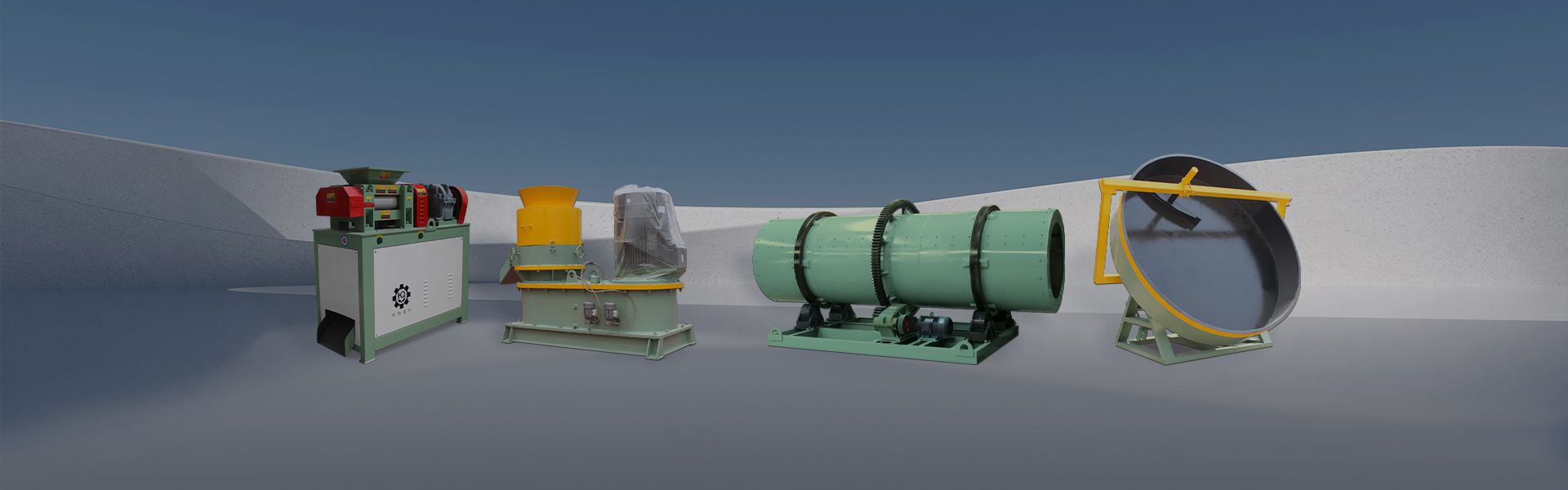
In the fascinating world of fertilizer production, there exists a remarkable device capable of transforming powdery raw materials into uniform, rounded pellets—this is the ball shaping machine, also known as the pelletizing disc. Like a skilled magician, it endows fertilizer with new form and value through exquisite rotational motion.
The Art of Rotation: How Ball Shaping Machines Create Perfect Pellets
Imagine this scene: Various fertilizer powders and additives, uniformly mixed, are fed into a large rotating disc. When this disc begins to rotate at precise speed and angle, the magic unfolds. Under the combined forces of centrifugal motion, gravity, and friction, fine powders start to aggregate, roll, and compact, gradually forming small, rounded spheres.
The heart of a modern ball shaping machine is an inclined rotating disc whose angle and rotation speed can be finely adjusted. Operators can modify rotation speed, tilt angle, and retention time based on material characteristics and desired pellet size. As materials continuously tumble within the disc, they gradually increase in size like rolling snowballs, forming perfect pellets with consistent diameter and uniform density.
More Than Just “Rounding”: A Symphony of Precision Mechanics
Although the operating principle of ball shaping machines appears simple, they are actually highly precise engineering systems:
Rotating disc design: Made of wear-resistant steel or special coatings with precisely machined surface smoothness ensuring smooth pellet rolling
Spray system: Evenly distributes liquid binders to help powder agglomeration
Angle adjustment mechanism: Precisely adjusts disc inclination to control material retention time and pellet size
Power system: Variable frequency motors provide smooth, adjustable rotational power for different production needs
Unlike traditional extrusion granulation, ball shaping machines employ “rolling granulation” principles, producing pellets with smooth surfaces and moderate strength that resist powdering while facilitating nutrient release. This pellet form is particularly suitable for slow-release and organic fertilizers because of their superior flowability and more even nutrient distribution.
The Ball Shaping Ecosystem: Perfect Harmony with Supporting Equipment
Ball shaping machines never work alone. Within a complete fertilizer production line, they collaborate with numerous other devices to form an efficient production system:
Upstream equipment:
Chain Crusher: Reduce raw materials to appropriate fineness
Horizontal Mixer: Ensure uniform blending of all components
Conveying systems: Gently transport mixed materials to the ball shaping machine
Downstream equipment:
Drum fertilizer dryer: Remove excess moisture from pellets to enhance stability
Drum fertilizer cooler: Reduce pellet temperature to prevent caking
Screening machines: Classify pellets by size, returning off-spec pellets for reprocessing
Coating machines: Add protective layers to control nutrient release
The entire system is coordinated by a central control system, with sensors monitoring temperature, humidity, rotation speed, and other parameters at each stage in real time, ensuring stable and efficient production.
Modern Upgrades: Innovative Breakthroughs in Intelligent Ball Shaping Machines
With technological advancements, ball shaping machines continue to evolve. Modern intelligent models feature these innovations:
IoT connectivity: Real-time monitoring and remote parameter adjustment
Adaptive control: Automatically optimizes rotation speed and tilt angle based on material characteristics
Energy-efficient design: High-efficiency motors and optimized transmission systems reduce energy consumption by over 30%
Modular structure: Facilitates maintenance and upgrades, minimizing downtime
Data logging: Tracks production parameters for each batch, enabling quality traceability
These innovations allow ball shaping machines to produce higher quality products while reducing energy consumption and labor costs, improving overall production efficiency.
Application Fields: The Versatile Granulation Expert Beyond Fertilizers
Although ball shaping machines are most widely used in the fertilizer industry, their applications extend far beyond:
Feed industry: Producing pelletized feed to improve animal intake and digestion rates
Chemical industry: Granulating catalysts, pigments, plastic pellets, etc.
Pharmaceutical sector: Manufacturing granular medications to improve flowability and dosage accuracy
Food industry: Producing granular seasonings, solid beverages, etc.
Environmental protection: Processing dust and powder waste to reduce environmental pollution
This versatility makes ball shaping machines indispensable equipment across numerous processing industries.