
In today’s world, with population growth and increased consumption, the generation of organic waste is rising sharply, putting immense pressure on the environment. Composting, as an eco-friendly and economical method, can transform this waste into beneficial soil amendments, promoting sustainable agriculture. However, traditional composting processes rely on manual turning, which is not only labor-intensive but also inefficient, often taking months to complete. The emergence of the large wheel compost turner has completely changed this scenario.
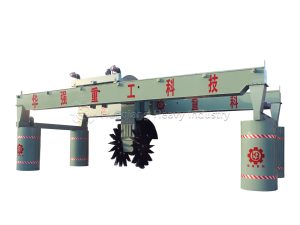
The large wheel compost turner, as the name suggests, is equipped with large tires that allow it to move easily across various terrains, making it particularly suitable for large-scale composting operations. Its core component is an efficient turning device that penetrates deep into the compost pile, performing even turning. This turning not only mixes the materials but also introduces sufficient oxygen, which is crucial for microbial decomposition of organic matter. As a result, the composting cycle is shortened from several months to just a few weeks, while the quality of the compost becomes more uniform and efficient.
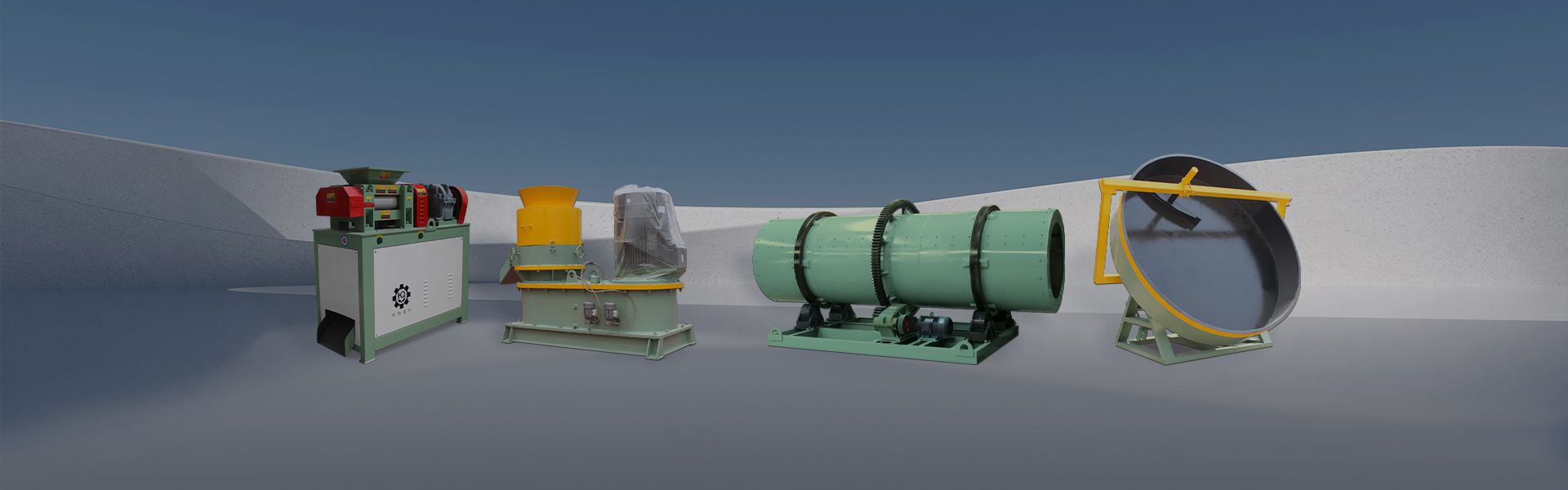
But the compost turner does not work alone. In modern fertilizer production systems, it often collaborates with other equipment. For example, fertilizer crushers can break down bulky organic waste, such as branches and crop residues, into fine particles for subsequent processing.Double axis mixer ensure that various components, like nitrogen and carbon sources, are evenly blended, optimizing the compost recipe. Additionally, fermentation devices control temperature and humidity to create an ideal environment for microbial activity, further accelerating the decomposition process. Together, these devices form an efficient fertilizer production line, making the transformation from waste to fertilizer smoother and more controllable.
The benefits of using these advanced devices are multifaceted. First, efficiency is greatly enhanced: a single large wheel compost turner can replace the labor of dozens of workers, significantly reducing labor costs. Second, compost quality is more stable: even turning and precise control prevent local overheating or anaerobic conditions, producing high-quality compost products. Moreover, environmental benefits are notable: by speeding up decomposition, emissions of greenhouse gases like methane are reduced, while waste is valorized, lessening the burden on landfills.
From a broader perspective, these technological innovations drive the development of a circular economy. Farmers can use their own agricultural waste to produce fertilizer, achieving self-sufficiency; urban waste treatment plants can efficiently process food waste to produce commercial fertilizers. This not only creates economic value but also contributes to environmental protection and climate change mitigation.
In summary, large wheel compost turners and their supporting equipment are becoming the backbone of sustainable agriculture and waste management. They work like magic, turning seemingly useless waste into “black gold”—fertile compost. Let’s embrace this transformation, invest in these smart devices, and leave a greener, more prosperous planet for future generations. In the future, with continuous technological advancements, we may see more compact and intelligent versions, making composting accessible to every household and community.