
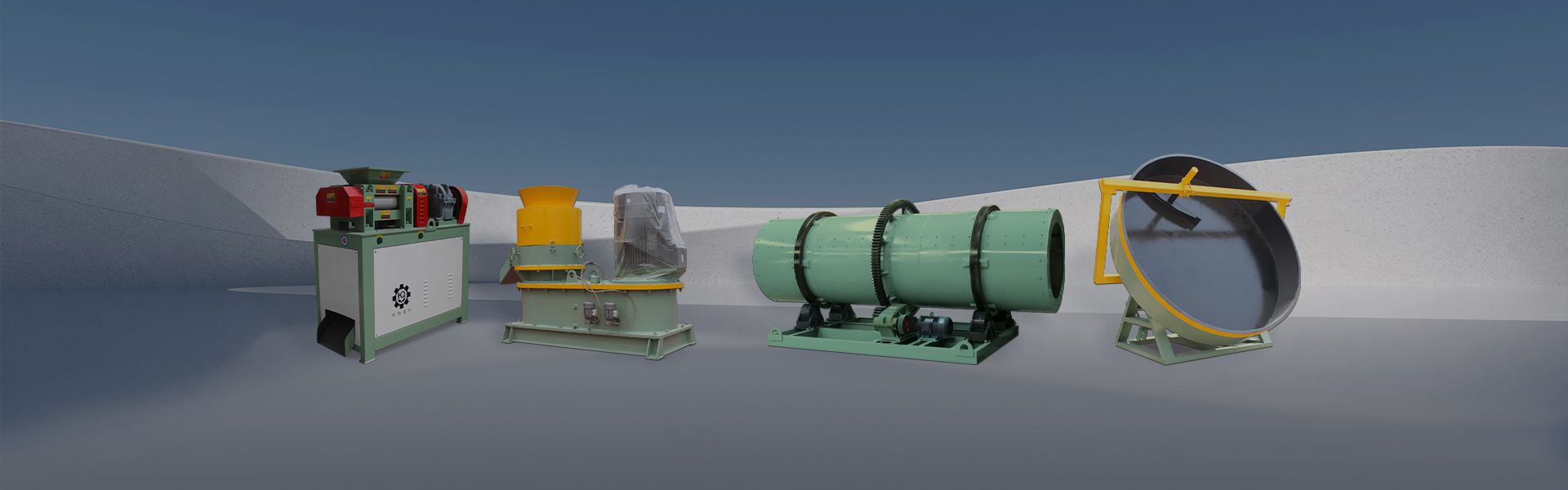
If you’ve ever watched a child roll snow into a perfect ball, you already understand the basic principle of a disc granulator. It’s one of the oldest, simplest, and yet most satisfying pieces of equipment in any fertilizer plant. There’s something almost hypnotic about watching a tilted pan spin slowly, its contents tumbling and growing like living things.
Step onto the floor of a disc granulation production line, and you’ll likely stop in your tracks. Not because of noise or heat—though there’s plenty of both—but because of the visual spectacle. Massive pans, some reaching five or six meters in diameter, rotate at carefully calibrated angles, their surfaces crawling with material in various stages of formation. It looks less like industrial machinery and more like some kind of geological process happening in fast-forward.
So how does this spinning pan actually work? Imagine feeding fine powder—ground limestone, recycled fines, or pre-mixed NPK ingredients—onto the rotating disc. As the pan turns, the powder is lifted and dropped, lifted and dropped, over and over. Spray nozzles mounted above mist the tumbling material with just enough liquid binder (water, steam, or sometimes dissolved urea) to make particles slightly sticky. And then the magic begins: small seeds attract smaller particles, growing layer by layer, like pearls forming inside oysters.
What makes the disc granulator special, though, is its honesty. Unlike other granulation methods where the process happens inside a closed drum or tower, the disc reveals everything. An experienced operator can walk up to a running pan, glance at the cascading material, and instantly know: too wet, too dry, too many fines, perfect. They can watch granules grow from pinhead-sized specks to perfect 3-4mm spheres in real time, adjusting angle or spray rate with a flick of the wrist.
And adjust they do. That’s the disc’s superpower—instant visibility means instant control. See too many fines riding on top? Increase the angle, speed up the roll. Granules getting too large? Reduce retention time by tilting the pan steeper. It’s responsive, intuitive, and oddly personal. Operators develop relationships with their discs, learning each pan’s quirks and preferences like a rider knows their horse.
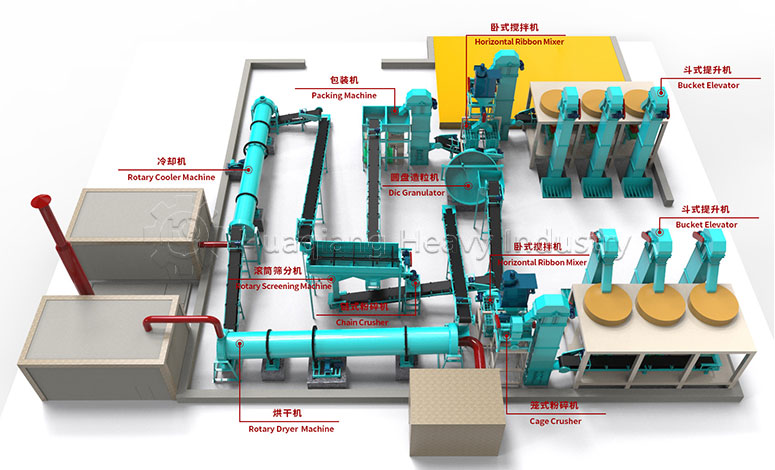
But the disc doesn’t work alone. Behind it stands a carefully orchestrated lineup of supporting equipment. A batching system feeds precisely weighed raw materials into a fertilizer mixer, ensuring every particle gets its fair share of nutrients. From there, the pre-blended powder travels via conveyor to the disc’s feed point, joining a continuous cascade of material. Below the pan, a swing-arm scraper constantly cleans the disc surface, preventing buildup that would ruin the delicate balance of tumbling.
Once granules leave the disc—spilling over the pan’s lower edge like ripe fruit falling from a tree—they’re not finished yet. They tumble into a dryer, where warm air strips away moisture and locks in their structure. Screens separate perfect product from oversize and undersize; oversize gets crushed and returned, fines go back to the disc as fresh seed material. It’s a closed-loop system, efficient and nearly waste-free.
What kinds of products thrive on a disc granulator? Almost anything you can imagine. Straight fertilizers like single superphosphate roll beautifully on discs. Compound NPK formulations, especially those with higher organic content, often prefer the disc’s gentle touch. Some plants even use discs to produce premium-grade products—uniform, spherical granules that farmers love because they flow easily through planters and dissolve predictably in soil.
Walk through a facility running discs, and you’ll notice something else: versatility. Change the formulation, adjust the angle, swap spray liquids, and the same pan that produced urea granules yesterday can produce organic-inorganic blends today. It’s this flexibility that keeps disc granulators relevant even in an age of high-tech towers and complex prilling systems.
From the outside, a disc granulation line might seem almost primitive—just spinning pans and moving belts. But spend an hour watching those pans work, watching granules form from dust, and you’ll see something deeper. You’ll see patience and precision dancing together. You’ll see why, after decades of innovation, the simple spinning pan still holds its place at the heart of fertilizer production.
Next time you scatter granular fertilizer across a field, picture its journey. Somewhere, on a spinning disc, that tiny sphere began its life—tumbling, growing, waiting for the moment it would meet the soil and finally fulfill its purpose.