
The Production Line: Step by Step
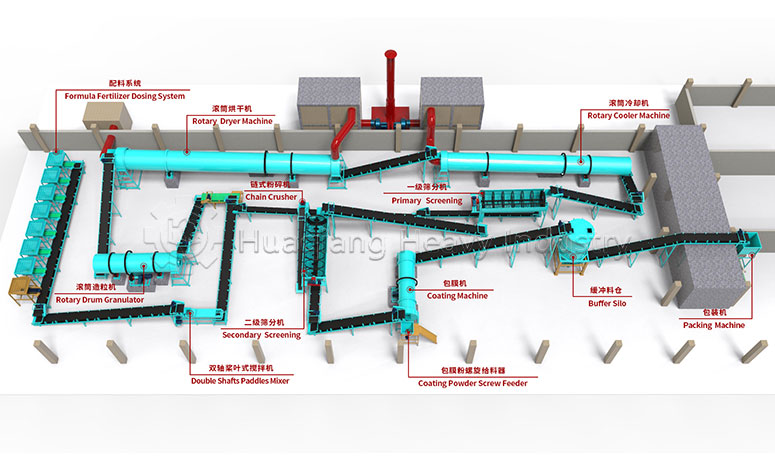
An NPK fertilizer production line typically follows a sequence of stages, each with its own specialized equipment. Let’s walk through them.
Raw Material Reception and Storage
The journey begins with raw materials arriving in bulk—by truck, rail, or ship. Urea prills pile up like snowdrifts. Phosphates stack in bagged towers or silos. Potash waits in covered storage, ready for its turn. Quality control samples every delivery, ensuring each ingredient meets specifications before it enters the line.
Crushing and Screening
Some raw materials arrive in lumps or cakes, especially if they’ve sat in storage. This is where the cage crusher earns its keep. Inside its spinning steel cage, rows of pins or bars smash lumps into fine powder with brutal efficiency. Oversize particles from later stages also return here for another chance. Everything must become uniform in size before moving forward.
Stand next to a running crusher, and you’ll feel its power through the floor. It’s not subtle, but it’s essential.
Accurate Batching
Now the real precision begins. Above the production line, a series of hoppers sits on load cells—electronic scales accurate to within grams. A central computer controls the show, drawing materials in exact proportions based on the desired formula.
Need 17-17-17? The system pulls 17 parts nitrogen source, 17 parts phosphate, 17 parts potash, plus fillers and micro-nutrients. Every batch is weighed twice, checked twice, recorded for traceability. This isn’t guesswork; it’s pharmacy-level precision.
Intensive Mixing
With ingredients weighed, they move to the double axis mixer. Picture a long trough with two counter-rotating shafts, each fitted with specially angled paddles. As the shafts turn, material gets lifted, thrown, and folded repeatedly—dozens of times per minute.
Granulation: The Heart of the Line
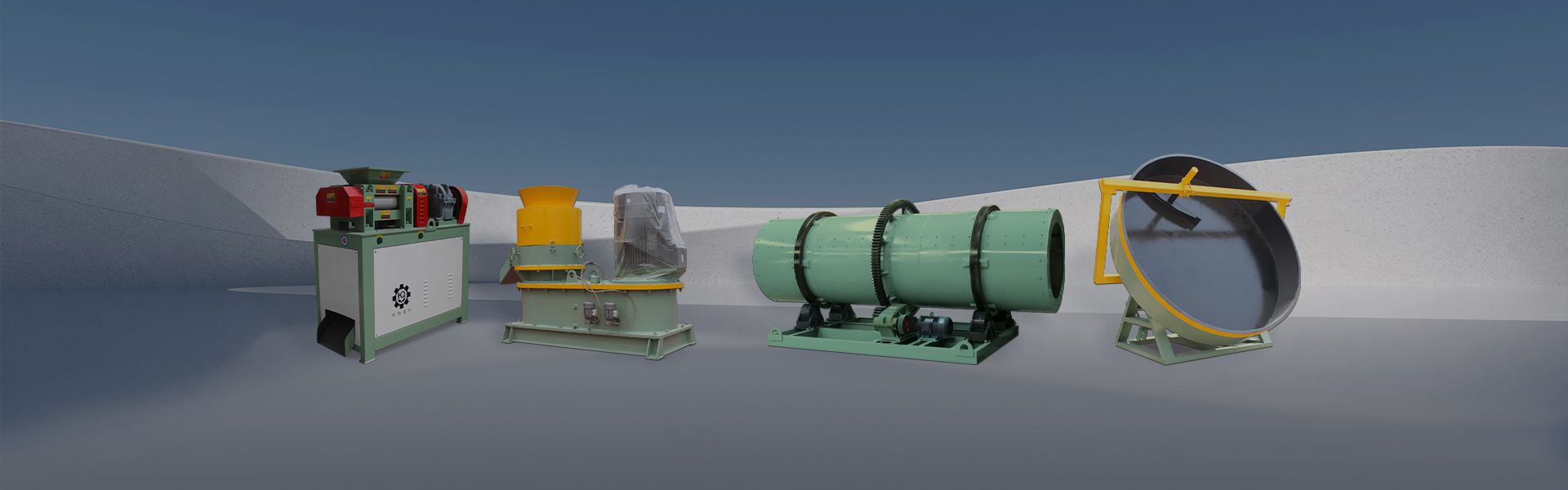
Now the prepared, uniformly blended material reaches the star of the show. Depending on the technology chosen, this could be a disc granulator, a rotary drum granulator, or even a pan granulator. Each has its strengths, but the rotary drum granulator remains the workhorse of large-scale production.
Imagine a massive steel cylinder, 10 to 20 meters long and 2 to 4 meters in diameter, rotating slowly on heavy-duty rollers. Inside, lifters carry material upward, then release it in a controlled cascade. Steam or water sprays into this tumbling curtain, creating just enough stickiness for particles to bond.
Drying: Locking in the Structure
Fresh from the granulator, granules are soft and moist—they’d cake together if bagged immediately. Enter the rotary dryer. Another massive drum, this one heated by a furnace or steam coils, tumbles the granules while warm air flows through.
Cooling: Preparing for Storage
Hot granules straight from the dryer would continue releasing moisture in storage, leading to caking. The rotary cooler solves this. Ambient or slightly chilled air flows through another rotating drum, bringing granule temperature down to near-ambient.
Screening: Separating Perfection
Now the granules meet their judge: the screening system. A series of vibrating screens with different mesh sizes separates the product stream into three fractions:
Oversize – Granules too large for specification. These get crushed and returned to the line.
Undersize – Fines and dust that never grew enough. Back to the granulator for another trip.
On-size – Perfect granules, exactly the right size range. These move forward to coating and packaging.
Coating: Adding the Finishing Touch
Some products receive a coating at this stage—a thin layer of oil and fine powder that prevents caking during storage and improves flowability. The coating drum applies this treatment gently, tumbling granules with precisely metered liquids and powders.
Packaging: Ready for the World
Finally, the finished granules reach the packaging station. Automatic baggers fill 25kg or 50kg bags at remarkable speeds—hundreds per hour. Palletizers stack them neatly for warehouse storage or immediate loading. Bulk systems fill trucks or railcars directly for customers who prefer to handle their own bagging.