
Imagine traditional composting like waiting for a pot of water to slowly boil—tedious, labor-intensive, and unpredictable. Modern composting equipment has fundamentally changed this waiting game. In this green revolution, the windrow compost turner plays the starring role. However, its efficient operation truly relies on the seamless collaboration of a suite of fertilizer handling equipment.
The Turner: The Core Engine of Composting
A windrow compost turner is far more than a simple “mixer.” It acts like a skilled masseur for the soil, regularly traversing neatly arranged compost rows. Its rotating flails or drums plunge into the material, performing three critical tasks: turning to introduce fresh oxygen, breaking to refine the structure, and mixing to ensure even temperature and moisture. This process dramatically accelerates aerobic microbial activity, shortening natural decomposition from months to mere weeks. Efficient turning means fewer odors, more thorough pathogen elimination, and a consistent output of nutrient-rich humus.

The Synergistic System: A Perfect Journey from Waste to Resource
Yet, a turner cannot work in isolation. It is part of a meticulously designed system chain:
Pre-processing Partners: Before material enters the composting zone, shredders and mixers take the stage. Bulky materials like branches and straw are homogenized by the shredder, then thoroughly blended with manure, food waste, and other ingredients in the vertical disc mixer, creating an ideal “starting environment” for microbes.
Formation Assistants: For some operations, windowers or stack formers quickly shape mixed material into uniform rows, significantly improving site utilization and subsequent turning efficiency.
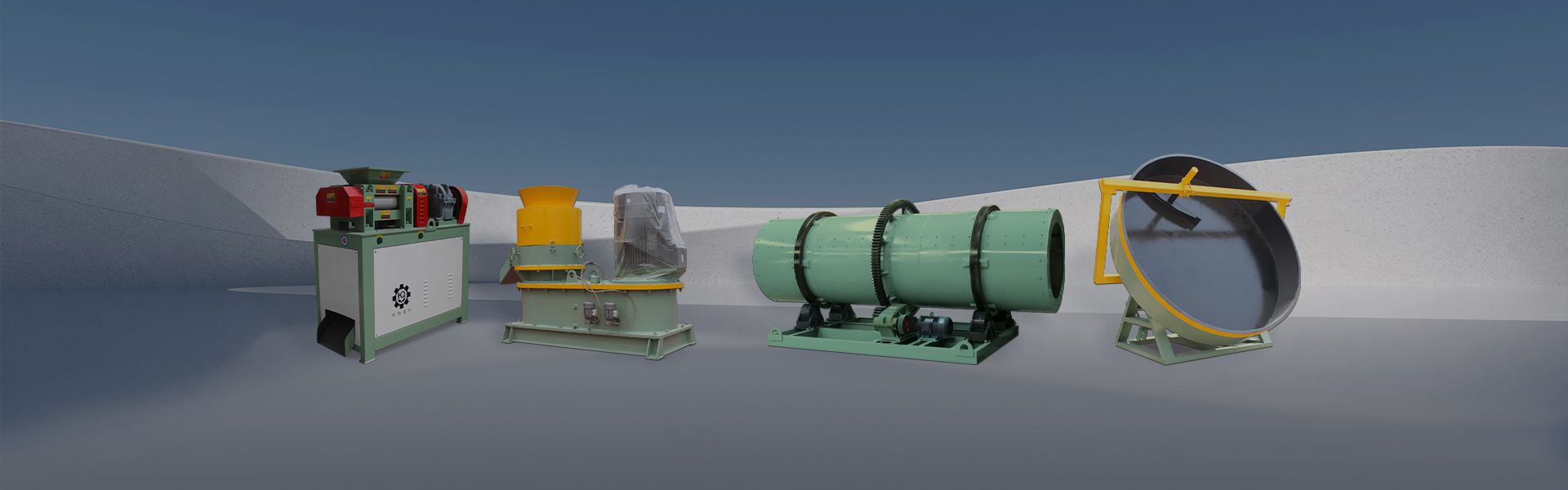
Post-processing Specialists: After fermentation, rotary screener machine come into play. They separate the finely decomposed finished product from undigested debris, ensuring fertilizer purity and effectiveness. Sometimes, pelletizers are used to compress powdered compost into granules for easier packaging, storage, and controlled nutrient release.
Monitoring & Control: Modern composting sites also rely on temperature probes, moisture sensors, and other monitoring devices. These act as the system’s “nerves,” providing scientific data to determine the optimal turning schedule.
A Symphony of Efficiency and Ecology
The ultimate goal of this equipment ensemble is to achieve large-scale resource cycling. It transforms agricultural waste, municipal green waste, and other burdens into treasures, reducing reliance on chemical fertilizers and improving soil health. Meanwhile, mechanized operations save significant labor and time, making large-scale, standardized organic fertilizer production viable. This directly supports sustainable agriculture and the circular economy.
Conclusion: Toward an Intelligent Green Future
From the powerful turning action to the precise coordination of the entire processing chain, modern composting equipment is upgrading the ancient art of composting into an efficient science. Technological progress continuously pushes these systems toward greater energy efficiency and intelligence. Investing in such a system is not just an investment in machinery; it’s an investment in a more fertile and vibrant future for our land.