
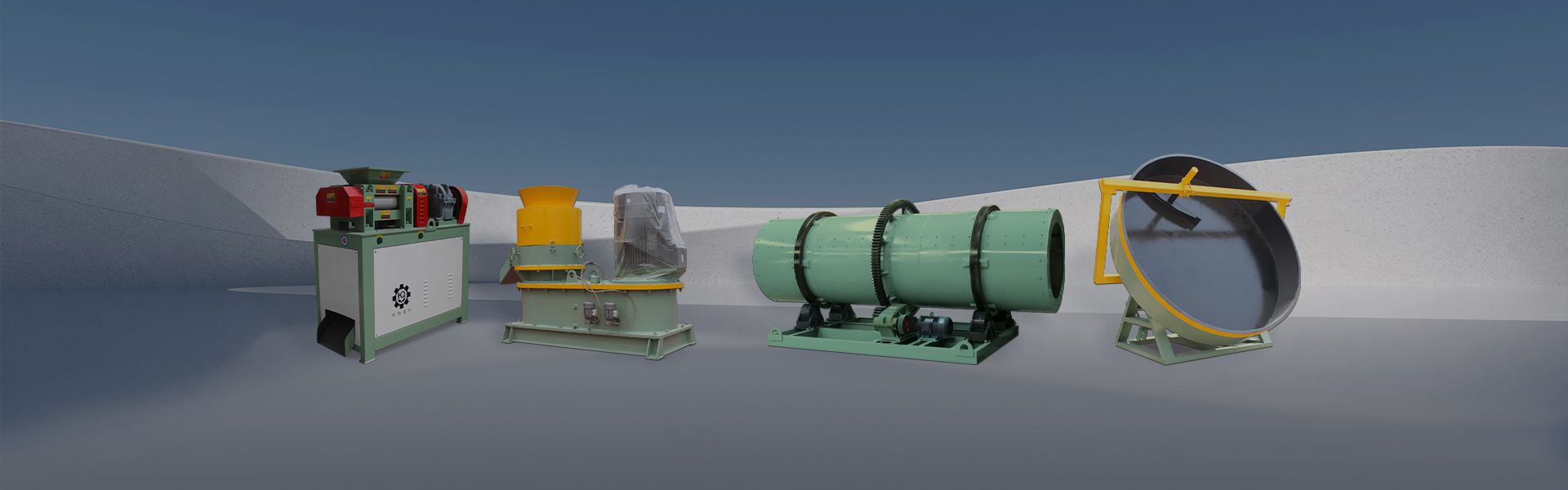
Driven by both the “dual carbon” goals and the circular economy policy, the resource utilization of industrial organic waste is evolving from an environmental responsibility into a strategic opportunity for enterprise development. Organic wastes such as sugar mill filter mud, pharmaceutical residue, municipal sludge, and food processing waste, if improperly disposed of, can cause environmental pollution and resource waste. However, through scientific fertilizer technology, they can be transformed into economically valuable organic fertilizers, achieving “turning waste into treasure.” Huaqiang Heavy Industry has developed a highly efficient and stable integrated solution for industrial organic waste to fertilizer production to meet this need, helping enterprises achieve a balance between environmental and economic benefits.
Precise Pre-treatment: Overcoming the Bottleneck in Industrial Waste Conversion
Industrial organic waste has a complex composition and diverse characteristics. The primary challenge in its resource utilization lies in differentiated pre-treatment.
Moisture and Physicochemical Property Control: For example, sugar factory filter sludge has a high sugar content and high moisture content, which can easily lead to rancidity if directly composted. It needs to be controlled to below 40% moisture content through sun-drying or mechanical dehydration. Some municipal sludge may contain heavy metals, requiring stabilization treatment with passivating agents such as montmorillonite and zeolite to ensure the final product meets the “Organic Fertilizer” (NY/T 525-2021) standard.
Safety and Harmless Treatment: Special wastes such as pharmaceutical factory residues may contain biologically active residues, requiring high-temperature sterilization or biodegradation pretreatment to completely eliminate their potential risks to the microbial fermentation process and the soil environment.
Homogeneous Crushing: Addressing the common problems of clumping and coarse fibers in industrial waste, Huaqiang Heavy Industry’s specially designed semi-wet material crusher can effectively process mixtures with a moisture content of 25%-55%, crushing them to a suitable particle size for fermentation, laying the foundation for subsequent processes.
High-Efficiency Fermentation and Granulation: Customized Processes Ensure Product Quality
The pre-treated materials enter the core biological fermentation and granulation stage, which directly determines the fertilizer’s maturity and commercial form.
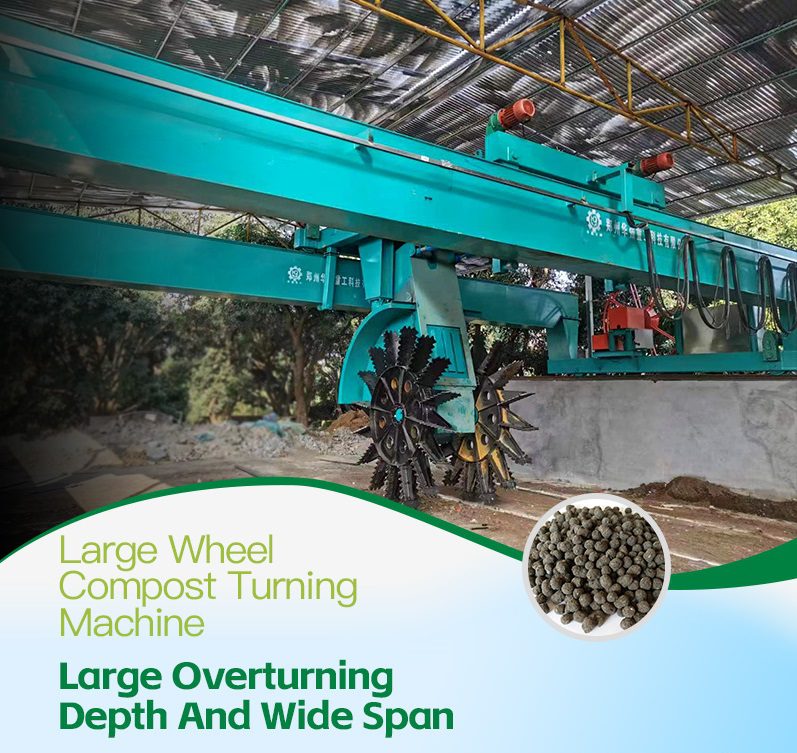
Enhanced Fermentation Process: Addressing the characteristics of industrial waste such as high cellulose content, imbalanced carbon-nitrogen ratio, and poor binding properties, Huaqiang Heavy Industry optimized the design of the compost turner, employing reinforced blades and an intelligent aeration system to improve material turning uniformity and oxygen supply efficiency. This ensures thorough high-temperature fermentation, killing pathogens, degrading harmful substances, and achieving waste stabilization and harmlessness.
Specialized Granulation Technology: Traditional granulation methods struggle to address the poor formability of industrial waste residue. Huaqiang Heavy Industry utilizes a two-in-one composite granulation technology, combining strong mechanical extrusion with appropriate binder assistance, effectively increasing the granule formation rate to over 85%. The finished granules are high-strength, not easily broken, and possess excellent commercial appearance and application performance.
III. Case Study: Dual Realization of Environmental and Economic Benefits
A biochemical pharmaceutical company in Shandong generates approximately 30,000 tons of pharmaceutical residue annually. Previously, landfill disposal was costly and posed environmental risks. After introducing Huaqiang Heavy Industry’s customized organic fertilizer production line, the company produces 18,000 tons of high-quality organic fertilizer annually through high-temperature sterilization, compounding, efficient fermentation, and molding of pesticide residues. This project not only saved the company millions of yuan in annual disposal costs but also created a new profit growth point through fertilizer sales. It is estimated that the production line can achieve a carbon dioxide emission reduction equivalent of approximately 5,000 tons annually, truly realizing the synergistic development of “environmental reduction” and “resource value enhancement.”
Solution Advantages: Integrated Services Empower the Circular Economy
Huaqiang Heavy Industry’s solutions not only provide individual equipment but also emphasize system synergy and service completeness:
Strong Process Customization Capabilities: Customized designs covering the entire process from pretreatment, fermentation, granulation to screening and packaging can be provided based on waste characteristics, production capacity requirements, and site conditions.
Intelligent Control and Environmental Compliance: An integrated intelligent sensing and control system monitors key parameters such as fermentation temperature, humidity, and oxygen in real time to ensure process stability; a waste gas collection and purification device is also included to achieve a clean production process.
Ongoing Service Support: We provide full-cycle services including process commissioning, personnel training, and operational guidance to ensure the long-term stable operation of projects.
Optimized Composting Systems for Industrial Waste
Following precise pretreatment, the core of converting industrial waste into fertilizer is the organic fertilizer fermentation process, which relies on advanced fermentation composting technology for organic fertilizer. For large-scale, controlled processing, trough-type aerobic fermentation composting technology is highly effective, utilizing reinforced turners that move along concrete channels to ensure consistent aeration and temperature. Alternatively, for more flexible or outdoor operations, a self propelled compost production machine can efficiently turn windrows. This suite of fermentation composting turning technology is fundamental to the equipments required for biofertilizer production. To achieve a consistent and nutrient-balanced final product, a multiple silos single weigh static batching system is often integrated upstream, ensuring precise formulation of the industrial waste with amendments (like microbial inoculants or carbon regulators) before they enter the fermentation stage. This combination of precise batching and robust aerobic composting forms the technological backbone for transforming heterogeneous industrial waste into stable, high-quality organic fertilizer.
Conclusion: Driving a Green Future with Technology
Converting industrial organic waste into organic fertilizer is a vivid example of the circular economy in agriculture. Huaqiang Heavy Industry, through technological innovation and engineering practice, has provided a reliable, efficient, and economical industrialization path for this process. For waste-generating enterprises, this is not only a choice to fulfill environmental and social responsibility, but also a strategic investment to tap potential value and cultivate new growth drivers. In the future, with continuous technological advancements and gradual policy improvements, the resource-based fertilizer production from industrial waste will undoubtedly become a vibrant new blue ocean in green manufacturing.