
What is the optimal temperature control during fermentation?
During the aerobic fermentation of organic fertilizer, the compost temperature is recommended to be controlled between 55°C and 65°C. This temperature range effectively kills most pathogenic bacteria, parasite eggs, and weed seeds, while providing the most active metabolic environment for aerobic microorganisms, significantly accelerating the decomposition and humification of organic matter.
- Why is 55°C–65°C the optimal range?
- Highly Effective Sterilization and Insect Killing, Achieving Harmlessness The core indicator of harmless composting is the duration of high temperature. When the compost temperature is maintained above 55°C for at least 5–7 days, it can effectively kill roundworm eggs (mortality rate ≥95%), E. coli, Salmonella, and other pathogenic microorganisms, as well as weed seeds, ensuring that the composted products meet the hygienic requirements of the “Organic Fertilizer” standard (NY/T 525-2021). 1. Temperatures below 50°C do not completely kill pathogens; temperatures above 70°C, while faster at killing bacteria, can excessively destroy beneficial active ingredients in organic matter.
- Promotes efficient decomposition by aerobic bacteria. Thermophilic aerobic bacteria in compost (such as Bacillus and Actinomycetes) exhibit peak activity of cellulase, protease, and lignin-degrading enzymes at 55°C–65°C. At this temperature, the decomposition rate of organic matter is fastest, the carbon-to-nitrogen ratio (C/N) decreases rapidly, humus is synthesized in large quantities, and the fermentation cycle can be shortened from 60 days in natural composting to 15–20 days.
- Risks of Abnormal Temperatures. Below 50°C: Compost enters the mesophilic stage. Thermophilic bacteria are active but their decomposition capacity is limited. Temperature rise is slow, mold may grow, fermentation is incomplete, and the finished product is prone to burning.
Temperatures above 70°C and sustained above this level: Thermophilic bacteria become overactive, rapidly consuming oxygen. If oxygen supply is insufficient, anaerobic fermentation occurs, producing foul odors such as hydrogen sulfide and ammonia. Simultaneously, excessively high temperatures inhibit microbial enzyme activity and may even kill the bacterial community, leading to fermentation stagnation.
III. How to Precisely Control Pile Temperature?
The core methods for temperature control are turning the pile for oxygen supply and moisture regulation:
Turning the pile: When the pile temperature exceeds 65°C, immediately start the turning machine to turn the material, mixing the high-temperature layer with the surface material, allowing for rapid cooling through natural heat dissipation; simultaneously, fresh air is introduced to restore an aerobic state. Generally, turning should be done every 1-2 days.
Moisture regulation: The material moisture content should be maintained at 50%-60%. Too dry (<40%) leads to microbial inactivation and difficulty in raising the temperature; too wet (>65%) clogs gaps and results in insufficient oxygen supply. Dry straw or moisture adjusters can be added to regulate moisture.
Ventilation: Trough fermentation systems can be equipped with bottom aeration pipes for forced ventilation to assist in temperature regulation.
- Temperature Monitoring Methods It is recommended to use a multi-point temperature measuring rod or a portable digital thermometer to measure the temperature at different depths of the compost pile (30cm, 60cm from the surface, and the center point) twice daily, once in the morning and once in the afternoon, and take the average value as the control basis. Recording the temperature curve can be used to judge the fermentation progress—when the pile temperature no longer rises for three consecutive days and tends to stabilize (close to the ambient temperature), it indicates that fermentation is basically complete.
In summary, strictly controlling the pile temperature within the range of 55°C–65°C is a core technical point for achieving the three major goals of “full decomposition, hygiene and safety, and high-efficiency production capacity.” In production, this must be ensured through standardized turning operations and real-time monitoring.
Precision Heating – The Heart of Aerobic Fermentation
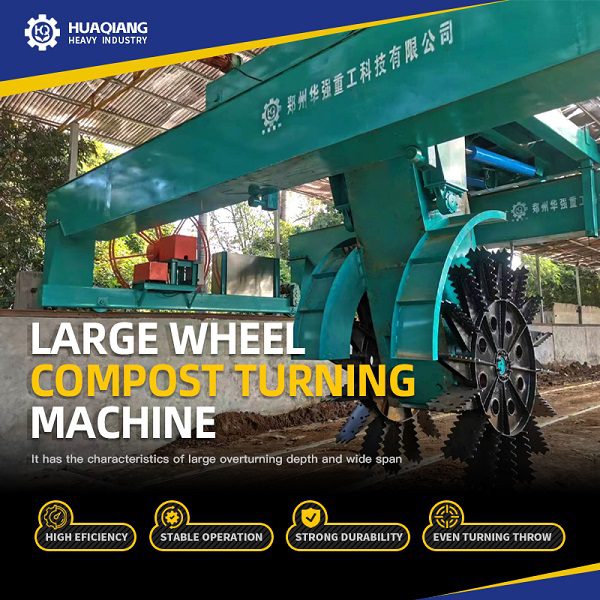
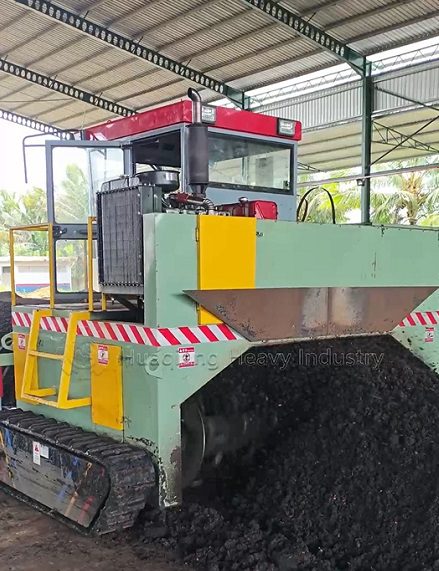
Mastering the 55–65 °C window is only half the battle; translating this knowledge into consistent industrial practice requires reliable fermentation composting turning technology. Whether you operate a trough-type compost turner for in‑vessel systems or a windrow composting machine for open piles, the turning frequency and depth directly determine temperature uniformity and oxygen diffusion. For large‑scale operations, the large wheel compost turning machine offers exceptional mixing capacity and span width, ensuring that even the core of massive windrows receives adequate aeration—preventing anaerobic zones and odor generation.
In practice, the chicken manure fermentation turning process exemplifies the need for adaptive control: poultry manure has high nitrogen content and tends to heat up rapidly, demanding more frequent turning and careful moisture adjustment to avoid overheating beyond 70 °C. After fermentation, the stabilized material can directly feed into a disc granulation production line, where the uniform particle size and humus‑rich composition greatly enhance granulation efficiency and product strength.
Ultimately, effective temperature management is not a standalone operation—it is an integrated system combining mechanical turning, aeration design, and real‑time sensing. By selecting the right turner for your plant layout and raw material characteristics, you transform a biological process into a predictable, high‑throughput engineering solution. Consistent temperature control, supported by robust turning equipment, is the undisputed cornerstone of premium organic fertilizer production.