
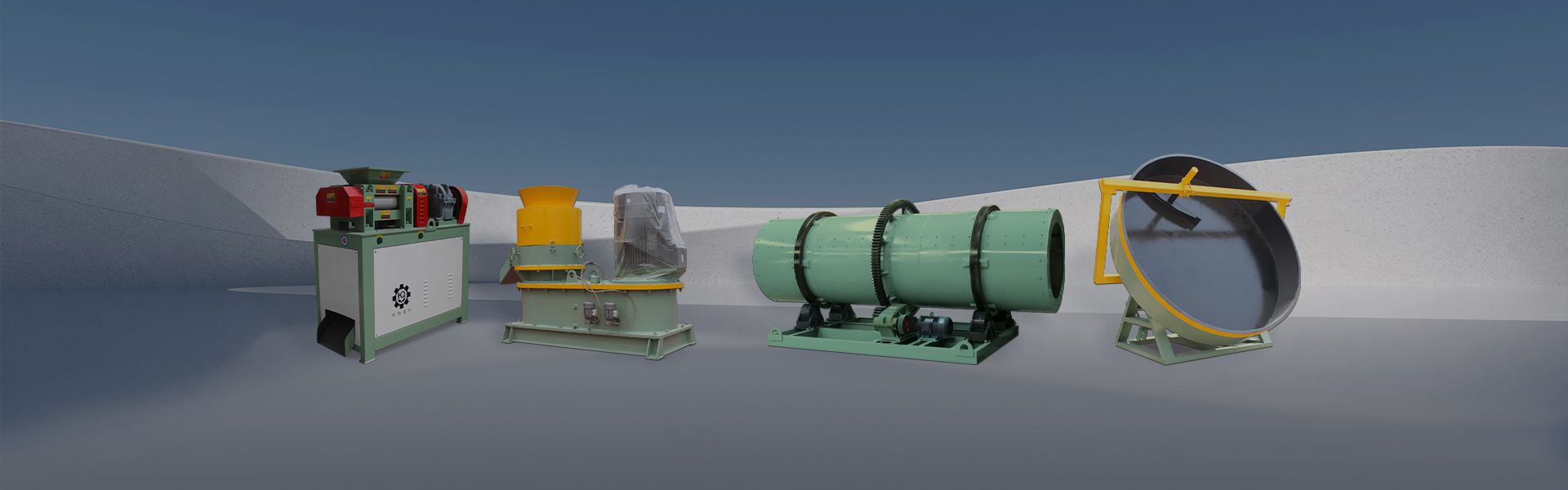
Is the “Drum + Disc” Combination Solution Worthwhile for a Medium-Sized Fertilizer Plant?
Whether the “Drum + Disc” combination solution is worthwhile for a medium-sized fertilizer plant depends on its specific production goals, product positioning, and investment budget. This combination is not a panacea, but rather a strategic choice for specific needs—balancing production capacity and granule quality.
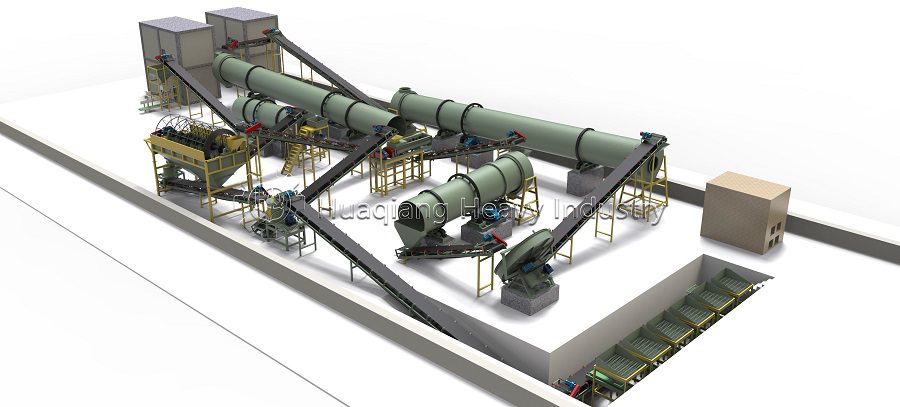
Core Value of the Combination Solution: Complementary Advantages
The core of the “Drum + Disc” combination lies in utilizing the respective advantages of the two pieces of equipment to achieve a “1+1>2” effect: Drum Granulator – Guarantee of Output and Strength: The drum granulator is an industrial-grade mass production equipment, with a single machine producing 10-50 tons per hour, suitable for 24-hour continuous operation. It produces granules with high strength and good uniformity, forming the cornerstone of large-scale production. Large compound fertilizer plants generally use it as their main equipment.
Disc Granulators – A Complement to Quality and Flexibility: Disc granulators have a simple structure and produce round, full granules with excellent quality. In combined systems, they are often used as secondary granulation or shaping equipment to “finish” the semi-finished products from the drum, improving the appearance quality of the granules. This series configuration effectively solves the problem of insufficiently round granules that may occur with single-drum granulation.
Cost Considerations: The Key to Cost-Effectiveness
While combined systems are advantageous, cost is a crucial factor that medium-sized plants must carefully consider:
High Investment Threshold: The investment for a single drum granulator typically ranges from 80,000 to 200,000 RMB, and also requires supporting systems such as steam, drying, and cooling. Including the disc granulator and related facilities, the overall investment is far higher than a single-equipment solution.
Increased Operating Costs: Drum granulators themselves have high energy consumption and require a large floor space. Combined systems mean additional operating, maintenance, and labor costs for the equipment. Data shows that, based on an annual production of 50,000 tons, a disc granulator alone saves 20,000 to 30,000 RMB in electricity costs compared to a drum granulator.
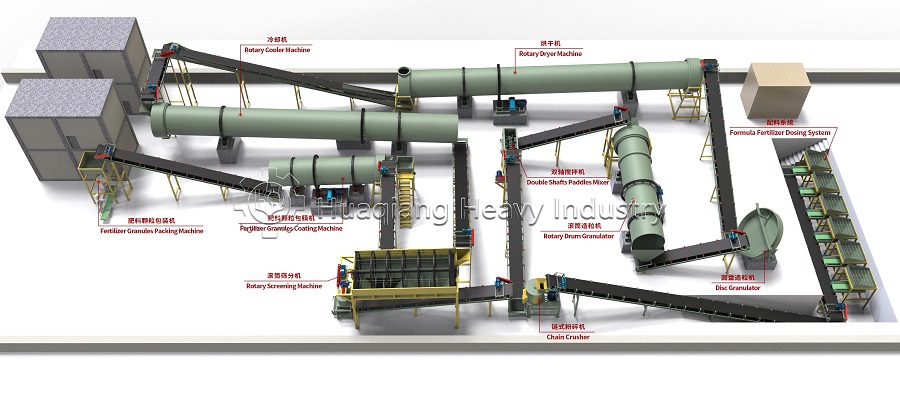
Cost-Effective Application Scenarios
This combination solution is more cost-effective in the following scenarios:
Pursuing High-Quality Commercial Fertilizers: When the product is positioned as a high-value commercial organic or compound fertilizer with strict requirements for granule appearance (roundness, gloss).
Handling Difficult-to-Granulate Materials: For special formulas that are difficult to granulate, such as organic-inorganic compound fertilizers, combined granulation can significantly improve the pelleting rate.
Diverse Product Range: When a single production line needs to flexibly switch between producing different varieties and particle sizes of fertilizers.
Conclusions and Recommendations
For most medium-sized fertilizer plants, if the product is mainly targeted at the bulk wholesale market and the requirements for granule appearance are not extremely stringent, then selecting a single rotary drum granulator with matching capacity may be a more cost-effective choice.
The “rotary drum + disc” combination is more suitable for medium-sized plants that “want to produce quality and are willing to invest in it.” It is recommended that before making a decision, the target output, product positioning (whether to focus on quantity or quality), and specific requirements for the finished granules should be clearly defined, and then the return on investment period should be comprehensively evaluated. For medium-sized factories with limited budgets, transitional solutions such as “large disc + hot process” are also worth considering.