
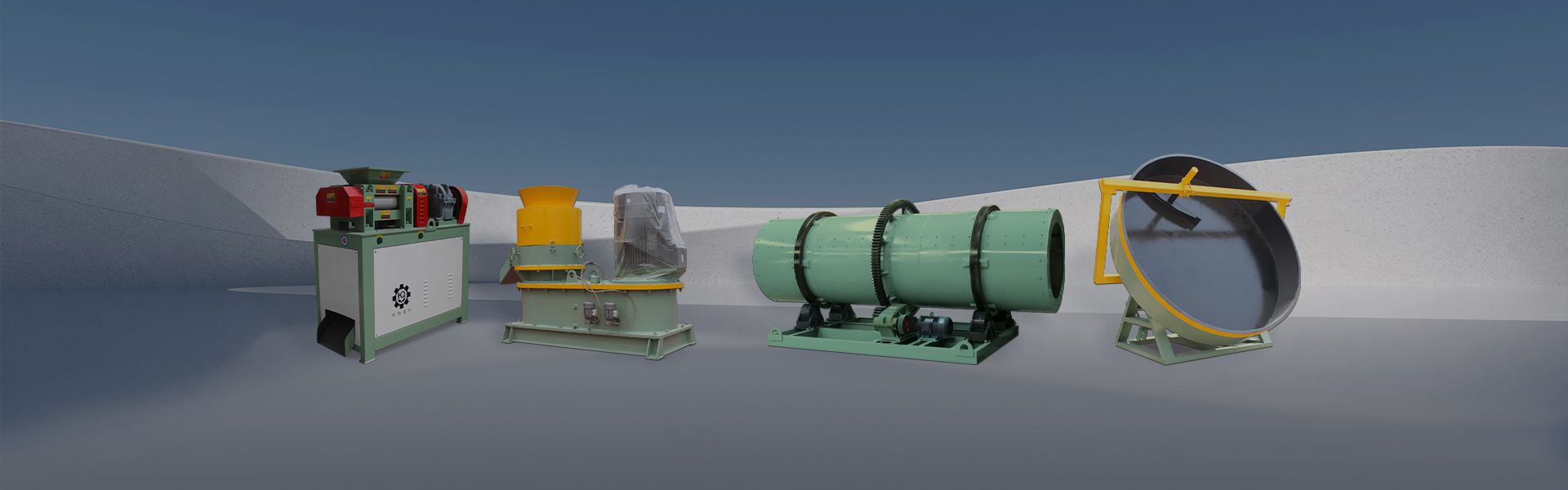
Jingxian County in Ningxia has a concentrated livestock breeding industry, resulting in a large output of cattle and sheep manure waste. Previously, a simple composting and fermentation method was used, which suffered from long fermentation cycles, uneven decomposition, odor pollution, and low production capacity. To improve the standardization of organic fertilizer fermentation, a local organic fertilizer processing plant built a new trough-type fermentation production line. On July 31, 2025, the installation, alignment, commissioning, and no-load testing of our company’s large-scale rotary compost turner were completed.
The large-scale rotary compost turner deployed this time is a large wheel type specialized fermentation equipment, suitable for standard fermentation troughs with a width of 3-6 meters. It has a maximum turning depth of 1.8 meters, a wide turning coverage area, and high operating efficiency. The equipment can process 800-1000 cubic meters of fermented material per hour, making it suitable for large and medium-sized organic fertilizer production projects. The equipment adopts a heavy-duty disc mixing structure with a thickened, wear-resistant blade, offering excellent impact and wear resistance. It excels at breaking up mixtures of cow and sheep manure and straw, enabling rapid turning, aeration, and oxygen supply, thus solving problems of material caking and anaerobic odor.
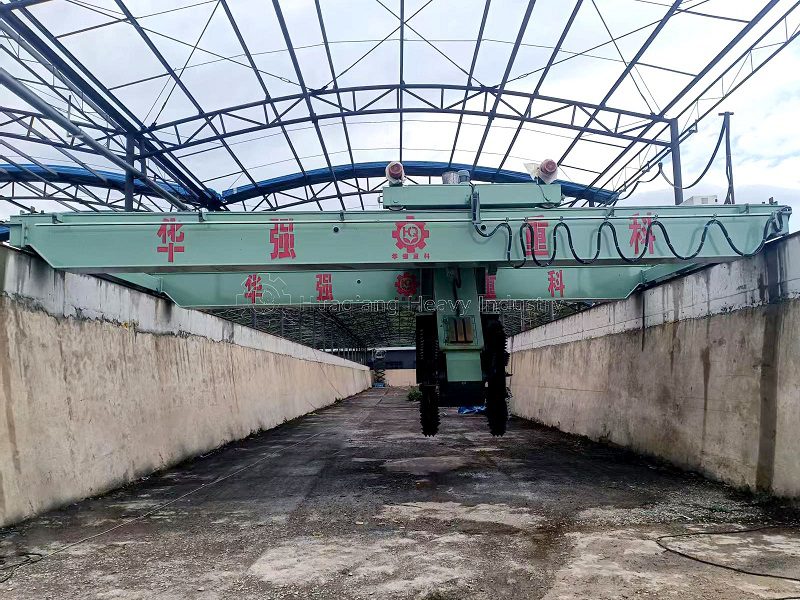
Considering the dry, windy, and high-temperature-difference conditions of Northwest Ningxia, the entire machine utilizes anti-corrosion and rust-proof processes. The transmission system is equipped with a dustproof sealing device to effectively resist wind and sand intrusion and reduce equipment failure rates. The equipment features a variable frequency speed control system, allowing adjustment of the walking speed and turning frequency based on the material’s moisture content and pile height, precisely controlling the fermentation temperature and shortening the conventional fermentation cycle to 15-18 days.
Our technical team completed on-site equipment frame calibration, track leveling, and electrical control system debugging. Simultaneously, they provided specialized training to plant operators on equipment inspection, speed control, and replacement of vulnerable parts. After successful commissioning, the equipment will completely achieve the harmless and resource-based treatment of local manure and wastewater, ensuring stable quality of the fermented product and providing core equipment support for large-scale commercial organic fertilizer production.