
In organic fertilizer production, compost turning equipment operates continuously in harsh environments characterized by high humidity, corrosiveness, and high dust levels, inevitably leading to various malfunctions. Equipment downtime not only affects production progress but can also cause anaerobic fermentation and foul odors in the compost pile. Mastering the quick troubleshooting and solutions for common faults can minimize downtime. This article outlines three typical faults in chain plate and wire stack compost turning machines, providing a practical guide from “phenomenon-cause-solution.”
Fault 1: Incomplete Turning and Insufficient Oxygen Supply to the Compost Pile
The symptoms include material remaining compacted after turning, insufficient or excessively high pile temperature, accompanied by an ammonia or rotten egg smell. The causes are usually threefold: insufficient chain tension causing slippage of the turning blades and insufficient turning depth; scraper wear exceeding 1/3, failing to effectively grasp material; and excessively slow rotation speed resulting in insufficient throwing force.
Quick troubleshooting steps: After stopping the machine, check the chain deflection. If it exceeds 20mm, adjust the tensioning device to 10-15mm. Visually inspect the scraper wear; replace the entire set when wear exceeds 1/3 of its length. Gradually increase the speed by 10%-20% using the frequency converter and observe the turning effect. If the problem is still unsatisfactory, check if the blade assembly is entangled in fibers; clean it and try again.
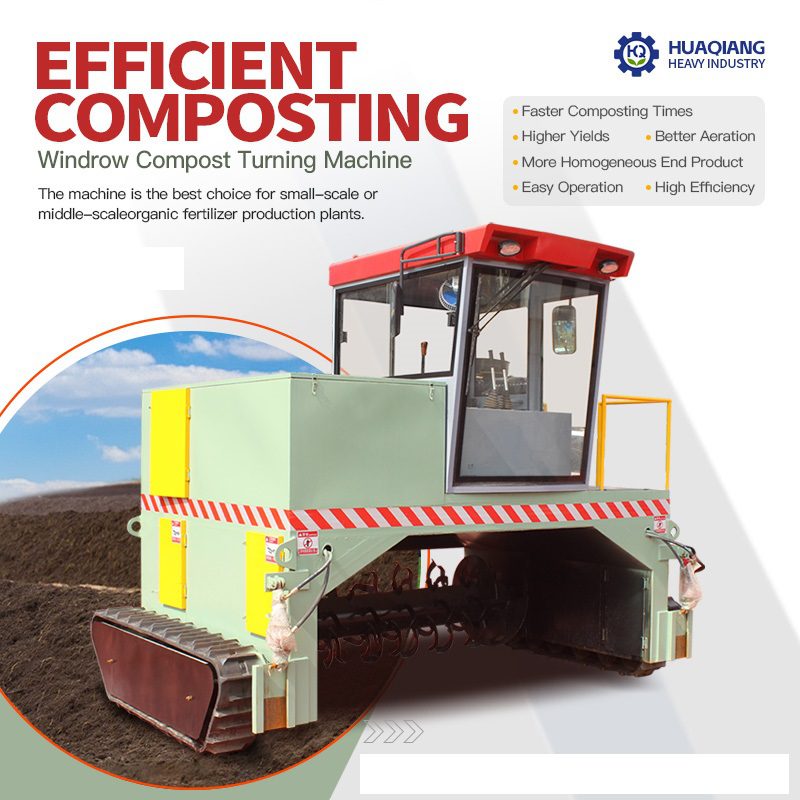
Fault 2: Equipment jams or cannot move. Self-propelled compost turners may experience difficulty moving, deviation from direction, or even become immobile after prolonged operation in muddy areas or after extended periods of use. Causes include: insufficient tire pressure (for large-wheel compost turners) or excessively loose track tension (for tracked compost turners), leading to increased ground contact area and resistance; slippage or breakage of the drive chain or belt; and material accumulation in the track of trough-type compost turners, causing the wheels to jam.
Quick Troubleshooting Steps: 1. Check tire pressure, maintaining it at approximately 0.7 MPa; inflate if insufficient. 2. For tracked equipment, adjust the tension cylinder to control track sag within 10-15 mm. 3. Check the drive chain for breakage or looseness; adjust or replace if necessary. 4. Clean any loose material from the track and check for jammed wheel bearings. If the motor runs normally but the equipment does not move, the gears inside the reducer may be damaged and require disassembly and replacement.
Fault 3: Raw Material Adhesion to the Walls and Scaling on the Scraper During the turning process, material adheres to the cutter roller, housing, or scraper, increasing the load and reducing turning efficiency. The main cause is excessively high raw material moisture content (>70%), or failure to clean promptly after shutdown, resulting in hardened residue.
Quick Troubleshooting Steps: 1. Immediately stop the machine. Use a high-pressure water gun or air gun to clean the adhered material, being careful to avoid electrical components. 2. Adjust the raw material pretreatment process; dehydrate fresh manure through a screw press until the moisture content is ≤60% before loading. Add 5%-10% dry auxiliary materials such as straw and rice husks during the mixing process to reduce overall stickiness. For equipment that frequently sticks to the walls, a scraper device can be installed above the cutter roller for real-time cleaning.
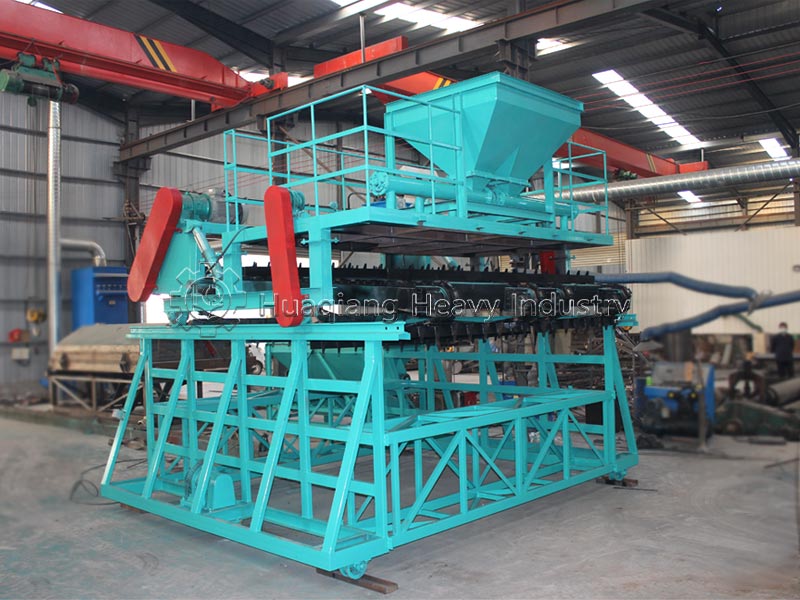
Preventive Maintenance Recommendations: After daily operation, residual material must be removed from the cutter roller, chassis, and hopper. Check the condition of vulnerable parts such as chains, scrapers, and tires weekly. Add bearing grease every 200 hours. Establish an equipment operation log to record fault phenomena and handling measures for future traceability.
Whether operating a large wheel compost turner for large-scale windrows, a chain compost turner or trough-type compost turner for intensive trough systems, or a flexible windrow composting machine, the principles of fault diagnosis remain consistent. Incomplete turning, often caused by chain tension or scraper wear, can affect any agriculture waste compost fermentation machine. Equipment jamming, due to tire pressure, track tension, or drive chain issues, is another common challenge. Material adhesion to walls and scraper scaling is particularly prevalent with high-moisture feedstocks, a problem that a trough-type compost turner with its enclosed design may mitigate, but which all turners must address through proper pre-treatment and post-shift cleaning. Mastering the quick troubleshooting steps—from checking chain deflection and tire pressure to using high-pressure cleaning—is essential for operators of any fermentation composting turning technology. A proactive maintenance routine, including daily cleaning and weekly inspections of vulnerable parts, is the key to minimizing downtime and ensuring the reliable, long-term operation of any agriculture waste compost fermentation machine.