
Pig manure is highly favored among organic fertilizer raw materials due to its rich nutrients and balanced nitrogen, phosphorus, and potassium ratio. However, pig manure has a high protein content and high viscosity, making it prone to adhering to the inner walls of equipment during granulation. This can result in irregular granule shapes or even equipment blockage and production interruption. How to smoothly transform viscous pig manure into uniform granules has become a technical challenge for many organic fertilizer producers. Solving this problem requires a comprehensive approach focusing on three aspects: ingredient optimization, moisture control, and equipment adaptation.
Causes of Viscosity and Ingredient Optimization
The viscosity of pig manure mainly stems from its high protein content and undigested feed residue. These substances form a colloidal state in a moist state, easily adhering to metal surfaces. The solution is not simply to reduce viscosity, but to add 20%-30% loosening auxiliary materials, such as rice husks, sawdust, and corn stalks, during the fermentation stage. These additives not only dilute the protein concentration but, more importantly, form a “skeleton” within the material, disrupting the formation of continuous colloids and transforming the material from a viscous paste into loose granules. The addition of these additives also adjusts the carbon-to-nitrogen ratio, providing more balanced nutrition for microorganisms and promoting fermentation and decomposition.
Moisture Control: Precision is Key The moisture content of the material before granulation is the core parameter determining the degree of adhesion. The ideal moisture range for pig manure granulation is extremely narrow—18%-22%. Below this range, the material is dry and hard, difficult to shape, and the granules are loose and brittle; above this range, moisture forms a liquid film on the surface, significantly increasing adhesion. In practice, the moisture content can be adjusted by mixing additives or by using high-volume air turning and natural dehumidification during the later stages of fermentation. For batches with large fluctuations in moisture content, it is recommended to add a buffer silo before the granulator, using an online moisture meter for real-time monitoring, automatically adjusting the feeding speed or adding dry material to ensure that the moisture content of the material entering the granulator remains stable within the target range.
Equipment Compatibility: Active Anti-sticking Design
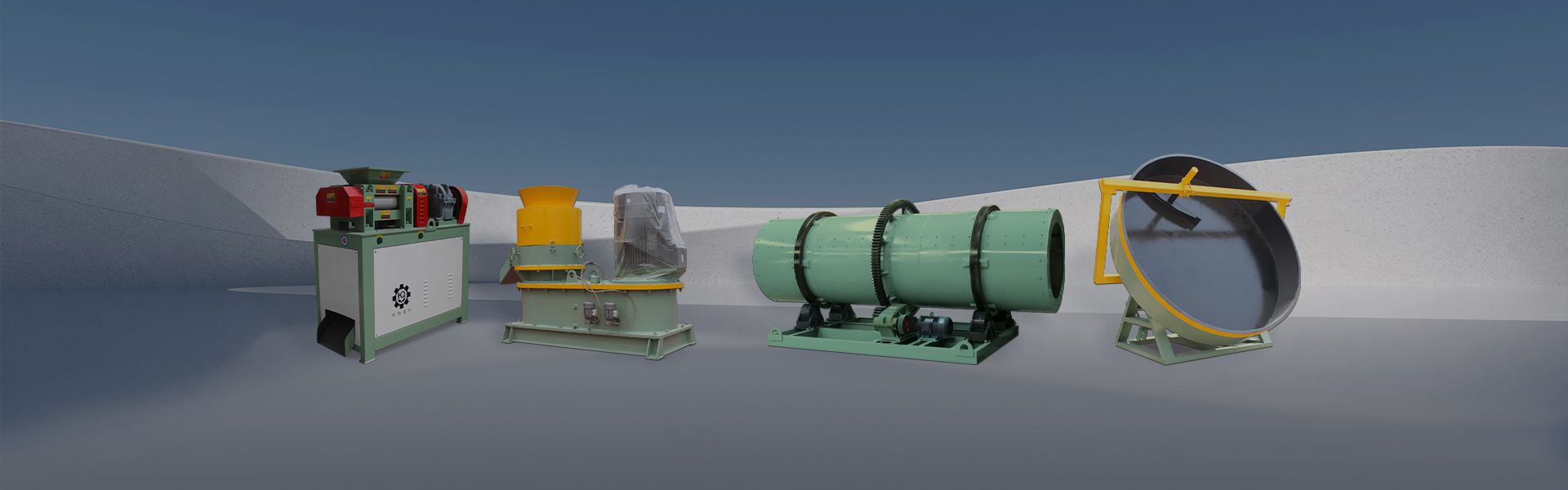
Given the sticky nature of pig manure, granulation equipment must possess active anti-sticking capabilities. When using a disc granulator, an automatic scraper device should be installed. The scraper adheres closely to the bottom and wall of the disc, cleaning adhering material in real time during operation to prevent the material layer from thickening. When using a drum granulator, a self-cleaning lifting plate should be installed on the inner wall to achieve dynamic peeling using the material’s own gravity.
For enterprises seeking efficient and continuous production, hydraulic roller granulators are a better choice. Their core advantage lies in the forced feeding system—a variable frequency speed-regulating screw forcefully pushes the material into the roller gap, ensuring stable feeding even with a certain degree of stickiness. The scraper device on the roller surface cleans simultaneously, preventing material accumulation on the roller surface. The constant high pressure provided by the hydraulic system instantly compacts the sticky material into shape within the roller gap, significantly reducing its residence time on the inner wall of the equipment. After adopting this process, a pig manure treatment project at a certain farm extended its continuous operating time from 2 hours to 72 hours, increasing production efficiency by 3 times. The granulated particles need to be dried as soon as possible. Low-temperature, high-volume drying (≤60℃) can quickly evaporate surface moisture, forming a “hard shell” on the particle surface to prevent the particles from sticking together again during transportation. After screening and before packaging, 1%-2% anti-caking powder can be sprayed to further isolate direct contact between particles.
Pig manure granulation is a balance between raw material characteristics and process precision. By optimizing the ingredient mix to reduce viscosity, precisely controlling the moisture range, and using active anti-sticking equipment, the originally troublesome viscous material can be stably transformed into high-quality organic fertilizer with uniform particles and smooth surfaces, making the resource utilization of pig manure smoother.
Pig Manure Granulation: Pre-Treatment and Composting
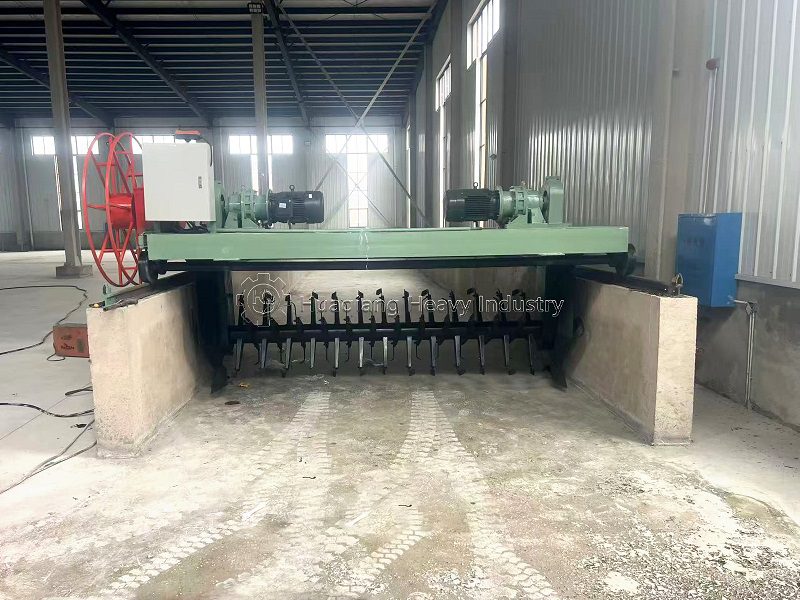
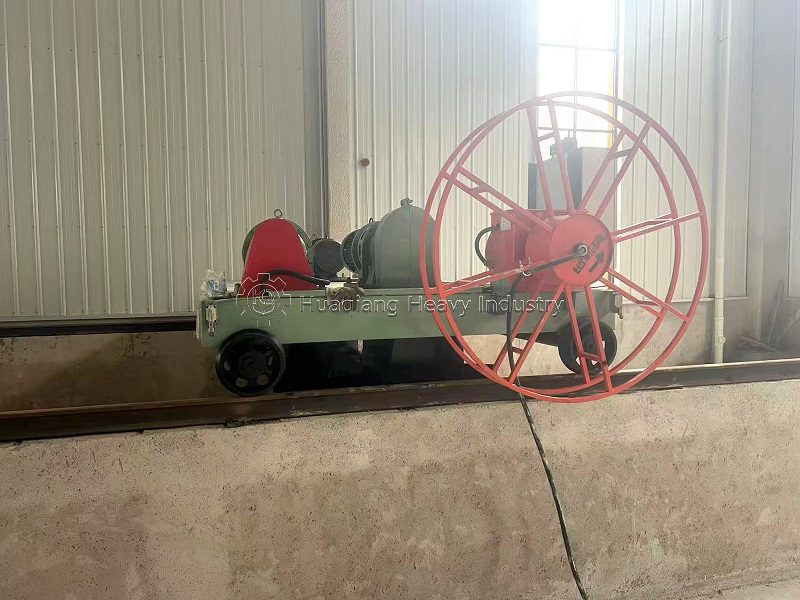
The detailed approach to pig manure granulation begins long before the material reaches the granulator. The key to managing its inherent stickiness starts in the fermentation stage. Adding loosening agents like rice husks or sawdust is crucial, but their effectiveness is maximized by a well-managed organic fertilizer fermentation process. This is where the choice of fermentation composting turning technology becomes critical. For large-scale pig farms, a trough-type compost turner operating within a trough-type aerobic fermentation composting technology system offers precise control over the composting environment, ensuring the added agents are uniformly mixed and the material is fully decomposed. For smaller operations or farms with open space, a large wheel compost turner or a windrow composting machine can efficiently handle the pre-treated manure, turning it regularly to promote uniform decomposition. A robust chain compost turner is also a versatile option. These agriculture waste compost fermentation machines are fundamental equipments required for biofertilizer production. A well-executed composting process, guided by appropriate turning technology, is the first and most critical step. It transforms the viscous, problematic raw manure into a more stable, structured material with a reduced propensity to stick, creating an ideal foundation for the subsequent granulation stage.