
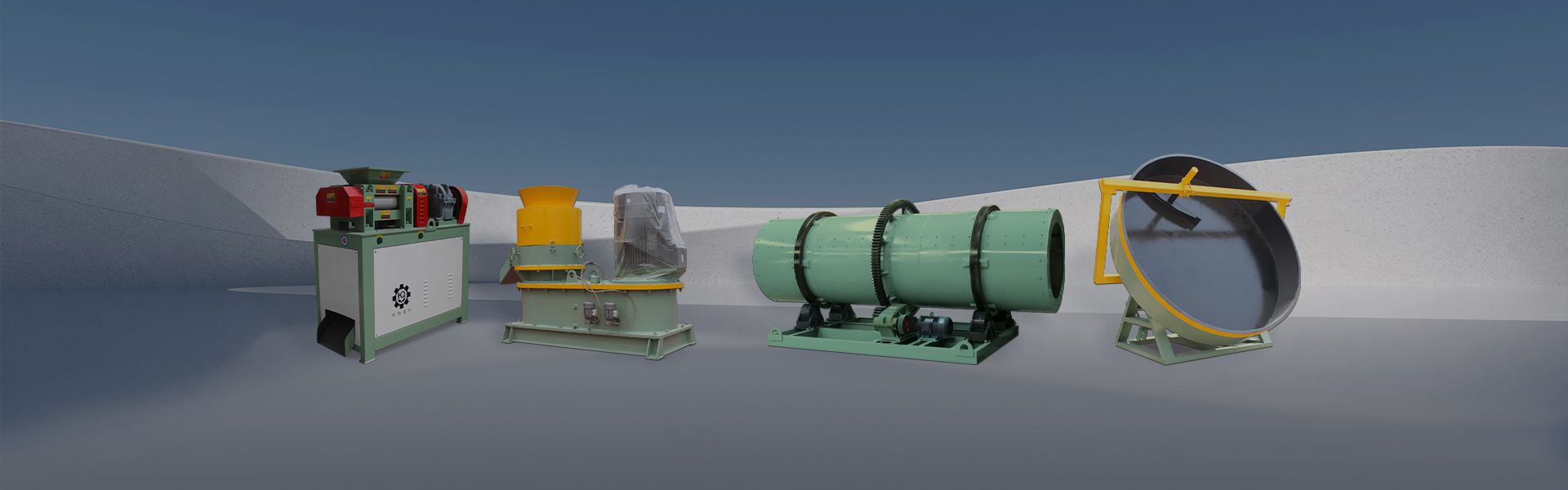
Where lies the key to high crop yields? The answer may lie in the precise operation of the NPK compound fertilizer production line. This production line, integrating technology and efficiency, takes nitrogen, phosphorus, and potassium as the core and links various professional fertilizer equipment to customize “nutritional packages” for farmlands around the world, revitalizing every inch of land.
The start of the npk fertilizer production line is an art of precise proportioning. Raw material pretreatment equipment takes the lead, crushing and screening raw materials such as urea, monoammonium phosphate, and potassium chloride, removing impurities to turn them into fine powder. Then, the batching scale, like a rigorous nutritionist, accurately weighs each component according to crop needs, with an error controlled within the gram level, laying the foundation for balanced nutrients.
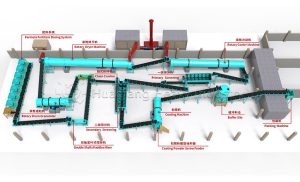
Mixing and granulation are the “core stage” of the production line. The double axis mixer rotates at high speed, allowing different raw materials to fully blend in a closed space to form a homogeneous mixture. Subsequently, the double roller press granulator presses the mixture into uniform particles, and the rotary drum granulator further polishes them into shape, making the particles round, smooth and not easy to agglomerate. At this point, the dryer and cooler connect seamlessly, controlling the moisture content of the particles within the optimal range to lock in every nutrient.
Subsequent links are equally indispensable. The screening machine selects particles of consistent specifications, while defective products are sent back for reprocessing by the return system to achieve zero waste. The coating machine puts a “protective coat” on the particles, slowing down nutrient release to meet the needs of crops throughout the growth period. Finally, the packaging machine accurately measures and seals bags quickly, and bags of high-quality NPK fertilizer are ready for the field.
From raw materials to finished products, this production line interprets precision with technology. It is not only suitable for food crops such as corn and wheat but also meets the special needs of fruits and vegetables. On European and American farms and African fields, it has left traces of boosting harvests. The NPK production line, with professional equipment and rigorous processes, guards the stability and hope of global agriculture.