
Premium WordPress theme for construction companies, contractors, builders, and a variety of other construction-related businesses.
-
28238 Kelsie Lane Apt. 451,
Port Annabelport
-
Call Us: (210) 451-123
(Sat - Thursday)
-
Monday - Friday
(10am - 05 pm)
Tons Bag Fertilizer Packing Machine
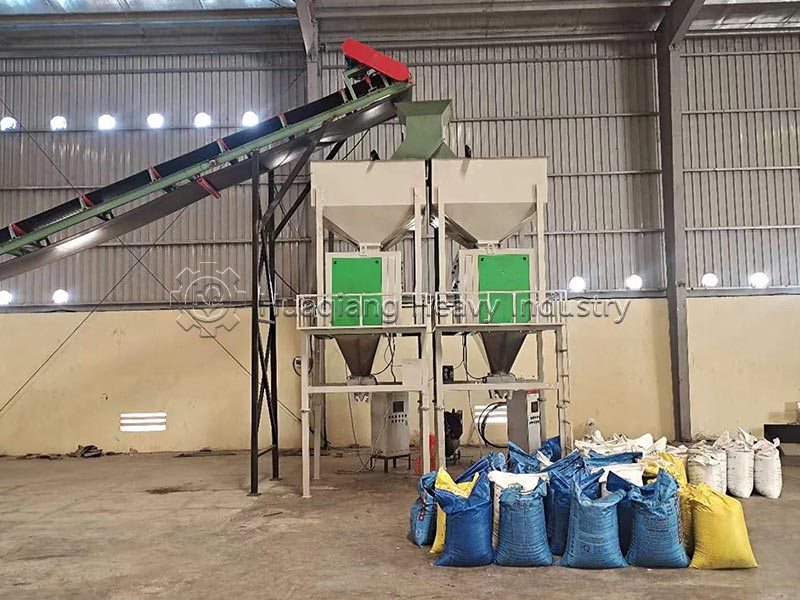
Equipment Introduction
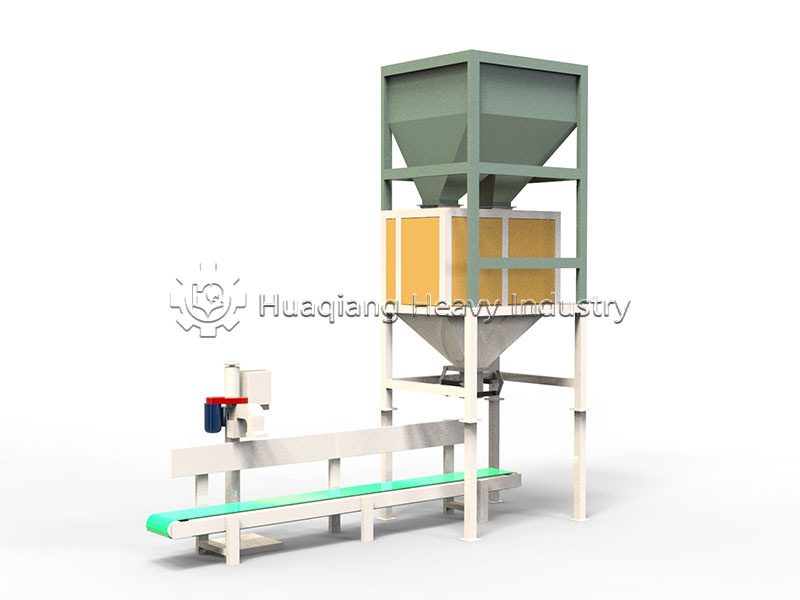
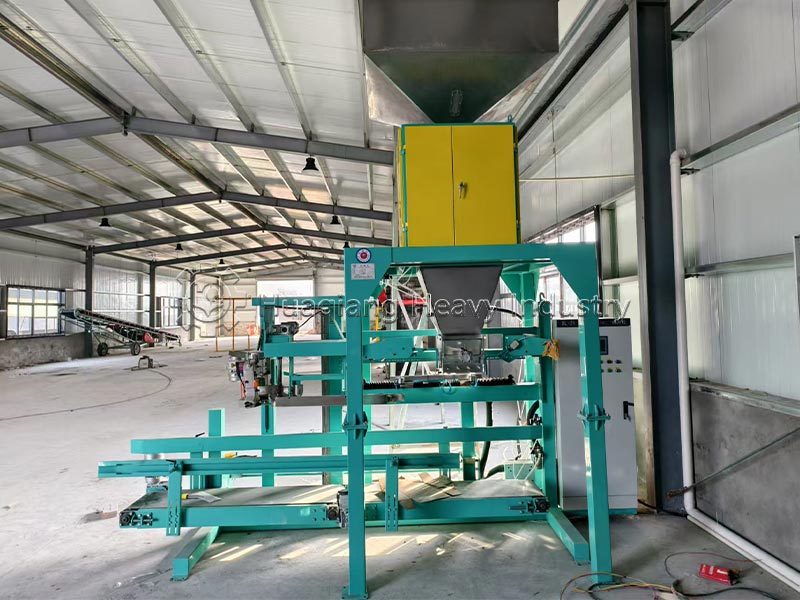
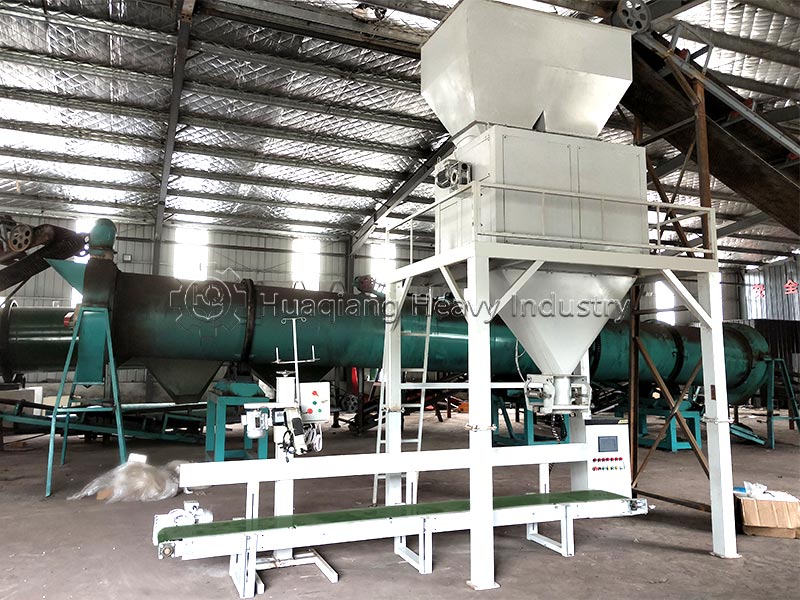
The ton bag fertilizer packaging machine, also known as a ton bag machine, large bag packaging machine, or ton bag packaging scale, is a large-scale packaging equipment specifically designed for weighing and packaging bulk materials such as fertilizers into bags ranging from 500 to 2000 kg/bag.
The ton bag fertilizer packaging machine is a core piece of equipment for bulk packaging at the end of the fertilizer production line. It integrates electronic weighing, automatic bag removal, and dust removal, offering a high degree of automation, high packaging accuracy, and adjustable packaging speed. This equipment is suitable for large-bag packaging of powdery, granular, flake, and small block fertilizers, and is a crucial link between finished product warehousing and logistics transportation.
Equipment Structure and Components
The ton bag fertilizer packaging machine mainly consists of the following systems:
- Feeding and Feeding System
Includes a buffer hopper and feeding device (screw feeder, gravity feeder, or vibratory feeder, etc.). It adopts a variable speed feeding mechanism, consisting of an adjustable speed motor, belt drive, screw shaft, and feeding nozzle. A dust suction port is provided next to the feeding nozzle.
- Weighing System
A metering and control system is composed of high-precision sensors (accuracy up to 0.02%) and high-resolution control instruments. The weighing frame is connected to the sensor, transmitting the material weight signal to the electrical box. Based on the metering method, it is divided into net weight type (material is weighed before being placed in the bag) and gross weight type (material is directly weighed after entering the bag).
- Bag Hanging and Clamping System
Includes bag hanging hooks, pneumatic bag clamping devices, and a lifting mechanism. The four corner straps of the ton bag are manually hung on the hooks, and the discharge port is fitted onto the sealed discharge port. The lifting function can accommodate ton bags of different sizes.
- Control System: The PLC-based electrical control system features both automatic and manual operation modes. It can perform functions such as parameter setting, weighing calibration, automatic tare, automatic zeroing, automatic drop correction, out-of-tolerance alarm, and fault self-diagnosis. It is equipped with a communication interface for easy network connection and remote monitoring.
- Dust Removal System: A dedicated dust removal device is provided to simultaneously remove dust that overflows with the air during the feeding process, preventing on-site dust pollution.
- Conveying System: The packaged ton bags are transported to the designated location via roller conveyors, belt conveyors, or forklifts.
Working Principle of the Equipment
The workflow of the ton bag fertilizer packaging machine is a semi-automatic or fully automatic closed-loop control process:
Step 1: Manual Bag Loading (Semi-automatic) or Automatic Bag Loading (Fully Automatic)
In semi-automatic models, the operator hangs the four straps of the ton bag on the hook and places the discharge port over the sealed discharge port. In fully automatic models, this is accomplished by the automatic bag loading system.
Step 2: Bag Clamping and Automatic Tare
The bag clamping and sealing switch is activated, clamping the bag opening onto the discharge pipe. The weighing system automatically tares and zeros the weight, deducting the weight of the empty bag.
Step 3: Graded Feeding
The feeding mechanism feeds material at two speeds (high and medium, or fast and slow):
Fast Feeding: The feeding screw rotates at high speed, quickly filling the bag.
Slow Feeding: The feeding speed decreases as the material approaches the set value, ensuring accuracy.
The feeding method can be selected based on the material characteristics: gravity feeding, screw feeding, vibratory feeding, or belt feeding.
Step 4: Weighing and Judgment
The sensor monitors the weight in real time and stops feeding when the set value is reached. Packaging accuracy is typically ±0.1% to ±0.6%.
Step 5: Bag Release and Hook Unhooking
After weighing, the bag-pressing cylinder releases the bag opening, and the hook automatically unhooks. The packaged bag falls onto the conveyor equipment.
Step 6: Conveying and Palletizing
The packaged ton bags are transported to the warehouse or loading area via conveyor equipment.
Summary table of application scope and applicable raw materials for ton bag fertilizer packaging machines
| Classification | Application Field / Material Category | Specific Description |
|---|---|---|
| Application Scope | Fertilizer Industry (Core Application) | Complete ton‑bag packaging for powdered organic fertilizer, bio‑organic fertilizer, humic acid fertilizer, compound fertilizer, compound nitrogen‑phosphorus‑potassium fertilizer, urea, phosphate fertilizer, potash fertilizer, ammonium sulfate and other chemical fertilizer raw materials. |
| Chemical & Pesticide | Used for ton‑bag filling and packaging of chemical raw materials, pesticides, rubber, plastics, inorganic salts and other materials. | |
| Mining & Building Materials | Ton‑bag packaging for cement, iron powder, copper powder, various mineral powder, superfine powder and nano‑powder. | |
| Grain & Feed | Realize ton‑bag filling and packaging for grain and various feed materials. | |
| Other Industries | Suitable for bulk material ton‑bag packaging conditions in coal, metallurgy, pharmaceutical, energy mineral and many other industries. | |
| Applicable Raw Materials | Fertilizer Materials | Powdered organic fertilizer, bio‑organic fertilizer, compound fertilizer granules, NPK compound granules, urea, phosphate fertilizer, potash fertilizer and other fertilizer raw materials, water‑soluble fertilizer, humic acid fertilizer. |
| Other Types of Materials | Powders: talcum powder, kaolin, ground calcium carbonate, titanium dioxide, carbon black, etc. Granules: plastic pellets, chemical fiber pellets; flake and small‑lump bulk materials. | |
| Material Adaptation Requirements | Prioritized for loose and low‑viscosity materials. Vibratory feeding mechanism can be equipped for poor‑flow materials. Excessive moisture or lump size may cause feeding blockage, pre‑treatment is required in advance. |
Application of Ton Bag Packaging Machines in Fertilizer Production Lines
(I) Complete Process Link: Granulation/Crushing Section → Drum Screen → Finished Product Silo → Bucket Elevator → Ton Bag Fertilizer Packaging Machine → Belt Conveyor → Sealing/Pallet Palletizing → Warehouse/Truck Transportation
(II) Section Support Logic
- Large-volume Export Support: Supports bulk raw material shipments from fertilizer plants and full-truckload shipments from farms/agricultural wholesalers in ton bags, replacing a large number of 25/50kg small bags and significantly reducing packaging and transportation labor costs;
- Raw Material Transfer and Recycling: Fermentation raw materials and purchased mineral powder in ton bags are directly fed into the batching section after warehousing;
- Dual-line Parallel Solution: The production line is simultaneously equipped with small bag packaging machines and ton bag packaging machines at the back end, accommodating both retail small bag and bulk ton bag orders;
- Dust Closed-Loop Recovery: Fine fertilizer powder collected during filling and dust removal is returned to the buffer silo, resulting in zero raw material loss.
Standard Operation and Full Lifecycle Maintenance
(I) Start-up and Shutdown Procedures
Start-up Procedure
- Check that the hopper is free of clumps, the sensors are free of fertilizer buildup, the dust collector filter is unobstructed, and the air pressure is stable at 0.5–0.7 MPa;
- First, start the dust collector, vibrating platform, and arch-breaking motor, and run them unloaded for 2 minutes;
- Retrieve the corresponding fertilizer formula on the touchscreen, perform zero-point calibration of the weighing, and begin bagging production after confirming that the accuracy meets the standards.
Shutdown Procedure
- Stop the front-end lifting and feeding mechanism, and wait for all material to be emptied from the hopper and feeding mechanism;
- Turn off the feeding, dust collector, and vibrating motors in sequence;
- Clean the weighing bridge and sealing skirt of any residual fertilizer, and loosen the lifting hook cylinder for long-term storage. (II) Tiered Maintenance
- Daily Inspection: Clean dust from the load cells, check the operation of the hooks, clamps, and cylinders, and calibrate the zero point of the weighing system every shift;
- Weekly Maintenance: Lubricate the feed gate/screw and drive chain with grease, and clean the dust collector filter bags;
- Quarterly Maintenance: Replace the gear oil in the reducer with new gear oil, and check the sensor wiring and shock absorber pads for aging and cracking;
- Annual Overhaul: Replace aged sealing skirts and damaged dust collector filter bags, and fully calibrate the accuracy of the weighing system.
(III) List of Vulnerable Parts
Dust collector sealing skirt, pulse filter bag, load cell, cylinder seal ring, screw blade (powder type), gate wear-resistant liner, lifting hook.
Target Customers for this Equipment:
- Large-scale Fertilizer Manufacturers: Manufacturers of organic fertilizers, compound fertilizers, and BB fertilizers with an annual output of tens of thousands of tons, requiring large-volume shipments. Ton bag packaging is standard for industrial-grade fertilizer products.
- Fertilizer Raw Material Manufacturers: Manufacturers of fertilizer raw materials such as urea, phosphate fertilizer, potash fertilizer, and ammonium sulfate; ton bag packaging is the industry standard.
- Export-oriented Fertilizer Companies: Exported fertilizers typically use ton bag packaging for easy container transport and port handling.
- Chemical and Mining Companies: Companies requiring large-bag packaging for chemical raw materials and non-metallic mineral powders.
- Companies Building or Expanding Fertilizer Production Lines: Fertilizer production projects requiring a complete packaging system. Ton bag packaging machines can be combined with small bag packaging machines, allowing for flexible switching between the two specifications. 6. Key Selection Points:
Material Characteristics Priority: For powdery materials, choose screw feeder with strong dust removal; for granular materials, choose gravity feeder.
Accuracy Requirements: For general fertilizers, choose ±0.4%-0.6%; for high-end products, choose ±0.1%-0.2%.
Capacity Matching: Calculate the required packaging speed based on daily output, allowing for a 10%-20% margin.
Automation Level: In areas with high labor costs, prioritize fully automatic models.