
Have you ever watched a potter work with clay? The way raw, stubborn earth yields to heat and becomes something pliable, something moldable? That’s exactly the kind of transformation happening inside a melting pot—except instead of clay, it’s molten urea, ammonium nitrate, or potassium salts swirling at just the right temperature, waiting to be reborn.
Walk up to a melting pot on a fertilizer production line, and you’ll feel its warmth before you hear its quiet hum. This isn’t the flashy star of the show—it won’t form granules or package final product—but ask any experienced plant operator, and they’ll tell you: get the melt wrong, and nothing else matters. The melting pot is where precision meets patience.
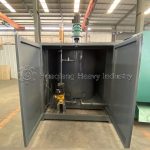
So what happens inside this sturdy vessel? Solid raw materials enter, often in the form of prills or crystals, and encounter carefully controlled heat. Not too fast—thermal shock can degrade sensitive compounds—and not too slow, because production schedules wait for no one. The pot’s design, usually jacketed for steam heating or electric tracing, ensures every particle surrenders to liquid state at exactly the same moment. It’s a gentle, thorough embrace.
But here’s where things get interesting. Modern melting pots aren’t just passive heating chambers anymore. They’ve evolved into intelligent blending stations. Imagine walking up to a control panel and watching real-time viscosity data flow across a rotary screener machine. Sensors embedded in the pot wall detect the slightest variation in melt consistency, automatically adjusting temperature or agitation speed. Some advanced systems even inject micro-nutrients or stabilizers directly into the melt stream, creating homogeneous liquid formulations that would have seemed like science fiction a generation ago.
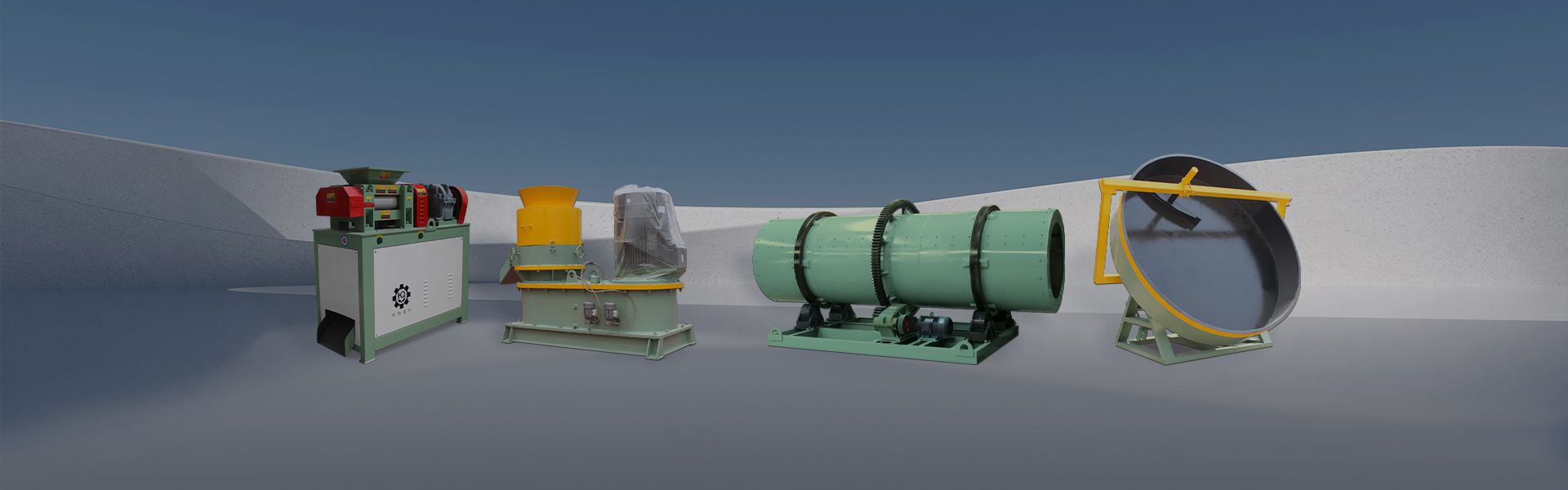
And the melting pot doesn’t work alone. It’s part of a beautifully choreographed sequence: once the melt reaches perfect fluidity, it flows—sometimes by gravity, sometimes pumped—the disc granulator. High above, nozzles spin or drip, turning that hot liquid into a cascade of falling droplets that cool into perfect spheres before they hit the ground. The melting pot’s job is to ensure every one of those droplets carries the exact same composition, the exact same potential.
What I find most fascinating, though, is how these pots handle diversity. One day they’re melting urea for straight nitrogen fertilizer; the next, they’re blending NPK melts with suspended fillers or trace elements. The best melting pots shrug off this variety, switching recipes with minimal downtime and zero cross-contamination. They’re the unsung heroes of flexibility in modern fertilizer plants.
From the outside, a melting pot might look like just another industrial tank—cylindrical, insulated, functional. But stand next to one during a production run, and you’ll sense something different. You’ll feel the steady pulse of transformation, the quiet confidence of a machine that knows exactly what it’s doing. It takes disparate solids, applies just enough energy, and delivers a uniform liquid that will eventually feed crops halfway across the world.
Next time you see a field of healthy corn or lush vegetables, remember: somewhere, a melting pot played its part in that story. It’s where the journey from raw chemical to living soil truly begins.