
Premium WordPress theme for construction companies, contractors, builders, and a variety of other construction-related businesses.
-
28238 Kelsie Lane Apt. 451,
Port Annabelport
-
Call Us: (210) 451-123
(Sat - Thursday)
-
Monday - Friday
(10am - 05 pm)
Mobile Belt Conveyor
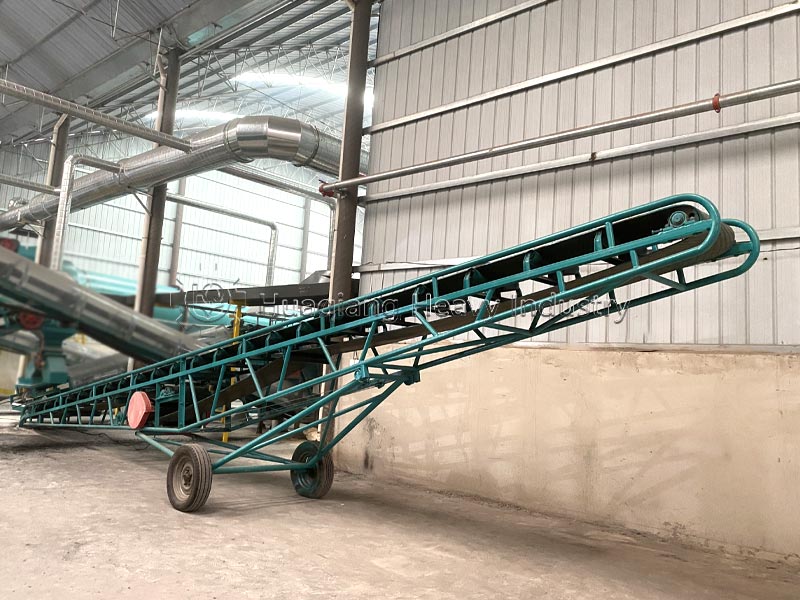
Equipment Overview
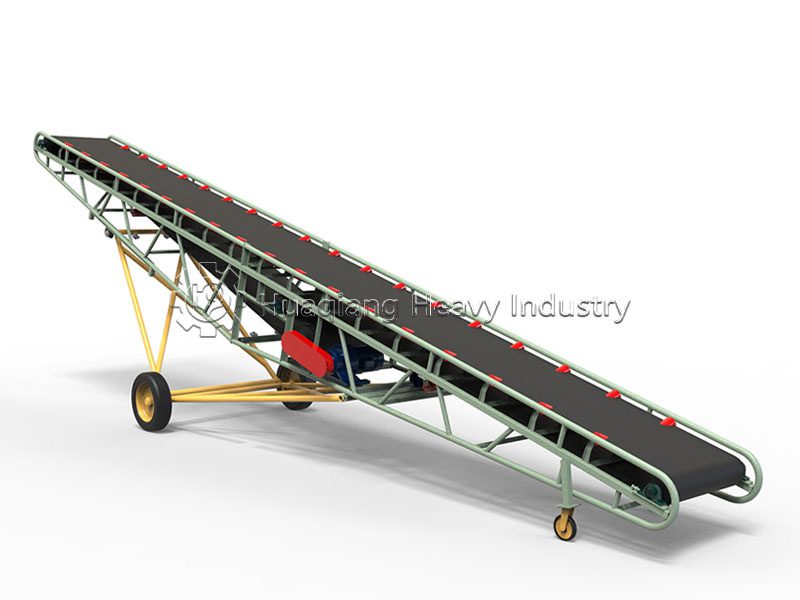
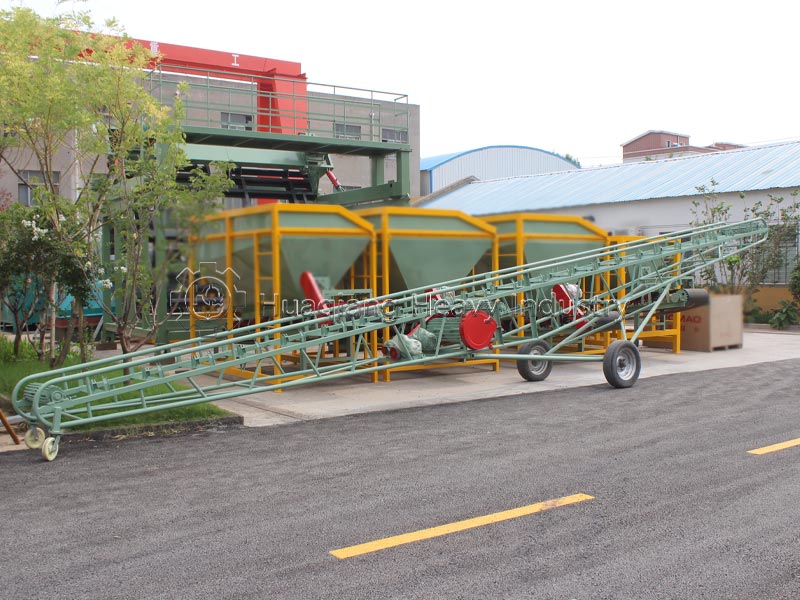
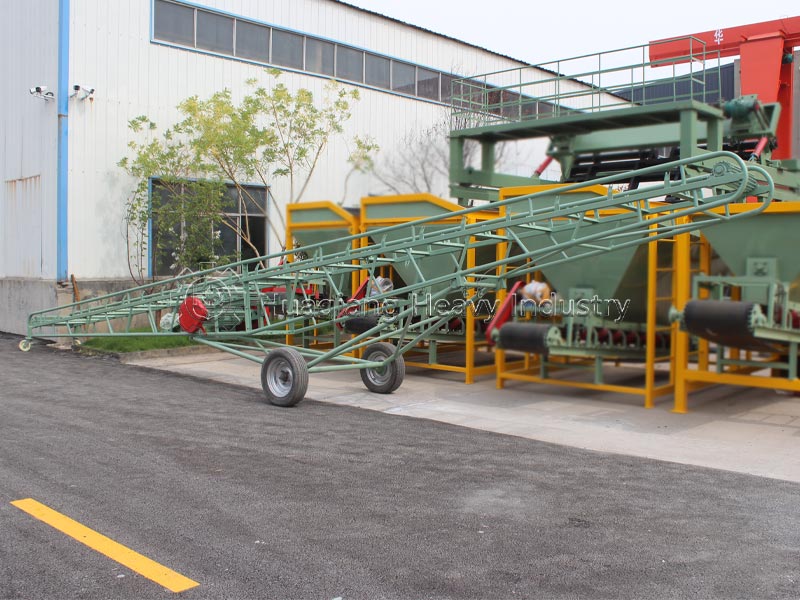
A mobile belt conveyor is a specialized conveying device that adds a traveling mechanism and lifting adjustment function to a fixed belt conveyor. It retains the core advantages of belt conveyors—continuous conveying, large capacity, and low energy consumption—while achieving mobility through casters or a tire chassis, eliminating the need for foundation fixing and allowing for rapid relocation. It is hailed as a “walking conveyor artery.”
Compared to fixed belt conveyors, the core value of a mobile belt conveyor lies in its flexible deployment—it can move quickly between different work sites such as warehouses, docks, construction sites, and grain depots. With the help of hydraulic or manual lifting systems to adjust the conveying height, it can flexibly connect with trucks, silos, and storage yards.
Equipment Structure Composition
| Equipment Classification | Structural Parts / Special Modules | Function Description |
|---|---|---|
| Belt Conveyor Main Core Parts | Conveyor Belt | Flexible closed‑loop component for carrying materials. Usually made of wear‑resistant rubber (bulk material) or PVC/PU (packaged goods). Optional herringbone pattern to enhance anti‑skid capacity. |
| Belt Conveyor Main Core Parts | Drive Unit | Combination of motor, reducer and coupling to supply power for whole machine. Power range: 0.75‑15 kW, determined by load and length. |
| Belt Conveyor Main Core Parts | Roller Set | Drive roller (head active), redirecting roller (tail return). Surface rubber‑coated for higher friction. |
| Belt Conveyor Main Core Parts | Idler Set | Trough‑shaped carrying idlers support loaded belt; parallel return idlers support return section. Some models install buffer idlers to absorb material impact. |
| Belt Conveyor Main Core Parts | Tensioning Device | Screw tensioning or heavy‑weight tensioning, maintain proper belt tension and prevent slipping. |
| Belt Conveyor Main Core Parts | Frame | Welded steel frame; light‑duty type adopts aluminum alloy. Channel steel / square tube structure ensures overall rigidity. |
| Mobile Conveyor Special Modules | Travel Mechanism | Heavy‑duty inflatable tires or universal casters. Front directional wheels, rear universal wheels for pushing / towing movement on flat or rough ground. |
| Mobile Conveyor Special Modules | Lifting Device | Manual screw lifting or hydraulic cylinder lifting, adjust conveying inclination and discharging height (common range:1.5‑6 m). |
| Mobile Conveyor Special Modules | Feed Hopper | Large‑capacity feeding hopper with movable baffle to avoid material overflow. Some models are equipped with breaking blades for lump‑material feeding. |
| Mobile Conveyor Special Modules | Support Legs | Telescopic support legs + ground base plates. Lower and lock legs during operation to prevent displacement. |
| Mobile Conveyor Special Modules | Protection Device | Side guide baffles, tail guard rail, emergency‑stop switch, belt cover to guarantee operation safety. |
Working Principle
The mobile belt conveyor operates based on the principle of friction drive, similar to a conventional belt conveyor:
- Power Output: The motor’s speed is reduced and torque increased via a reducer, driving the head drive roller to rotate;
- Friction Traction: A tensioning device maintains sufficient positive pressure between the conveyor belt and the drive roller, generating friction to drive the belt continuously;
- Material Loading: Material is evenly fed onto the conveyor belt through the feed hopper, supported by trough rollers and moving synchronously with the belt;
- Unloading and Return: After reaching the head of the conveyor, material is unloaded by gravity; the empty belt is deflected back via the tail deflector roller, returning to the feed end for the next cycle.
Mobility Characteristics: Before operation, the equipment is pushed to the target position via the traveling mechanism, and the support legs are lowered and locked; the frame tilt angle (typically 10°–26°) is adjusted via the lifting device according to the height of the truck bed or hopper to achieve precise docking.
Application Scope
Mobile belt conveyors, characterized by their “mobility, flexibility, and immediate usability,” are primarily used in the following scenarios:
| Industry Field | Typical Application Scenarios |
|---|---|
| Grain & Agriculture | Bulk grain (corn, wheat, soybean) loading‑unloading and stacking in granary, drying yard and wharf; work together with grain scraper and cleaning sieve. |
| Logistics & Express | Truck loading and unloading in warehouse and sorting center; replace manual handling to reduce labor intensity. |
| Mining & Quarrying | Temporary stockpiling and material transfer in quarry and aggregate plant; cooperate with crusher and vibrating screen to form mobile crushing line. |
| Construction Site | Short‑distance lifting & transfer of foundation earthwork, construction waste and sand‑stone materials; pass through narrow passages. |
| Port & Wharf | Auxiliary loading and unloading for bulk cargo ships and barges; flexible connection between warehouse and cargo hold. |
| Manufacturing | Temporary conveying for raw material warehousing and finished‑goods outbound inside factory; material circulation between assembly lines. |
Target Customers:
- Small and medium-sized organic fertilizer, compound fertilizer, and bio-fertilizer production plants with limited storage space and frequently changing transfer points;
- Large-scale livestock and poultry breeding groups and fruit and vegetable planting cooperatives with self-built simple fertilizer production workshops;
- Enterprises engaged in the resource-based and environmentally friendly disposal of sludge and kitchen waste, requiring temporary transfer of outdoor composting raw materials;
- Agricultural input storage and fertilizer trading distribution centers, with frequent loading and unloading of bagged fertilizer trucks;
- Fertilizer complete equipment suppliers, providing flexible feeding equipment for small production lines;
- Grain, feed, and small-scale chemical powder processing plants.
Application Technology of Mobile Belt Conveyor in Fertilizer Production Line
Production Line Connection Logic: Complete Fertilizer Main Line: Raw Material Warehouse → Fixed Belt Conveyor → Crusher → Mixer → Granulator → Dryer → Cooler → Coating Machine → Screening → Finished Product Warehouse
Mobile Belt Conveyor Connection Points:
1) Raw Material Stockpile → Mobile Belt Conveyor → Crusher Inlet (Temporary feeding for outdoor composting, can be moved at any time);
2) Screening Fine Powder Outlet → Mobile Belt Conveyor → Front-end Mixer (Fine powder is recycled for re-granulation, temporary setup without civil engineering);
3) Packaging Machine Outlet → Mobile Belt Conveyor → Truck Cargo Box (Flexible loading of bagged fertilizer, adaptable to different vehicle types and parking locations).
Common Faults, Causes, and Standardized Solutions
| Fault Phenomenon | Root Causes | Professional Solutions |
|---|---|---|
| Belt continuous deviation | 1. Head‑tail rollers not parallel; 2. Material feeding off‑center; 3. One‑side idler stuck; 4. Light slipping of body brake | 1. Adjust tail screw tensioner to calibrate rollers; 2. Lengthen feed chute for centered feeding; 3. Replace stuck idler; 4. Tighten wheel brake and lower stable support legs |
| Belt slipping, roller idling | 1. Insufficient belt tension; 2. Material dust accumulated on roller surface; 3. Over‑feeding | 1. Adjust tail screw to increase tension; 2. Stop machine and clean roller surface; 3. Reduce feeding speed and feed evenly |
| Material sliding down at large inclination angle | Belt without anti‑slip ribs, smooth belt surface, inclination angle over 22° | Replace with herringbone anti‑slip belt; lower lifting support to reduce inclination angle |
| Whole unit pushing stuck, difficult steering | Material lumps wrapped around walking wheels, lack of wheel shaft lubrication, tire wear or air leakage | Clear debris around wheels, inject grease into wheel shaft, replace damaged tires |
| Hydraulic lifting fails to raise / lower | Insufficient hydraulic oil, cylinder seal leakage, hydraulic pump failure | Refill hydraulic oil, replace oil seal, inspect and repair hydraulic power unit |
| Heavy or stuck manual lifting screw rod | Screw rod surface rust, adhesive material dust | Clean blockages on screw rod, apply anti‑rust lubricating grease |
Mobile belt conveyors are an organic combination of stationary belt conveyors and motorized chassis. Their core competitive advantages lie in their simple structure, lack of foundation requirements, immediate usability, and adjustable height, filling the gap in flexible conveying between fixed conveyor lines and temporary work sites. In fields such as grain storage, mining, logistics loading and unloading, and construction, mobile belt conveyors have become indispensable motorized conveying equipment by reducing manual handling, shortening material transfer distances, and improving loading and unloading efficiency. When selecting a model, key considerations should be given to frame rigidity, lifting method, tire/wheelset configuration, and belt material to ensure the equipment maintains reliability and durability under both frequent movement and continuous operation.