
Premium WordPress theme for construction companies, contractors, builders, and a variety of other construction-related businesses.
-
28238 Kelsie Lane Apt. 451,
Port Annabelport
-
Call Us: (210) 451-123
(Sat - Thursday)
-
Monday - Friday
(10am - 05 pm)
Large Angle Belt Conveyor
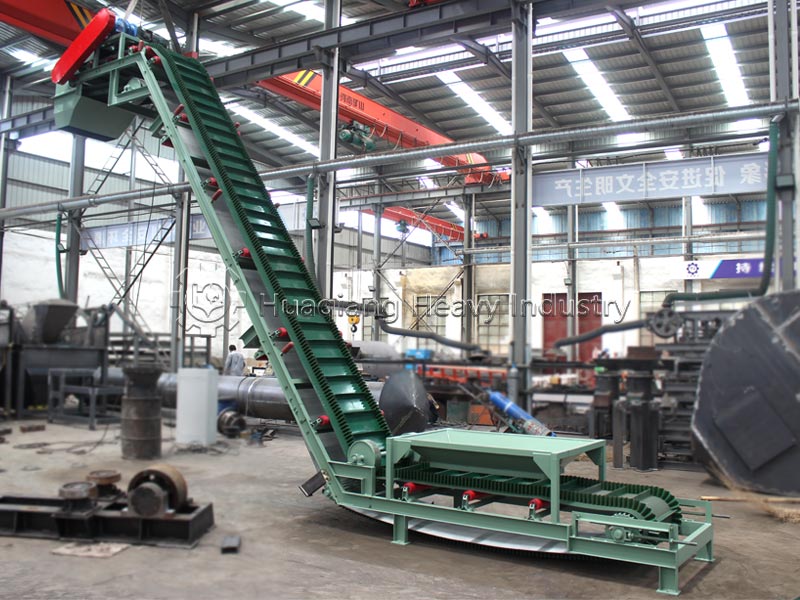
Equipment Introduction
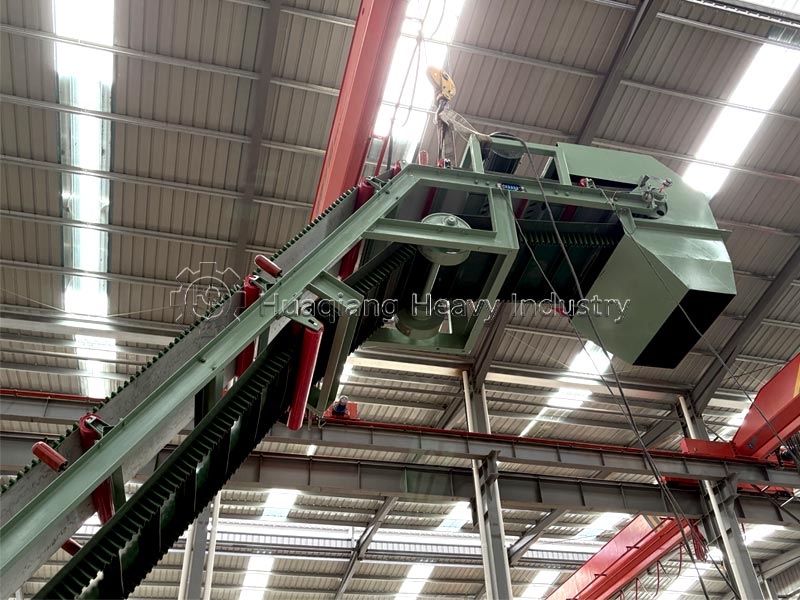
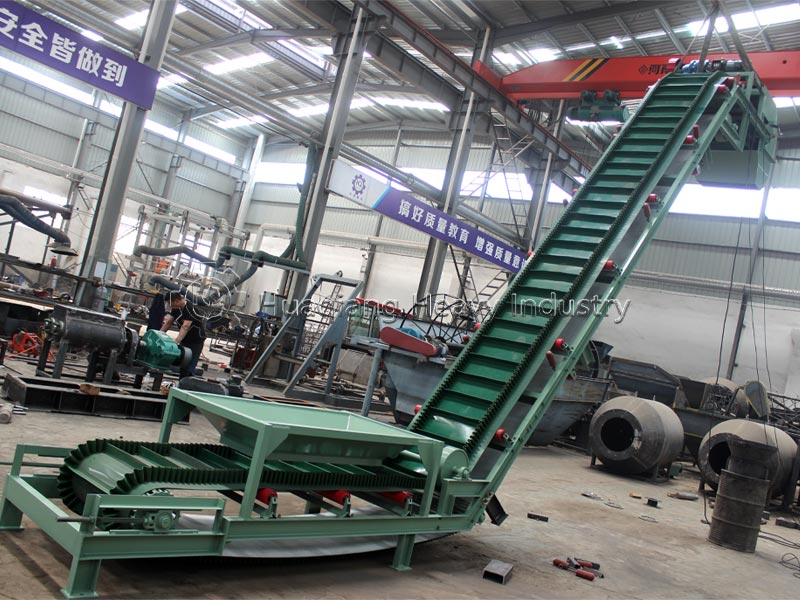
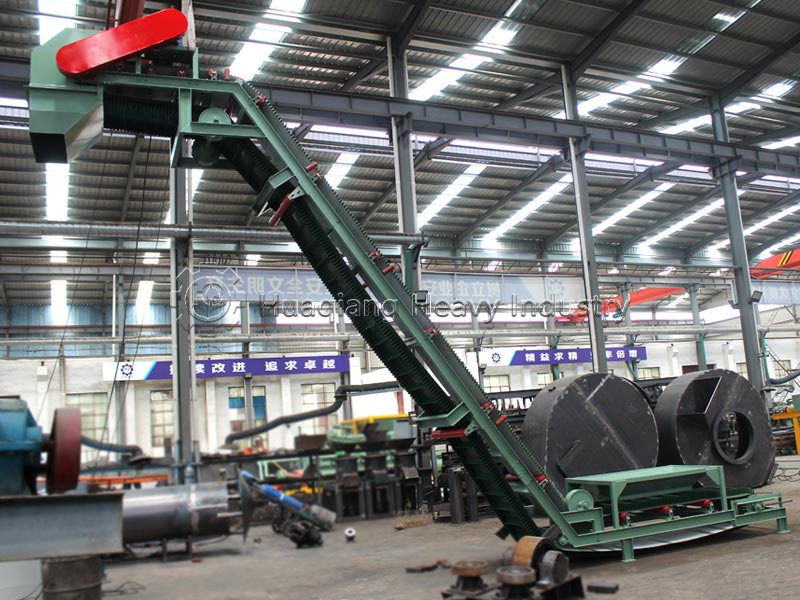
The large-angle belt conveyor is a special continuous conveying equipment that breaks through the limitations of ordinary belt conveyors. It relies on a cassette-type hopper composed of corrugated rubber sidewalls and transverse partitions to solve the problems of conventional belts having a maximum inclination angle of only 15° and the tendency for highly moist materials to slip and spill. The conveying angle is adjustable from 0° to 90°, enabling near-vertical material lifting.
(I) Core Advantages
- Significantly Reduced Factory Footprint: For the same lifting height, the horizontal projection length is reduced by over 60% compared to ordinary conveyor belts, eliminating the need for long ramp construction and making it suitable for low-ceilinged, compact organic fertilizer workshop renovations;
- Excellent Adaptability to High-Moisture Materials: The box-shaped enclosed hopper can stably transport wet livestock and poultry manure with a moisture content of 20%~45%, with no lateral leakage or backflow;
- Low Particle Breakage Rate: Flexible rubber bearing capacity reduces fertilizer breakage by 80% compared to bucket elevators, ensuring the appearance of finished particles;
- Lower Energy Consumption and Simpler Maintenance: The installed power is less than that of bucket elevators for the same production capacity. Standardized idler rollers and sweepers reduce maintenance difficulty;
- Environmentally Friendly Sealed Configuration: The entire machine is equipped with a fully enclosed dust cover, preventing dust spillage during the transport of powdered organic fertilizer and meeting environmental protection standards;
- Flexible Layout: Can be configured in Z-shape or S-shape. The machine features a straight-up, vertical layout with integrated horizontal sections at the head and tail, allowing direct connection to crushers, dryers, and silos.
(II) Core Comparison with Conventional Conveying Equipment
| Comparison Items | Large‑angle Sidewall Belt Conveyor | Ordinary Trough Belt Conveyor | Bucket Elevator |
|---|---|---|---|
| Max Conveying Inclination | 90° vertical | ≤15° | 90° vertical |
| Adaptable Material Moisture | 0~45% high‑humidity manure fertilizer | ≤25% dry granules | ≤30% medium humidity |
| Material Breakage Degree | Extremely low (flexible conveying) | Low | Relatively high (steel bucket impact) |
| Floor Horizontal Occupancy | Minimum | Large | Medium |
| Main Operation‑maintenance Cost | Low (local belt repairing) | Lowest | High (chain & bucket wear) |
Equipment Structure Composition
The entire machine is divided into five main modules: dedicated conveyor belt, segmented frame system, drive tensioning unit, anti-deviation belt pressure assembly, and cleaning and safety accessories.
- Core Corrugated Sidewall Conveyor Belt (Dedicated Component): Composed of a base belt, two corrugated rubber sidewalls, and transverse partitions, integrally vulcanized. The partitions and sidewalls form an independent compartment. For fertilizer applications, three types of base belts can be customized: wear-resistant, acid and alkali-resistant, and heat-resistant. Sidewall heights range from 40 to 240 mm, selectable as needed.
- Segmented Welded Frame
- Lower Horizontal Feed Section: Buffer rollers and a centrally located guide chute reduce material impact.
- Concave Arc Transition Section: Equipped with pressure rollers to press the sidewalls and prevent them from flipping out of the chute (core leak-proof structure).
- Inclined Main Conveying Section: Bearing rollers + double-sided anti-deviation vertical rollers.
- Convex Arc Discharge Section: Gentle arc for smooth material removal from the belt.
- Upper Horizontal Discharge Section: Discharge chute and head cleaning device.
- Drive and Tensioning Assembly: Head-mounted rubber-coated drive roller, motor + frequency converter reducer; tail-mounted spiral/counterweight tensioning mechanism to maintain belt tension throughout; standard backstop to prevent material backflow during machine stop.
- Dedicated Anti-Belt Deviation Assembly: Concave arc belt pressure pulley set, double-sided limiting vertical rollers, self-aligning idler rollers to solve the problems of belt deviation on one side and side scraping of the frame under large inclination angles.
- Cleaning and Safety Features: Head spring sweeper, bottom beater wheel (to shake off adhering wet fertilizer clumps); emergency stop rope, belt deviation alarm switch, grounding protection, fully enclosed dust cover (optional).
Working Principle
- Closed-loop transmission: The motor drives the head rubber-coated roller, relying on the friction between the roller and the base belt to continuously circulate the entire sidewall belt.
- Bucket loading: Material falls from the tail guide chute into the sidewalls and partitions to form an independent bucket. The wavy sidewalls prevent material from scattering laterally.
- Stable lifting at large angles: The belt is constrained by the concave arc pressure pulley, preventing it from folding outwards. The partitions mechanically support and counteract the downward force of gravity, ensuring no backflow or spillage at angles of 30°~90°.
- Head unloading: The belt passes around the head arc-shaped roller, and the material is discharged from the unloading chute by gravity and centrifugal force, and sent to the next equipment.
- Return self-cleaning: When the empty belt descends, the bottom beater vibrates, and the spring cleaner scrapes away any clumps of fertilizer adhering to the belt surface, preventing material accumulation and blockage on the return trip.
Application Scope
- Core Scenarios in Fertilizer Production Lines
1) Small, Compact Organic Fertilizer Workshops: For workshops with insufficient ceiling height and limited space, high-drop transfer of wet fermentation raw materials to crushers and mixers is used.
2) Granulation and Drying Section: Wet granulated particles are directly fed into the drum dryer at a large angle, eliminating the need for multi-stage conveyor belt transfers and reducing dust points.
3) Finished Product Processing Section: Cooled, high-temperature fertilizer is lifted to the coating machine and high-level screening silo.
4) Fine Powder Recycling: Screened fine powder is returned to the mixer at a large angle for secondary granulation, resulting in zero raw material loss.
5) Raw Material Storage and Loading: Ground compost is vertically lifted to high-level storage silos, saving on investment in civil engineering ramps.
- Other Industries
Feed processing plants, grain storage facilities, municipal sludge resource utilization plants, and small-scale chemical powder production lines.
Standard Operation and Full-Cycle Maintenance Methods
(I) Standard Start-up and Shutdown Procedures
Start-up Sequence
- Pre-start Inspection: Check for tears in the sidewalls and partitions; ensure the idler rollers and pressure rollers rotate freely; ensure the sweeper adheres to the belt; check that the emergency stop and belt misalignment protection functions are normal;
- Start under no-load, run idle for 5 minutes, observe for no belt misalignment, no sidewall flipping, and no abnormal noises;
- Feed material evenly, avoiding large amounts of wet fertilizer impacting the belt at once.
Shutdown Sequence
- First, shut down the front-end feeding equipment, waiting for the material on the belt to be completely emptied;
- Turn off the main motor, clean the sweeper and any clumps of fertilizer adhering to the belt;
- For long-term shutdowns, loosen the belt tension to prevent the rubber sidewalls from deforming due to prolonged pressure. (II) Safety Operation Procedures
- During operation, it is strictly forbidden to cross the belt or reach in to clean the pressure rollers and idlers; power must be disconnected and a sign posted before maintenance;
- When performing circuit maintenance, wear insulated gloves, and ensure the entire machine is properly grounded before starting;
- When conveying and drying high-temperature fertilizer, it is forbidden to allow the belt to idle for extended periods to bake the rubber at high temperatures;
- Install a debris removal screen at the front end of the material to prevent iron wires and hard stones from scratching or tearing the side guards.
(III) Graded Lubrication and Maintenance Procedures
- Daily Inspection: Clean any clumps on the belt surface; check for delamination at the base of the side guards and detached partitions; test the misalignment and emergency stop switches;
- Weekly Lubrication: Add lithium-based grease to the bearings of the head and tail rollers, pressure rollers, and self-aligning idlers;
- Quarterly Maintenance: Check the gear oil level in the reducer, and replace all gear oil every 4 months; tighten all bolts on the frame and pressure rollers;
- Annual Overhaul: Conduct a comprehensive inspection of the belt vulcanization joints; localized cracks can be repaired on-site with cold bonding; replace jammed idlers and worn cleaning scrapers. (iv) List of vulnerable parts: corrugated sidewall conveyor belt, transverse partition, cleaner rubber scraper, concave arc pressure roller, idler roller, roller bearing, anti-backflow brake pad, tension screw.
Equipment Application Process in Fertilizer Production Line
Complete Fertilizer Production Line Supporting Chain
Raw Material Stockpile → Inclined Belt Conveyor → Crusher → Batching and Mixing Machine → Granulator → Inclined Belt Conveyor → Rotary Drum Dryer → Cooler → Inclined Belt Conveyor → Coating Machine → Screening Machine → Finished Product Silo → Packaging Machine
Section Supporting Logic
- Raw Material Feeding Section: Due to limited workshop height, wet manure is lifted at a large angle to the crusher in one go, eliminating the need for concrete ramps and saving on construction costs.
- Drying and Transfer Section: Wet granulated particles are directly fed into the high-level feed inlet of the dryer at a large angle, eliminating the need for two-stage ordinary belt conveyors and reducing dust leakage.
- Finished Product Refining Section: After cooling, high-temperature particles are lifted in a sealed manner to the coating machine and high-level screening silo.
- Fine Powder Circulation Section: Screened fine powder is returned to the mixer via an inclined belt conveyor for re-granulation, eliminating raw material waste.
Summary of Equipment’s Comprehensive Technical Features:
- Extremely High Space Utilization: The large-angle conveyor significantly reduces the horizontal footprint of the factory, making it suitable for the renovation of old, low-ceilinged fertilizer workshops;
- Exclusively Suitable for High-Moisture Materials: The box-type sidewall structure stably conveys livestock and poultry manure with a moisture content of 45%, which ordinary belt conveyors cannot achieve;
- Excellent Finished Product Protection: Flexible rubber conveying results in a much lower fertilizer particle breakage rate than bucket elevators, leading to a better product appearance;
- Environmental Compliance: Can be equipped with a fully enclosed dustproof shell, ensuring no dust leakage during the transfer of powdered organic fertilizer;
- Economical and Convenient Operation and Maintenance: Standardized idlers and sweepers allow for on-site repair of partial belt damage, eliminating the need for complete machine replacement;
- Flexible Process Adaptability: Adjustable inclination angle and belt speed via frequency conversion, suitable for all types of production lines producing organic fertilizer, compound fertilizer, and bio-fertilizer.
Target Customers:
- Organic fertilizer, bio-fertilizer, and compound fertilizer manufacturers with compact factory spaces and significant elevation differences;
- Large-scale livestock and poultry farming groups with self-built manure-to-fertilizer workshops, handling high-moisture livestock and poultry manure year-round;
- Municipal sludge and kitchen waste environmental resource recovery companies;
- Fertilizer equipment integrators providing high-elevation conveyor systems for compact production lines;
- Feed and grain processing plants;
- Foreign trade equipment purchasers, procuring complete sets of conveyor equipment for small overseas organic fertilizer processing plants.