
How to determine the turning frequency? The core answer is: once every 3 days at 50℃, and once every 2 days above 60℃. This is the golden rule verified through long-term practice in the aerobic fermentation of organic fertilizer. The turning frequency is not determined by feeling, but is directly driven by the temperature of the compost pile. Temperature reflects the activity of microorganisms and the rate of oxygen consumption, and also determines whether immediate oxygen replenishment, heat dissipation, and moisture regulation are needed.
Why turn every 3 days at 50℃?
When the pile temperature rises to 50℃, it means that the compost has entered the high-temperature fermentation period from the mesophilic stage. Thermophilic aerobic bacteria begin to multiply rapidly, and the decomposition of organic matter accelerates. At this time, the oxygen consumption of the pile increases, but it has not yet reached the critical point of oxygen deficiency. Turning the pile every 3 days can replenish fresh air, maintain an aerobic environment, and avoid excessively frequent turning, which would lead to rapid heat loss and difficulty in raising the pile temperature. When turning the pile, the hot materials inside the pile should be turned to the outer layer, and the outer layer materials should be turned to the inside, so that fermentation is even.
Why turn the pile every two days when the temperature exceeds 60℃?
When the pile temperature exceeds 60℃, microbial metabolism enters its most vigorous phase, oxygen consumption increases exponentially, and anoxic zones easily form inside the pile. Simultaneously, sustained high temperatures pose a risk of “pil burning,” causing nitrogen to volatilize as ammonia and excessively consuming organic matter. At this point, the turning frequency must be shortened to once every two days to replenish oxygen, balance temperature, and promote moisture evaporation. If the pile temperature exceeds 65℃, it should be turned immediately to cool it down, even before two days have passed; if it exceeds 70℃, emergency turning is necessary, otherwise microbial activity will be severely inhibited.
How to accurately measure the temperature?
Temperature measurement is the prerequisite for determining the turning frequency. It is recommended to measure the temperature twice a day, once in the morning and once in the afternoon, at points including 30 cm, 60 cm from the surface, and at the center of the pile. Use a portable digital thermometer or a multi-point thermometer and take the average value as the basis for judgment. After turning the pile, measure the temperature again and observe whether it has dropped back to the ideal range of 55℃–65℃. If the temperature rises rapidly above 60℃ after turning, it indicates that the organic matter is still decomposing rapidly, and the frequency of turning every two days should be maintained.
How to adjust in special circumstances?
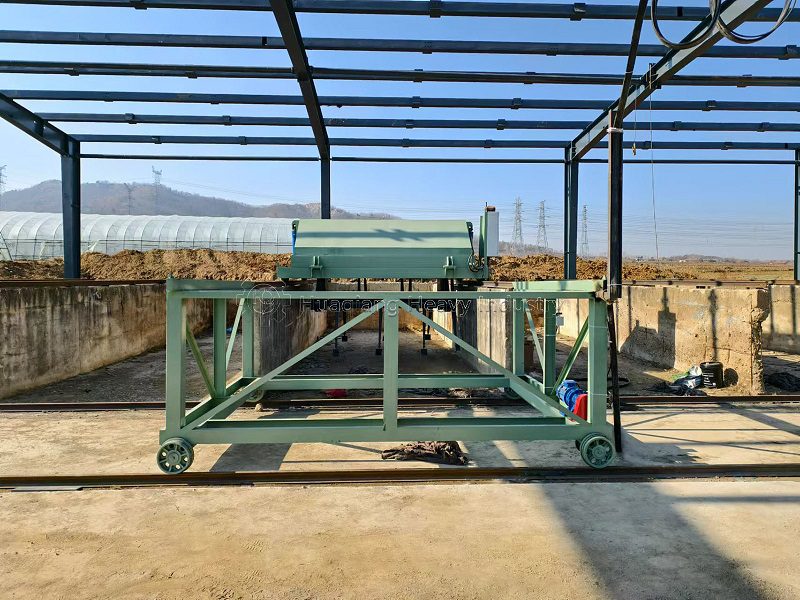
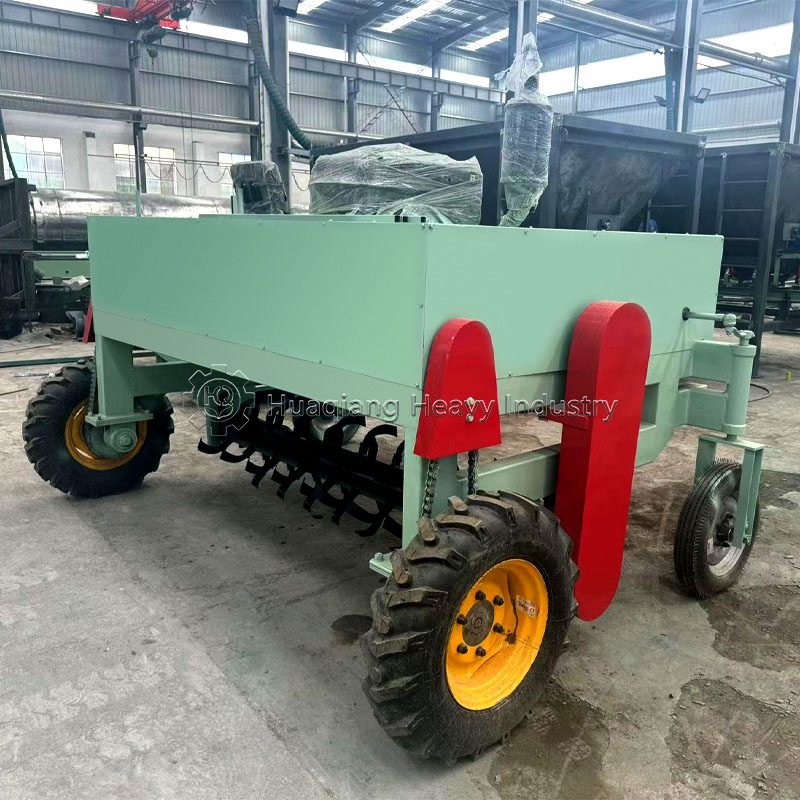
In winter, the ambient temperature is low and the pile dissipates heat quickly, so the frequency can be extended to once every 4-5 days, and an insulating film can be used. In summer, the temperature is high and humidity is high, and microorganisms are active, so the frequency can be increased to once a day. When the moisture content of the material is high, the turning frequency should be increased appropriately to promote moisture evaporation; when the moisture content is low, a small amount of water can be added in conjunction with turning. When using a trough-type, tracked, or wheel-type compost turner, an executable turning plan should be developed based on the equipment capacity and the size of the pile.
Summary How to determine the turning frequency? Turn every 3 days at 50℃, every 2 days above 60℃, and immediately above 65℃. The core logic of this rule is “observe the temperature and determine the frequency.” It is recommended to establish a temperature record log during production and dynamically adjust the turning rhythm in conjunction with the compost turner operation records. Only by keeping the compost pile in an aerobic, temperature- and humidity-controlled state can we achieve the goal of producing organic fertilizer that is rapidly decomposed, harmlessly and thoroughly, and with stable fertilizer effects.