
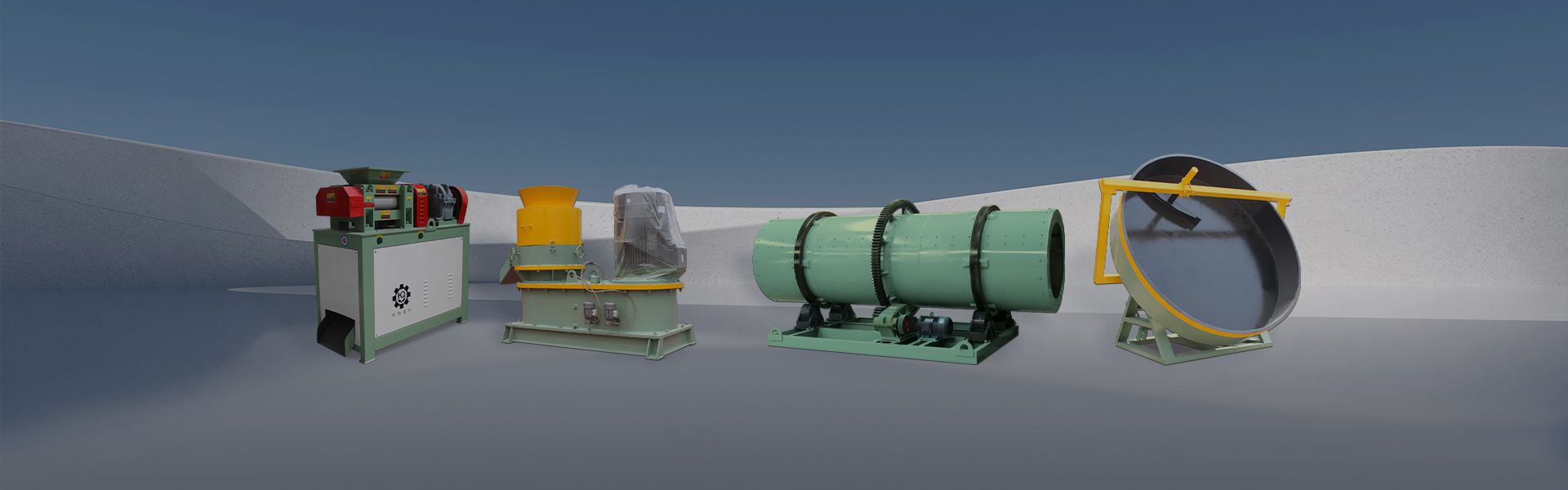
In modern industry’s pursuit of precise, uniform, and efficient mixing, the Horizontal Mixer stands as an irreplaceable core asset with its unique design and outstanding performance. It does not rely on gravity diffusion but achieves high-intensity, low-residue blending of dry powders, granules, and pastes through precise mechanical action on a horizontal axis, rightfully earning the title of “Horizontal Specialist.”
Core Advantages: Efficient, Uniform, Low Residue, Easy Maintenance
The design philosophy of the horizontal mixer is to achieve the optimal balance between mixing performance and operational maintenance. Its core strengths make it excel in numerous blending tasks:
Exceptional Three-Dimensional Mixing Uniformity: The mixing drum is positioned horizontally, typically equipped with a dual-ribbon or paddle-type agitator. The outer ribbons convey material from both ends toward the center along the drum wall, while the inner ribbons simultaneously push material from the center toward the ends. This creates intense bidirectional convection, shearing, and diffusion. This three-dimensional compound motion ensures materials reach high homogeneity in a short time, especially effective for ingredients with significantly differing specific gravities or particle sizes.
Very Low Residue & Efficient Discharge: The precise fit between the unique U-shaped drum and the ribbons, combined with a full-length, large bottom discharge door, allows for rapid,-free dead-zone-free emptying with extremely low residue rates (typically <0.1%). This is crucial for industries requiring frequent formula changes and prevention of cross-contamination (e.g., food, pharmaceuticals, premium feed).
Smooth Operation, Excellent Sealing Performance: The horizontal structure ensures even load on the drive system, resulting in low-noise, low-vibration operation. The shaft ends employ multiple seals (e.g., air seals, labyrinth seals, lip seals), effectively preventing the escape of fine dust and contamination by lubricants. This makes it particularly suitable for handling toxic, irritating, or materials requiring an aseptic environment.
Gentle and Controllable Mixing Process: Compared to some high-shear vertical mixers, the horizontal mixer’s action is more uniformly gentle, causing minimal damage to the crystalline structure of materials or the integrity of already granulated products. It is the ideal choice for blending finished compound fertilizers, BB fertilizer raw materials, or fragile materials.
Wide Capacity Range, Strong Adaptability: Ranging from small laboratory models to large industrial units handling several tons per batch, horizontal mixers meet production needs of various scales. They perform well with dry powders, granules, short fibers, and pastes with a certain moisture content.
Working Principle: The Art of Bidirectional Flow on a Horizontal Axis
The core of a horizontal mixer lies in its agitator rotor inside the horizontal drum. Taking the Dual-Ribbon Horizontal Mixer as an example, its operation is a precise exercise in “bidirectional convection”:
Loading: Material is loaded into the U-shaped mixing drum via the top inlet, with a fill ratio typically between 40%-70%
Mixing: The drive unit rotates the dual ribbon shafts synchronously. The outer ribbons transport material from the drum ends along the wall toward the center zone; the inner ribbons simultaneously push material from the center toward the ends, creating a powerful axial main circulatory flow.
Diffusion & Homogenization: Concurrent with macroscopic convection, material splashing and the shearing action at the ribbon edges further promote microscopic mixing in the radial and circumferential directions, completely breaking up agglomerates to achieve microscopic homogeneous distribution of components.
Discharge: Upon completion of mixing, the bottom pneumatic or manual large door empties the drum rapidly and completely within seconds, with almost no residue).
Comparison with Other Mixing Equipment
Within the family of mixing equipment, the horizontal mixer holds a unique position due to its horizontal shaft design:
VS Vertical Disc Mixers : Vertical disc mixers rely on gravity diffusion, requiring longer mixing times and potentially leaving dead zones at the bottom, with possibly incomplete discharge. Horizontal mixers blend faster, more intensely, and more thoroughly, especially suitable for large-capacity batch mixing.
VS Double Shaft Mixers: Double shaft mixers offer extremely high mixing intensity and very short cycle times but have a more complex structure, potentially higher power consumption and wear. Horizontal ribbon mixers provide gentler mixing, extremely high uniformity, and lower residue, striking an excellent balance between homogeneity and gentle handling.