
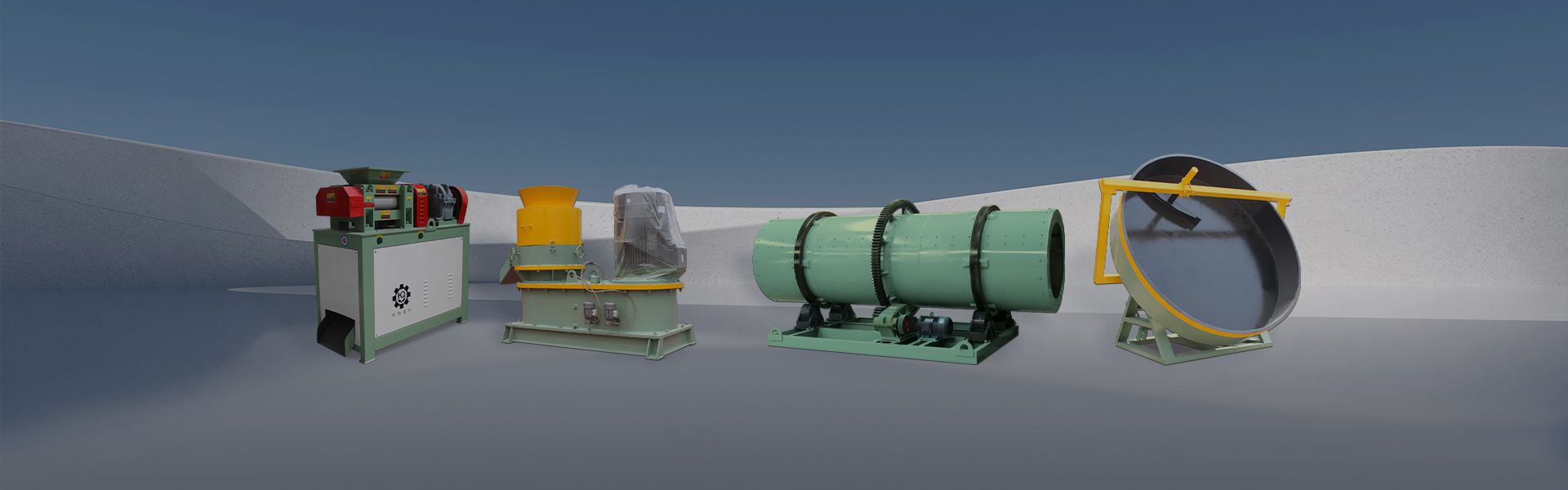
Imagine livestock manure and discarded crop straw, once considered unpleasant waste, being transformed into “black gold” that nourishes crops. This is not magic, but the reality created by modern fertilizer processing technology. In the global push for sustainable agriculture, windrow compost turner and a suite of innovative equipment are playing a pivotal role, converting agricultural waste into valuable resources and writing a new chapter for the circular economy.

The Core Engine: The Vital Role of the Windrow Turner
The windrow compost turner is often called the “heart” of efficient composting. Its core function is to aerate compost windrows, providing essential oxygen for microorganisms while evenly distributing heat and moisture. Research shows that using a turner significantly improves compost quality compared to manual turning. One comparative study found that mechanically turned compost achieved a Cation Exchange Capacity (CEC) as high as 68.87 meq/100g, far surpassing the 33.28 meq/100g from manual turning, indicating a final product that can more effectively store and supply nutrients to the soil
Turning frequency is also a science. Research on composting oil palm empty fruit bunches suggests that turning every two days may be the optimal frequency, balancing aeration with heat retention to produce mature compost with an ideal carbon-to-nitrogen ratio (around 14.83) within 30 days. In South Korea, researchers developed a self-propelled windrow turner adapted for local mushroom substrate fermentation.Compared to a simple compost turner, its working efficiency was 2.8 times higher than conventional excavator work and successfully increased mushroom yield by 22.9%.
Beyond Turning: Diversified Innovation in Fertilizer Processing
However, the needs of modern agriculture extend far beyond simple turning. A range of more sophisticated and intelligent technologies are expanding the boundaries of fertilizer processing.
Compost Aeration and Heat Recovery (CAHR) System: In a case study in Vermont, USA, the CAHR system not only accelerated compost maturation (by approximately 25%) through positive and negative aeration but also recovered heat generated during the process. This heat was used to warm facility buildings and dry finished compost, creating an energy loop
DACS Dynamic Aerobic Composting Silo: For sludge treatment, the Chinese-developed DACS silo reactor uses intelligent forced aeration to achieve rapid maturation. Its vertical composting model saves up to 75% of the space typically required, significantly addressing a major pain point of traditional aerobic composting.
Intelligent Membrane Composting Technology: In rural Hubei, China, an innovative “intelligent membrane” technology is used to process straw and livestock manure. This composite membrane acts like a smart ecosystem, trapping odors and greenhouse gases while providing insulation and rain protection. This method requires no frequent turning, produces organic fertilizer in just over 30 days, and operates with minimal odor.
Case Focus: The “Circular Gear” in Yunxi, Hubei
In Yunxi County, Hubei Province, a circular agriculture model integrating multiple technologies is in operation. Waste such as straw, mushroom cultivation bags, and livestock manure undergoes processes including 144 hours of anaerobic fermentation in an intelligent production line, transforming into seven types of functional organic fertilizer granules. Thanks to nitrogen slow-release technology, the nutrient utilization rate of its products is 45% higher than that of traditional organic fertilizers. This model has not only increased the county’s comprehensive utilization rate of agricultural waste to over 90% but also boosted the average annual income of over 3,000 participating farming households by 5,000 yuan, vividly demonstrating the dual economic and ecological benefits of “turning waste into treasure”.