
Premium WordPress theme for construction companies, contractors, builders, and a variety of other construction-related businesses.
-
28238 Kelsie Lane Apt. 451,
Port Annabelport
-
Call Us: (210) 451-123
(Sat - Thursday)
-
Monday - Friday
(10am - 05 pm)
Coating Machine
Equipment Introduction
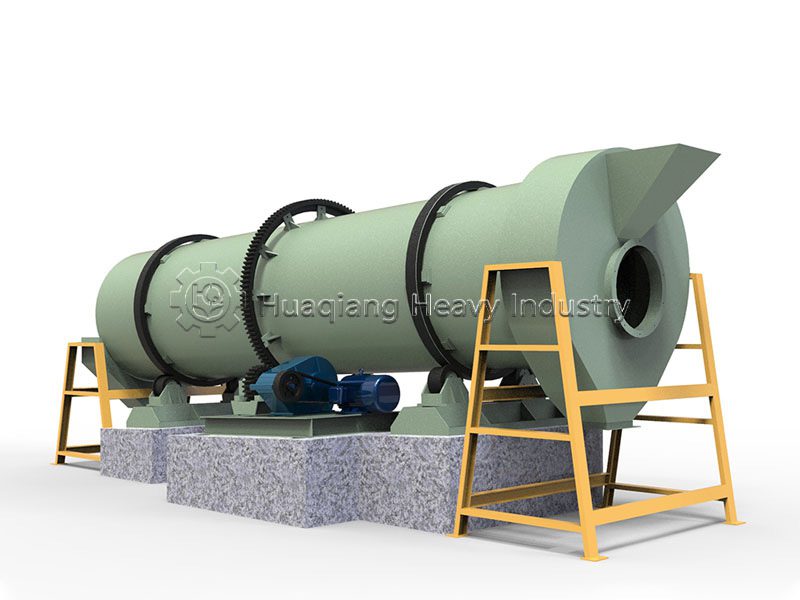
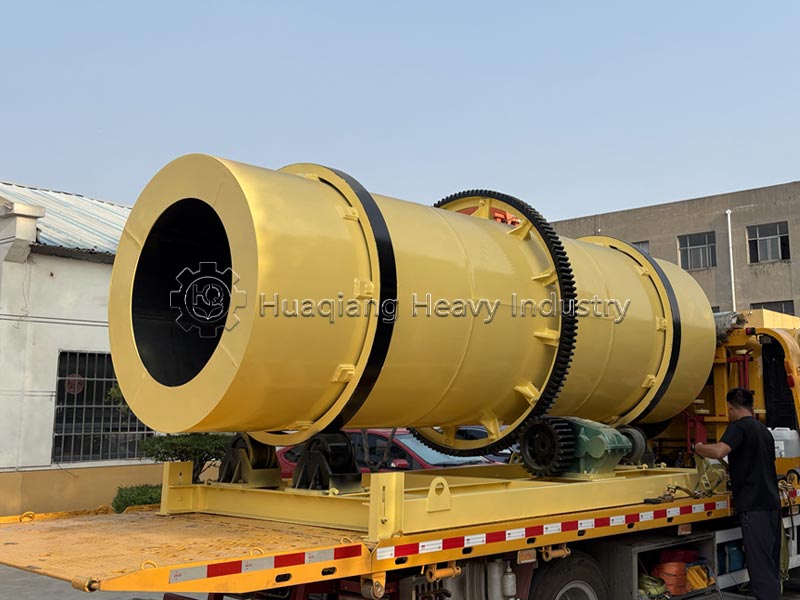
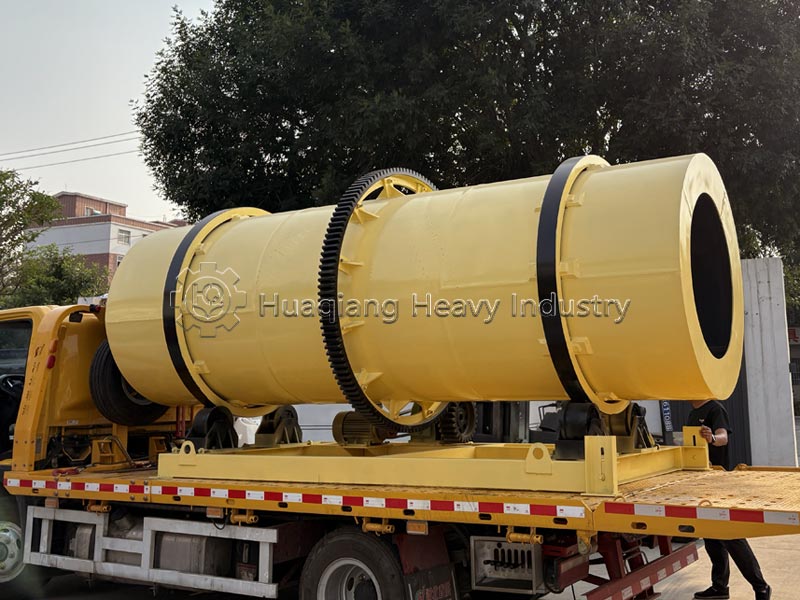
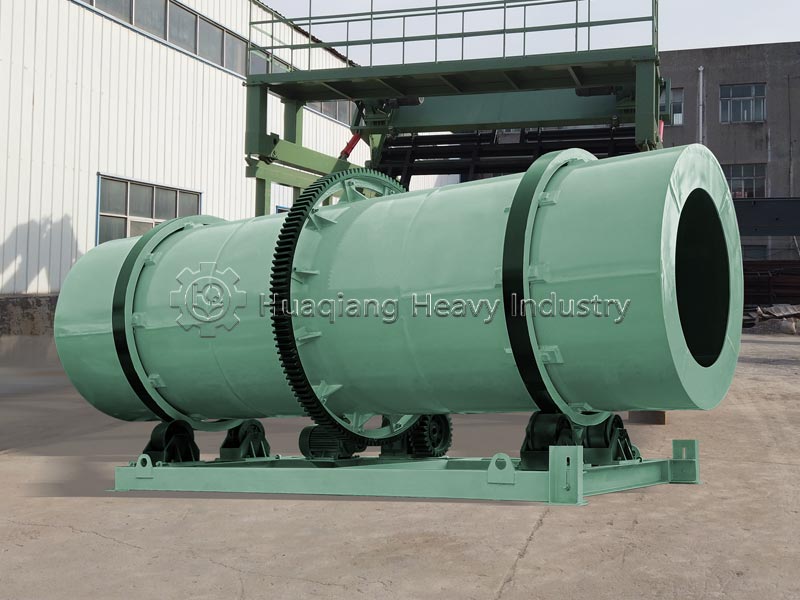
A coating machine (Fertilizer Coating Machine), also known as a rotary coating machine or fertilizer coating machine, is a core post-processing device at the end of a fertilizer production line for granule surface treatment. It uses powder coating or liquid coating processes to evenly coat the surface of organic fertilizer, compound fertilizer, and blended fertilizer granules with a functional protective film.
The main function of the coating machine is to prevent fertilizer clumping—during storage and transportation, fertilizer granules are prone to salt bridging and surface moisture absorption, leading to granule adhesion and clumping. By forming a protective film on the granule surface to isolate it from the outside air, this industry pain point is effectively solved. Simultaneously, coating can improve the surface gloss of the granules (better appearance) and allows for the addition of trace elements or functional microbial agents to enhance fertilizer efficiency. For controlled-release fertilizers, coating can also achieve controlled-release nutrient function.
This equipment is suitable for anti-caking coating operations on various granular fertilizers, including organic fertilizers, inorganic fertilizers, bio-fertilizers, compound fertilizers, and BB fertilizers. The main unit typically uses a polypropylene liner or acid-resistant stainless steel, providing excellent corrosion resistance and durability. The equipment features high pellet strength, corrosion resistance, and low energy consumption, and is suitable for the combined processing of dry powder and liquid coating agents.
Complete Equipment Structure
The entire machine consists of five basic components: a rotary main unit and a complete coating auxiliary system. The main unit structure is compatible with dryers and coolers, and parts are interchangeable:
(I) Five Main Components of the Rotary Main Unit
Cylinder Body (Coating Core): High-quality medium carbon steel plate, welded and rolled, standard 2.5° inclination installation; internally lined with polypropylene/stainless steel anti-corrosion layer to prevent fertilizer corrosion; the cylinder has no built-in lifting plates, relying on the low-speed rotation of the cylinder to drive the particles to tumble as a whole, avoiding particle breakage; flexible seals at both ends to prevent coating agent volatilization and dust overflow.
Support Bracket Assembly: Channel steel + steel plate integrally welded front and rear brackets, equipped with wear-resistant cast steel rollers and limit rollers to bear the entire weight of the cylinder; lifting lugs are reserved at the four corners of the brackets, and the base has foot mounting holes, with wedge blocks and pads to adjust the cylinder’s level and inclination. Transmission Drive System:
ISO-compliant standard-exempt motor + V-belt + reducer + nylon pin/cross coupling transmits torque; integrated welded transmission frame ensures low operating vibration and suitability for long-term continuous loads.
Large Gear Ring Drive Pair: A high-wear-resistant alloy steel large gear ring is fixed to the outside of the cylinder and meshes with the pinion gear on the drive shaft to drive the cylinder’s rotation; the wear-resistant material extends the overall machine’s service life.
Rolling Belts (Pulleys): Two annular wear-resistant steel belts are fixed to both ends of the cylinder, providing rolling support against the rollers and reducing frictional loss between the cylinder and the rollers.
(II) Complete Set of Coating Auxiliary Equipment (Essential for the Process)
Liquid Spraying System: Thermally conductive and insulating oil pump, coating agent mixing and storage tank, compressed air atomizing nozzle, conveying and atomizing oil-based and resin-based liquid coating agents;
Powder Packing System (Optional): Screw feeder, talc/bentonite silo, providing solid anti-caking powder;
Conveying Equipment: Feed screw conveyor, discharge belt conveyor, connecting the cooler discharge and coating machine feed;
Dust Removal System (Optional): Negative pressure fan + small dust collector, collecting coating volatile dust and improving workshop conditions;
Temperature Control Components (For Slow-Release Fertilizers): Insulated jacket for cylinder, hot air-assisted curing device, accelerating resin coating formation.
Applicable Raw Materials (Scope of Processed Materials)
- Main Materials for Granular Fertilizers
Inorganic Compound Fertilizers: Urea-based, sulfur-based, and chlorine-based compound fertilizers, BB fertilizers, high-tower spray granulation granules, extrusion granulation compound fertilizers;
Organic Fertilizers: Fermented livestock and poultry manure organic fertilizers, bio-fertilizers, humic acid granular fertilizers, straw/mushroom residue fertilizer granules;
Special Slow-Release Fertilizers: Resin-coated controlled-release fertilizers, sulfur slow-release fertilizers, functional granular fertilizers containing trace elements.
- Coating Consumables (Coating Raw Materials)
Liquid Coating Agents: Mineral oil, vegetable oil, paraffin wax, resin, water-soluble trace element solution, bio-bacterial suspension;
Solid Powder Coating Agents: Talc, diatomaceous earth, bentonite, sulfur powder, functional coloring powders.
Working Principle (Dual Processes in Parallel)
The entire machine rotates at a low speed with a slight 2.5° tilt. Material is fed from the high end and discharged from the low end. Two coating processes are used: liquid spraying and liquid-powder composite coating.
Feeding Tumbling: Cooled to… Uniform fertilizer granules at temperatures below 40℃ are fed into the cylinder, where slow rotation causes the granules to tumble continuously, forming a flowing layer.
Atomized Coating (Liquid Process): An insulating oil pump delivers a coating agent to the atomizing nozzle at the cylinder’s feed end. Compressed air disperses the liquid into micron-sized droplets, evenly adhering to the surface of each fertilizer granule.
Powder Coating (Composite Process): After a liquid oil film is applied, a spiral powder spreader evenly sprinkles in dry powders such as talc. The tumbling and friction of the granules causes the dry powder to firmly adhere to the outer layer of the oil film, forming a double-layer protective film.
Polishing and Shaping Discharge: Continuous tumbling and friction of the granules ensures uniform curing of the surface coating and polishing of the granule surface. The granules are then slowly moved towards the lower end by the cylinder’s tilting thrust, completing the coating process before being discharged into the packaging section.
Exhaust Gas Treatment: Volatile oil vapors and fine dust inside the cylinder are purified by an induced draft dust removal system, resulting in no harmful dust emissions.
Key process: The material temperature must be ≤45℃. High temperature will cause the liquid coating agent to flow and the film layer to break, which will greatly reduce the anti-caking effect.
Applications of the equipment
The coating machine is widely used in the following fields:
| Application Field | Specific Purpose |
|---|---|
| Compound Fertilizer Industry | Anti‑caking treatment, surface polishing, slow‑release / controlled‑release coating for NPK compound fertilizer |
| Organic / Bio‑organic Fertilizer | Add functional bacterial agents, prevent caking, improve particle flowability |
| Slow‑release / Controlled‑release Fertilizer | Coat wax, sulfur, resin, polymer and other controlled‑release materials to adjust nutrient release rate |
| Seed Processing | Seed coating, add protective layer or nutrient components to improve germination rate |
| Feed Industry | Spray oil, molasses or medicine on feed particle surface to enhance nutrition and storage performance |
| Chemical Industry | Moisture‑proof and dust‑proof surface treatment for granular chemical raw materials |
Target Audience:
Professional manufacturers of compound fertilizers, organic fertilizers, and slow-release/controlled-release fertilizers;
Large-scale livestock and poultry breeding groups, fruit and vegetable planting cooperatives, and companies with their own fertilizer processing workshops;
Enterprises engaged in the environmentally friendly resource utilization of municipal sludge, kitchen waste, and livestock and poultry manure;
Fertilizer equipment integrators and production line engineering installation service providers;
Overseas fertilizer equipment buyers and fertilizer processing plants in Southeast Asia/Central Asia;
Enterprises engaged in the research and development and production of bio-fertilizers and functional fertilizers containing micronutrients.
Common Faults, Causes, and Standardized Solutions
| Fault Phenomenon | Root Causes | Professional Solutions |
|---|---|---|
| Uneven particle coating, partial missing‑coating | Nozzle blockage & poor atomization; excessive feeding rate; low drum rotating speed | 1. Disassemble and clean atomizing nozzles; 2. Reduce feeding speed; 3. Increase drum rotation speed |
| Material particles stick and agglomerate | Insufficient supply of coating agent; material inlet temperature>45℃; insufficient powder feeding amount | 1. Increase pump delivery flow; 2. Repair front‑end cooling machine, keep temperature below 40℃; 3. Raise powder feeding volume |
| Riding ring slipping, drum offset | Loose riding ring end‑face bolts; inconsistent stress on both sides of supporting rollers | 1. Tighten riding ring end‑face bolts; 2. Adjust supporting roller height evenly with shims, avoid over‑compression causing vibration |
| Axial sway and displacement of drum shell | Severe wear of supporting roller and riding ring; loose foundation anchor bolts for supporting rollers | 1. Polish & repair or replace supporting roller / riding ring; 2. Calibrate supporting roller level, tighten all anchor bolts |
| Abnormal gear meshing noise & face misalignment | Partial wear of pinion; loose connecting flange between big gear and drum shell | 1. Re‑install pinion for partial wear; replace directly for two‑sided heavy wear; 2. Tighten bolts of big‑gear‑drum connecting flange |
| Irregular vibration during drum operation | Broken supporting‑roller base connection, loose bolts; uneven unilateral wear of riding ring | 1. Calibrate supporting roller installation position and tighten anchor bolts; 2. Lathe‑repair riding‑ring surface or replace riding ring |
| Pump no liquid output, nozzle no spraying | Coating agent solidification due to too low temperature; pipeline and filter blockage | 1. Increase heating & holding temperature of mixing tank; 2. Disassemble and clean pipelines and filters |
| Bearing temperature>50℃ under no‑load test run | Lack of grease; internal bearing wear | Stop machine and refill grease; replace bearing directly in case of severe wear |
Application of Coating Machines in Complete Fertilizer Production Lines
Complete Standard Production Line Process Flow:
Raw Material Crushing → Batching and Mixing → Granulation (Disc/Drum/Extrusion) → Rotary Dryer → Rotary Cooler → Rotary Coating Machine (Fine Processing Section) → Rotary Screening Machine → Automatic Packaging Machine
Section Matching Logic:
Prerequisite: Granules must be cooled to ≤40℃ by a cooler. Direct coating of high-temperature granules will damage the protective film and lose its anti-caking effect.
Process Value: Coating extends the fertilizer’s storage period by 3-6 months, prevents moisture absorption and clumping, results in smooth granule appearance, and increases the selling price.
Detailed Supporting Solutions:
Small-scale Organic Fertilizer Line (1-3t/h): BM1000/BM1200 Coating Machine + Simple Liquid Spraying System;
Medium-scale Compound Fertilizer Line (5-10t/h): BM1500×6000 Coating Machine + Liquid-powder composite coating equipment; Large-scale slow-release fertilizer base (10~15t/h): BM1500×7000 extended coating machine + heat-insulating oil pump + hot air curing system; Waste recycling: A small amount of crushed fine powder from the coating section is returned to the front-end mixer for regranulation, resulting in zero raw material loss.
Selection and Usage Recommendations
- Material Selection: If the coating agent contains strong acids, strong alkalis, or highly corrosive components, acid-resistant stainless steel lining is preferred; for general anti-caking powder coating, polypropylene lining is a better choice due to its cost-effectiveness.
- Tilt Angle and Rotation Speed: A standard tilt angle of 2.5° is suitable for most materials; if a longer coating time is required (e.g., multi-layer coating of slow-release fertilizer), the tilt angle or rotation speed can be appropriately reduced.
- Drying Requirements: Before coating, ensure the particles are fully cooled and dried; otherwise, the coating layer will be difficult to solidify, easily leading to particle sticking and wall clogging.
- Liquid Spray Quantity Control: The spray quantity of liquid coating agent must match the particle flow rate. Excessive spraying will cause particle sticking, while insufficient spraying will result in incomplete coating. It is recommended to equip the system with a metering pump and flow meter for precise control.
- A fan is recommended for liquid coating processes to accelerate air circulation within the cylinder, promote solvent evaporation, and prevent the coating layer from being damaged by subsequent particles.