
When the fermentation tank temperature is not rising or only partially heating up, the troubleshooting order should start with “whether the microorganisms are consuming food and oxygen,” rather than immediately suspecting the inoculant. First check the uniformity of turning and aeration, then check the moisture content and C/N ratio. Localized heating is often due to insufficient turning and covering of the edges or corners, or high material moisture content leading to localized oxygen deficiency. A mismatch between the turning depth and width and the tank structure indicates a deeper structural problem.
I. Four Causes of No Temperature Increase: Oxygen Supply, Moisture Content, C/N Ratio, Turning and Covering
Oxygen supply is the first prerequisite for temperature increase. Aerobic fermentation relies on oxygen to oxidize organic matter and release heat; the oxygen content in the pile should be maintained above 18%. Inadequate turning and compaction of the material over a long period prevents oxygen from entering, causing the bottom layer to quickly become anaerobic, naturally preventing the temperature from rising. When troubleshooting, first check if the material has truly been “dispersed and loosened” after turning, not just the surface.
Moisture content is the second hurdle. The ideal moisture content for fermentation to start is 50%-60%, judged by the fact that it “clumps together when squeezed in the hand, but doesn’t drip water between the fingers.” When the moisture content is below 30%, microbial metabolism stagnates; above 65%, the voids in the pile are filled with water, obstructing gas flow and resulting in insufficient oxygen supply, thus preventing temperature rise. High moisture content is often a direct cause of localized temperature stagnation: wet material clumps together, has poor aeration, and cannot be broken up even when turned.
An imbalanced C/N ratio is the third common cause. The target C/N ratio should be controlled between 25-30:1. When the C/N ratio is above 50:1, nitrogen source is severely insufficient, microorganisms cannot multiply significantly, and the pile temperature rises difficult. For pure straw-based raw materials, a high C/N ratio requires supplementation with livestock manure or an appropriate amount of nitrogen source; a low C/N ratio easily leads to nitrogen escaping as ammonia, also affecting fermentation quality.
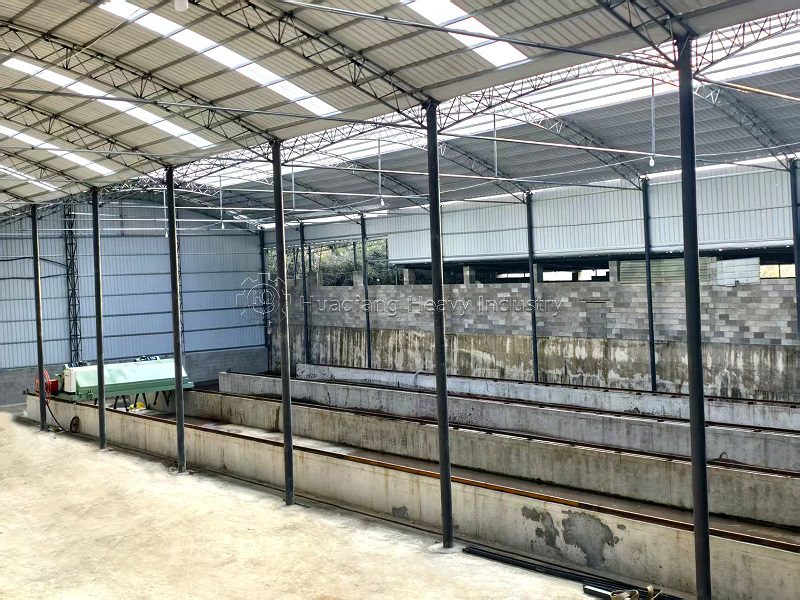
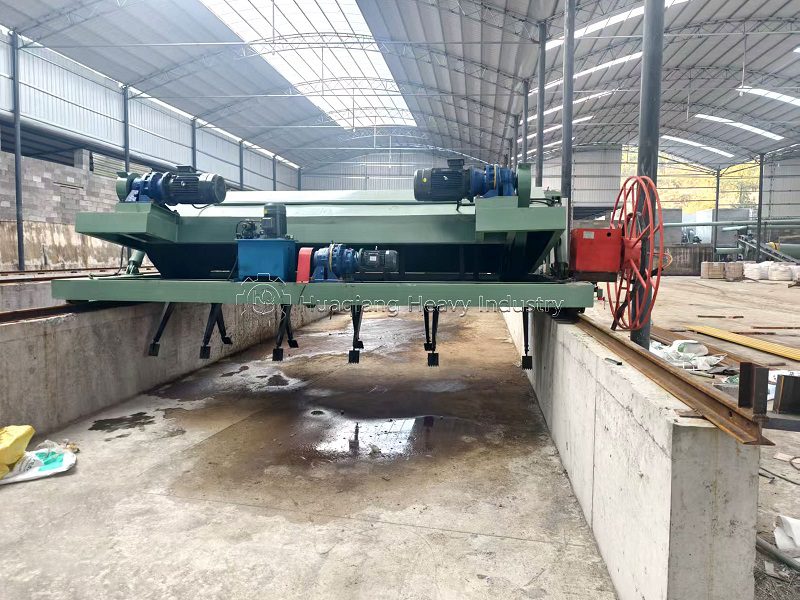
Insufficient turning and covering is the structural root cause of localized problems. The turning depth should be 10-20 cm lower than the material pile height and not exceed 90% of the equipment’s rated depth to ensure that the bottom layer of material is touched while the surface layer is not excessively exposed. If the turning width is less than the net width of the tank, there will be a blind zone on each side, and the temperature of the material at the edge can be 8-12℃ lower than that in the middle, extending the fermentation cycle by 5-7 days.
II. Tank Corners: The Structural Source of Turning Blind Zones
The problem of corners not heating up is often not due to operation, but rather to the mismatch between the tank dimensions and the turning machine’s operating range. It is recommended that the tank width be controlled at 8-12 m and the depth not exceed 3 m. Beyond this range, the turning equipment cannot reach the corners, easily creating blind zones. The effective coverage width of the turning should be 5-10 cm wider on each side than the net width of the fermentation tank as a safety margin; otherwise, a static material strip should be left on each side.
The tank structure itself can also reduce dead zones: use rounded transitions instead of right angles at the corners, with a radius of 30-50 cm; the bottom should be slightly inclined at 1%-2% towards the discharge port to reduce material deposition at the bottom of the tank. For areas difficult for equipment to reach, such as the ends, a small mobile compost turner or manual assistance can be used to periodically turn the compost pile, checking the corner piles every 2-3 days.
III. The Moisture-Regulating Effect of Additives
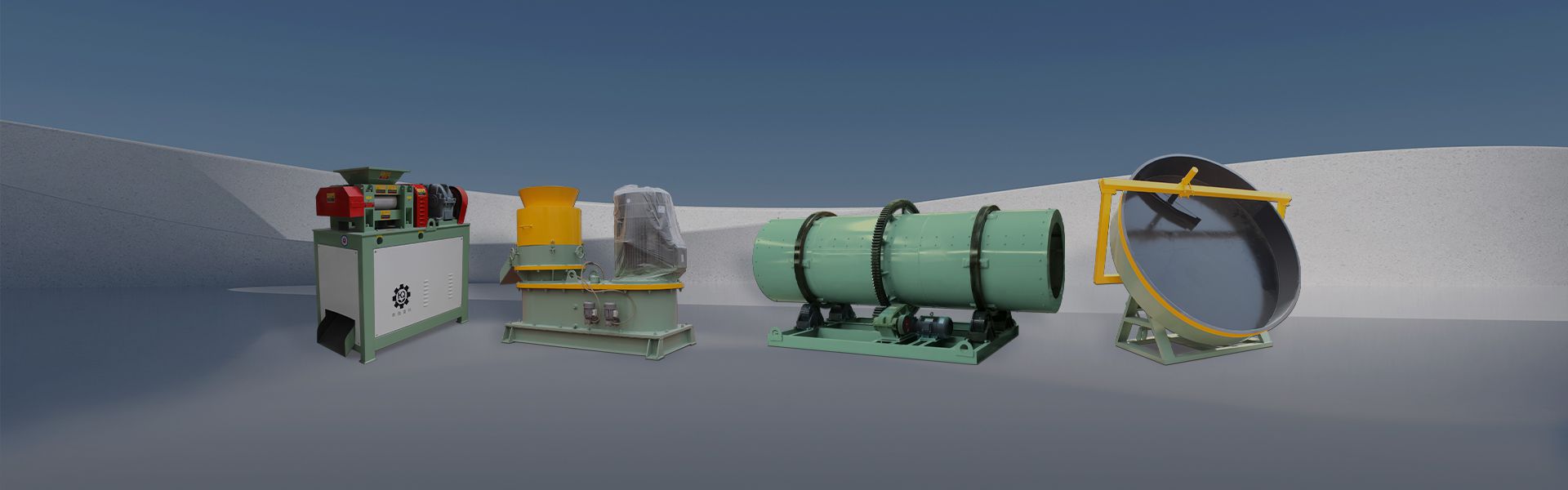
When the moisture content is too high, the most direct adjustment method is to add dry additives. Dry materials such as straw powder, rice husks, and sawdust can absorb excess moisture, while increasing the porosity of the pile and improving oxygen supply. Remixing with already decomposed low-moisture materials (approximately 30% moisture) is also effective, offsetting the wet and dry conditions without increasing external purchase costs. The selection of additives should consider the subsequent granulation route: Straw fibers are long; if subsequent granulation is done via disc or drum, they should be pre-cut to below 5 mm to avoid entanglement and jamming during granulation.
IV. FAQ: What to do about slow fermentation in winter?
Q: In winter, the ambient temperature is low, and the fermentation tank temperature remains low. What adjustments should be made first?
First, maintain the temperature; then adjust the moisture content; finally, consider using microbial agents. For open-air or open-style fermentation tanks, an insulated shed can be built, covered with a double layer of plastic film and straw mats or insulating blankets to reduce heat loss; a 10-15 cm thick bedding layer should be laid on the ground to prevent heat loss due to low ground temperature. The total material volume is recommended to be no less than 2-4 m³, as a smaller pile will not be able to sustain its own heat generation. Regarding moisture, 30-40℃ warm water can be used to adjust the material’s humidity, preventing cold water from further lowering the material temperature. Microbial agents accelerate the fermentation process, but only if moisture, oxygen supply, and C/N ratio are basically appropriate—if these conditions are not met, adjusting the process conditions first is more effective than adding microbial agents. The fermentation cycle in winter is usually several days to two weeks longer than in warmer seasons; progress should be judged by the actual pile temperature curve, rather than by accelerating ripening according to a fixed number of days.
The troubleshooting logic for fermentation tanks not heating up involves locking down the four variables—oxygen supply, moisture, C/N ratio, and turning/covering—one by one, and then checking whether the tank size and turning/covering equipment are compatible. Localized failure to heat up can almost always be traced back to a corner that was missed during turning or a clump of material with excessively high moisture content. First, address the physical conditions, then discuss the microorganisms. Heating is the result, not the means.