
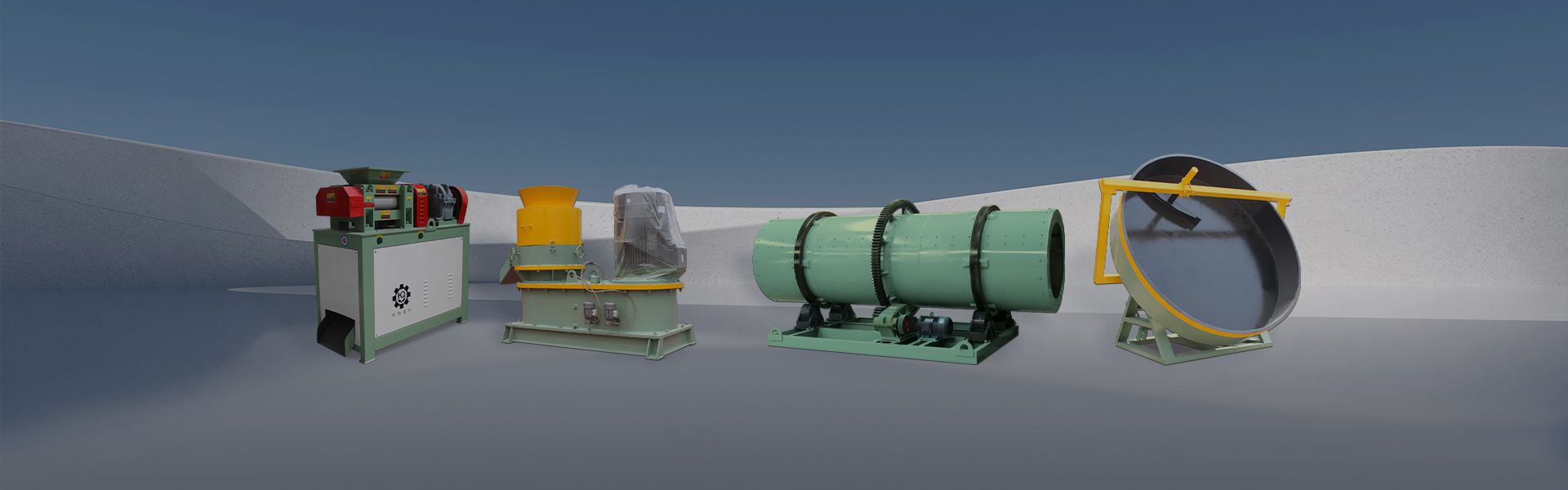
In the realm of fine grinding for fertilizer and mineral processing, where stringent requirements for particle fineness and uniformity exist, the cage crusher distinguishes itself from other equipment. It does not rely on brute force but excels through its unique working principle and ingenious design, serving a dual role in fine pulverization and efficient mixing. It is particularly adept at handling dry, brittle materials of medium hardness.
Core Advantage: Impact-Based Fine Crushing & Efficient Dispersion
The heart of the cage crusher lies in its high-speed, counter-rotating dual-cage structure. As two rotor cages equipped with steel pins rotate inward, material between them is subjected to high-speed, multi-directional impact, collision, and friction, resulting in rapid size reduction. This “centrifugal impact crushing” mode not only ensures high efficiency but also tends to produce fine powder with uniform particle size and fewer sharp edges, making it ideal for producing powdered fertilizers or those requiring a high specific surface area (e.g., some foliar fertilizer bases). Compared to the pounding and grinding action of chain crusher, cage crushers generate less heat, better preserving heat-sensitive components within the material.
Exceptional Balance of Economy & Practicality
The machine’s structure is relatively simple, and wear parts (such as cage pins) are easy to replace, leading to significantly lower maintenance costs compared to crushers with more complex internal mechanisms. The crushing process is accompanied by strong airflow, providing a degree of self-cleaning and cooling, which reduces the risk of clogging and overheating. For processes that require simultaneous grinding and preliminary mixing of multiple raw materials (e.g., nitrogen, phosphorus, and potassium bases), the cage crusher is an ideal, two-in-one solution that effectively streamlines production.
Targeted Application: Specialized in Dry & Fine Processing
The cage crusher is a classic dry-process grinding device. It forms a striking contrast and perfect complement to the previously discussed “semi-wet material crusher“: the latter specializes in coarse crushing and tearing of high-moisture, fibrous materials, while the former focuses on fine grinding of dry, brittle materials. In a complete fertilizer processing line, they can each play their part—the semi-wet crusher handles initial wet fermented material, and the cage crusher refines the product after drying.
Beyond Fertilizer: A Broad Stage of Application
Its applications extend far beyond the fertilizer industry. In chemical, building materials, animal feed, and other sectors—wherever dry lumpy raw materials need to be processed into fine powder ranging from 80 to 200 mesh—the cage crusher can deliver stable performance. It represents a classic approach to achieving efficient size reduction through sophisticated mechanical design.
Conclusion: A Lever for Precision Production
On the path to pursuing product quality and process optimization, selecting the right specialized equipment is key to success. With its unique impact crushing principle, excellent particle size control, and stable operational performance, the cage crusher has secured a solid position in the niche field of fine grinding. For producers committed to increasing product value-added and achieving precision processing, it is undoubtedly a reliable and sharp tool for “fine milling.”