
Premium WordPress theme for construction companies, contractors, builders, and a variety of other construction-related businesses.
-
28238 Kelsie Lane Apt. 451,
Port Annabelport
-
Call Us: (210) 451-123
(Sat - Thursday)
-
Monday - Friday
(10am - 05 pm)
Belt Conveyor
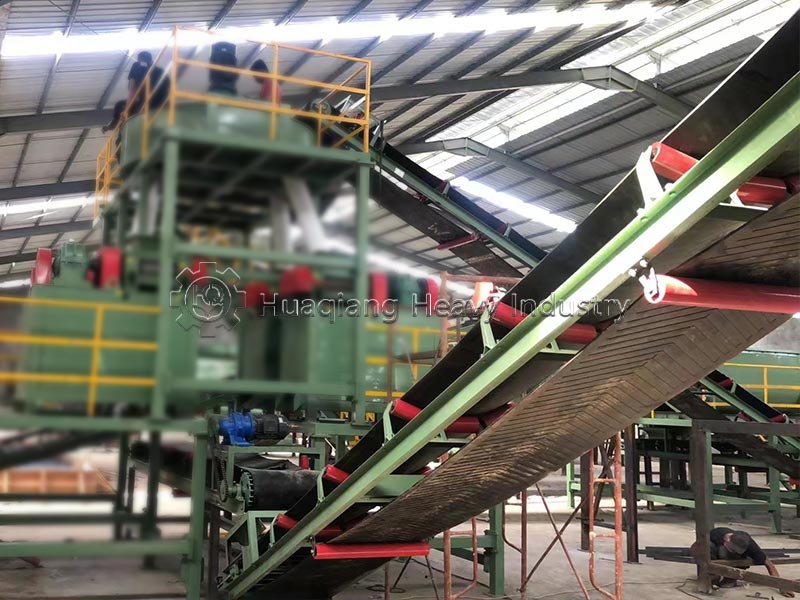
Equipment Introduction
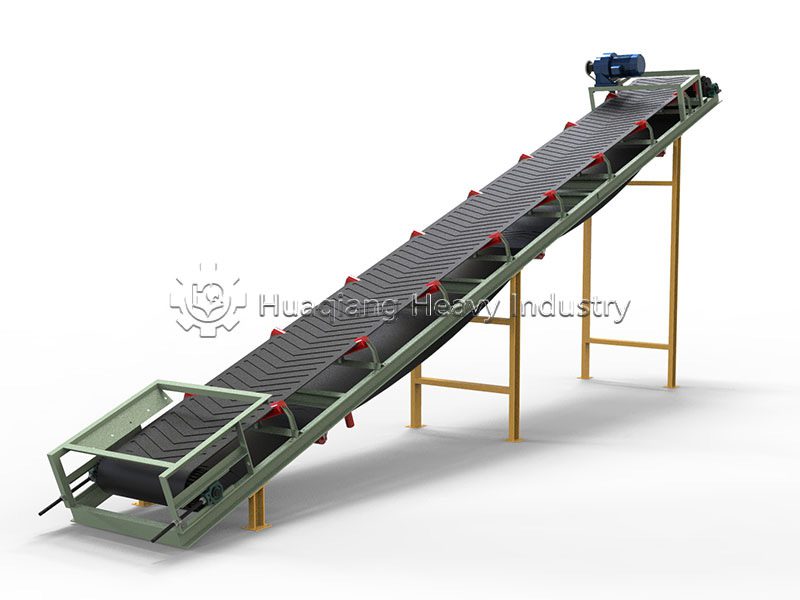
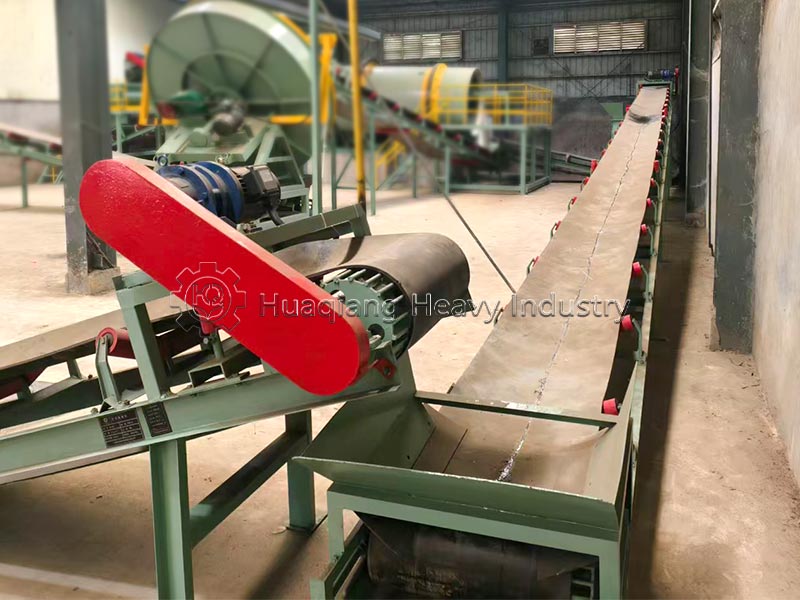
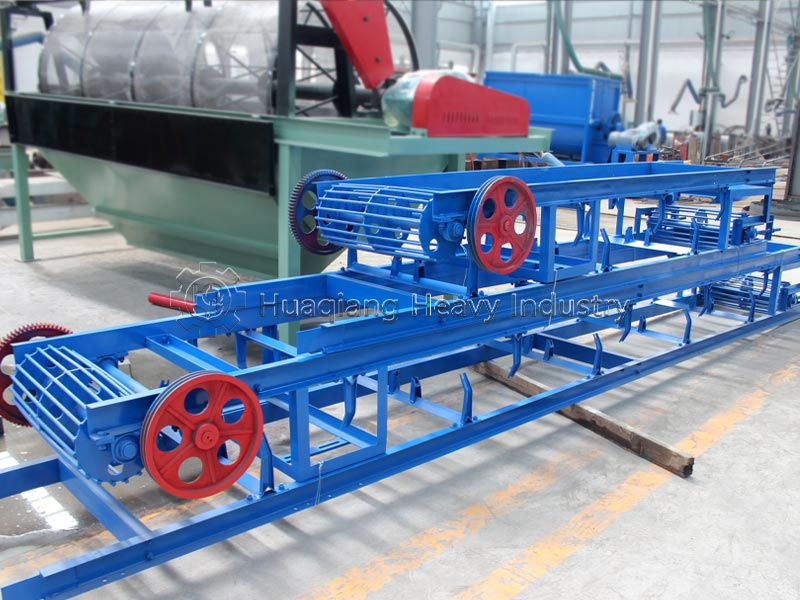
(I) Standard Fixed Belt Conveyor
The fixed belt conveyor is a fundamental continuous bulk material conveying equipment in the fertilizer, chemical, and grain industries. It relies on a ring-shaped rubber belt to carry materials and uses roller friction transmission to complete horizontal and small-angle (≤15°) material transfer. It is a basic supporting equipment for material flow in the entire fertilizer production line.
Core Advantages
- Large conveying capacity, stable operation, low breakage rate of granular fertilizers, suitable for powdery, granular, and bagged fertilizers;
- Simple structure, low maintenance cost, standardized parts, stable continuous 24-hour operation;
- Can be enclosed for dust prevention, and can be equipped with a sealing cover to meet the environmental protection requirements of organic fertilizer plants;
- Flexible inclination angle, suitable for both horizontal and incline operation, and can connect to various main units with different heights;
- Adaptable to full-capacity production lines, belt width optional from 500–1200mm, and can be freely spliced for different lengths.
(II) Telescopic Belt Conveyor (Telescopic Loader)
The telescopic belt conveyor is a derivative model of the belt conveyor. It adds a nested telescopic frame, belt storage bin, and telescopic drive mechanism to the fixed belt. The machine body can freely extend and retract like a telescope, with an adjustable length of 3–26m. It is primarily used for loading and unloading bagged fertilizer from trucks and containers, and is only suitable for transferring finished bagged fertilizer; it cannot replace long-distance raw material transportation within a production line.
Core Advantages
- Flexible and adjustable length, allowing direct access into the depths of the truck bed, reducing manual back-and-forth handling distances;
- Hydraulic lifting + bidirectional conveying, suitable for both loading and unloading, adaptable to different vehicle heights;
- Small footprint when retracted, suitable for placement in narrow spaces in warehouses and factories;
- Variable frequency speed control, complete safety protection, 1-2 people can complete the loading and unloading of a whole truckload of fertilizer, reducing labor costs by more than 60%.
(III) Comparison of Core Differences between the Two
| Comparison Item | Fixed Belt Conveyor | Telescopic Belt Conveyor |
|---|---|---|
| Body Length | Fixed and unchangeable, extendable by segmented splicing | 3‑26m free telescoping, greatly reduced folded size |
| Core Application | Continuous transfer of raw materials and granules inside production line | Loading/unloading bag‑finished fertilizer for trucks, warehouse inbound & outbound |
| Frame Structure | Single‑section fixed channel steel frame | Multi‑section nested slide‑rail telescopic frame with belt storage bin |
| Lifting Function | None, fixed height | Standard hydraulic lifting, adjustable height |
| Conveyed Materials | Powder, granules, lumps and bagged materials | Only bag‑finished fertilizer and boxed cargo |
| Installation Form | Fixed installation with concrete foundation | Equipped with universal casters, movable, no civil foundation required |
Equipment Structure Composition
(I) Standard Structure of Fixed Belt Conveyor
- Conveyor Belt: The core load-bearing component; wear-resistant troughed rubber belts are commonly used in fertilizer plants; troughed idlers create a U-shape to prevent powder spillage; heat-resistant belts can be selected for high-temperature conditions, and acid- and alkali-resistant rubber belts are used for acid and alkali fertilizers.
- Support Idler System
- Troughed load-bearing idlers: Support the belt when fully loaded with materials;
- Return flat idlers: Support the empty belt;
- Self-aligning idlers: Automatically correct belt misalignment.
- Roller Assembly
- Drive Roller (Head): Surface coated with rubber to increase friction, driven by a motor and reducer;
- Idling Roller (Tail): Changes the direction of the belt loop;
- Drive Unit: Standard motor + reducer / electric roller, frequency conversion speed control optional;
- Tensioning Device: Tail-end spiral tensioning / counterweight tensioning, adjusts belt tension and prevents slippage;
- Frame: Channel steel / square tube welded fixed bracket, floor-mounted;
- Auxiliary Accessories: Feed chute, belt cleaner, side guards, dust cover, backstop, emergency stop switch.
(II) Unique Structure of Telescopic Belt Conveyors (Additions to Ordinary Belt Conveyors)
- Nested Telescopic Frame: 2–4 sliding rail telescopic sections, chain/rack and pinion driven telescopic movement;
- Belt Storage Bin: Built-in multiple guide rollers automatically store/release excess belt during telescopic movement, maintaining belt tension throughout;
- Hydraulic Lifting System: Cylinder-supported height adjustment for different truck bodies;
- Dedicated Telescopic Drive Motor: Dual motor configuration, one controlling belt conveying and the other controlling machine telescopic movement;
- Safety Control System: Front-end anti-collision photoelectric sensor, emergency stop, anti-pinch protection, and remote telescopic function; The structures of other belts, idlers, rollers, and cleaners are the same as ordinary belt conveyors.
Working Principle
- Working Principle of Belt Conveyor
The belt conveyor operates based on the principle of friction drive:
1) Power Output: The drive motor, after being reduced in speed and increased in torque by a reducer, drives the drive drum to rotate;
2) Friction Traction: The tensioning device maintains sufficient positive pressure between the conveyor belt and the drive drum, generating friction; as the drum rotates, the friction drives the closed conveyor belt to run continuously in a preset direction;
3) Material Loading: The material is placed on the conveyor belt and moves synchronously with the belt due to the friction of the belt surface; the load-bearing idler supports the loaded belt, and the return idler supports the unloaded belt;
4) Unloading and Return: After the material reaches the unloading point at the head of the conveyor, it is unloaded by gravity or by the unloading plow; the unloaded belt is turned back by the tail reversing roller and returns to the starting point to enter the next cycle.
Core Formula: Transport Capacity (tons/hour) = 3600 × Belt Speed (m/s) × Material Density (t/m³) × Effective Cross-sectional Area (m²). Belt width, belt speed, and material characteristics are the three key variables determining the conveying capacity.
- Working Principle of Telescopic Belt Conveyor
Based on the principle of a regular belt conveyor, the telescopic belt conveyor adds a length adaptive mechanism:
1) Telescopic Action: An independent telescopic motor drives the traction translation frame, which slides relative to the outer frame via wire rope or chain traction, allowing for free adjustment of the overall machine length;
2) Belt Length Adaptation: During telescopic movement, the Z-shaped reversing section in the belt storage bin automatically retracts or releases excess belt, maintaining a match between the belt length and the frame length;
3) Bidirectional Operation: The conveyor belt can rotate in both directions, enabling both loading and unloading; combined with height adjustment, it can precisely connect to truck beds or containers of different specifications.
Application Scope
(I) Fixed Belt Conveyor Application Scenarios
- Fertilizer Complete Production Line (Core Supporting Equipment)
- 1)Raw Material Section: Transferring raw materials such as straw and livestock manure between crushers and mixers;
- 2)Granulation and Drying Section: Transferring material from the granulator to the dryer, from the dryer to the cooler, and from the cooler to the coating machine;
- 3)Finished Product Section: Transferring granular fertilizer between screening machines, silos, and packaging machines;
- Plant Yard Transfer: Long-distance material transportation from workshops to raw material storage sheds and finished product warehouses;
- Cross-Industry Expansion: Grain, feed, chemical powder, and building material sand and gravel transportation.
(II) Telescopic Belt Conveyor Application Scenarios
- Fertilizer Plant Finished Product Warehouse: Rapid loading/unloading of bagged fertilizer trucks and containers;
- Organic fertilizer and compound fertilizer sales transfer warehouses, agricultural material logistics sorting centers;
- Used only for finished product bagging transfer, not connected to internal process sections of the production line.
Common Faults, Causes, and Solutions
(I) Faults of Fixed Belt Conveyors
| Fault Phenomenon | Fault Cause | Solution |
|---|---|---|
| Belt continuous deviation | 1. Head‑tail rollers are not parallel; 2. Material falls off‑center of belt; 3. Single idler stuck; 4. Skewed belt joint | 1. Adjust left‑right position of head‑tail tension rollers; 2. Extend guide chute for centered feeding; 3. Replace damaged idlers; 4. Re‑vulcanize and correct belt joint |
| Belt slipping, roller idling | 1. Insufficient belt tension; 2. Fertilizer dust adheres to roller surface; 3. Instant over‑feeding | 1. Adjust tension device to increase belt tension; 2. Clean dust buildup on roller surface; 3. Reduce feeding rate and feed evenly |
| Belt edge cracking & damage | 1. Scratches from hard impurities in material; 2. Excessive pressure of scraper blade; 3. Long‑term belt aging | 1. Install pre‑screening and impurity‑removal screen; 2. Loosen scraper pressure; 3. Repair or replace worn belt timely |
| Idler abnormal noise / non‑rotation | Bearing oil shortage, dust ingress causing bearing wear | Add grease; replace idler directly if heavily worn |
(II) Faults Specific to Telescopic Belt Conveyors
| Fault Phenomenon | Fault Cause | Solution |
|---|---|---|
| Jamming during telescoping, cannot extend / retract | Dust and caking material on slide rail, lack of lubrication for telescopic chain, overload of telescopic motor | Clean dust on slide rail, apply chain grease, reduce load on belt conveyor |
| Hydraulic lifting fails to raise / lower | Insufficient hydraulic oil, oil cylinder seal leakage, hydraulic pump failure | Refill hydraulic oil, replace oil seal, inspect and repair hydraulic power unit |
| Body retracts automatically after reaching telescopic position | Insufficient tension of telescopic chain, brake device failure | Tighten telescopic chain, inspect and repair brake assembly of telescopic motor |
| Material spillage and deviation at front loading‑unloading end | Excessive belt speed, missing idlers on telescopic section | Reduce VFD speed, complete missing idlers for telescopic section, install side baffle strips |
Application Processes of Two Types of Equipment in Fertilizer Production Lines
- Fixed Belt Conveyor System (Core Production Line Link): Raw Material Yard → Belt Conveyor → Crusher → Belt Conveyor → Batching and Mixing Machine → Belt Conveyor → Granulator → Belt Conveyor → Rotary Drum Dryer → Rotary Drum Cooler → Belt Conveyor → Coating Machine → Screening Machine → Belt Conveyor → Finished Product Silo → Packaging Machine. Function: Transports powdery and granular semi-finished products throughout the entire process, connecting all main equipment and ensuring continuous production on the assembly line.
- Telescopic Belt Conveyor System (Finished Product End Only): Packaging Machine Discharge Port → Short-Distance Fixed Belt Conveyor → Telescopic Belt Conveyor → Truck/Container Carriage. Function: Used only for loading and unloading bagged fertilizer after packaging; does not participate in upstream drying, granulation, or other processes; it is an auxiliary equipment for warehousing and logistics.
Summary of Comprehensive Technical Features of the Equipment
Fixed Belt Conveyor
- Highly versatile, capable of conveying dry, wet, powder, and granular fertilizers;
- Stable long-distance continuous conveying, low energy consumption, and large single-unit conveying capacity;
- Can be equipped with a sealed dust cover to meet the environmental protection standards for organic fertilizer production;
- Modular splicing, allowing for free adjustment of conveying length and climbing angle according to workshop layout.
Telescopic Belt Conveyor
- Dual adjustment of telescopic and lifting, adaptable to various truck beds, increasing loading and unloading efficiency by 3-5 times;
- Movable and space-saving, does not occupy factory space when retracted;
- Bidirectional frequency conversion conveying, combining loading and unloading functions, significantly reducing manual labor;
- Only suitable for bagged finished materials, not for transferring bulk raw materials on the production line.