
Premium WordPress theme for construction companies, contractors, builders, and a variety of other construction-related businesses.
-
28238 Kelsie Lane Apt. 451,
Port Annabelport
-
Call Us: (210) 451-123
(Sat - Thursday)
-
Monday - Friday
(10am - 05 pm)
Ring Die Pelleting Machine
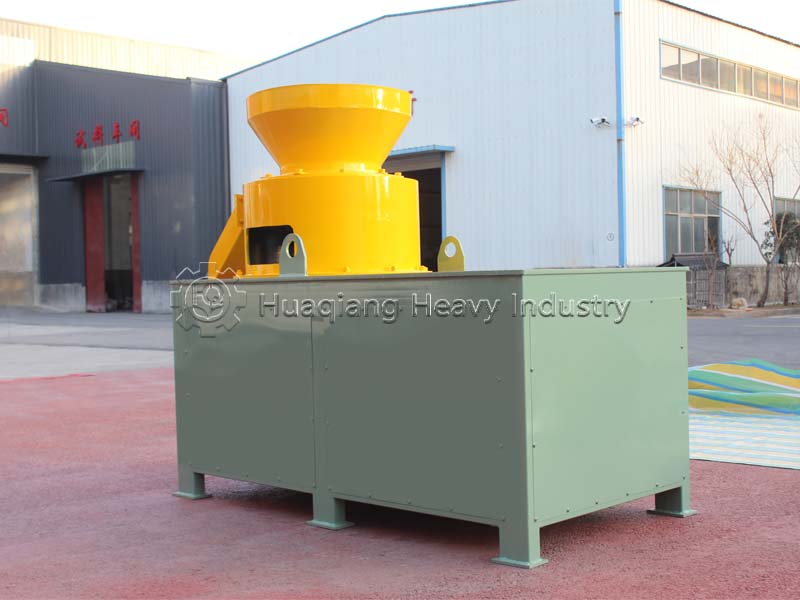
Equipment Introduction
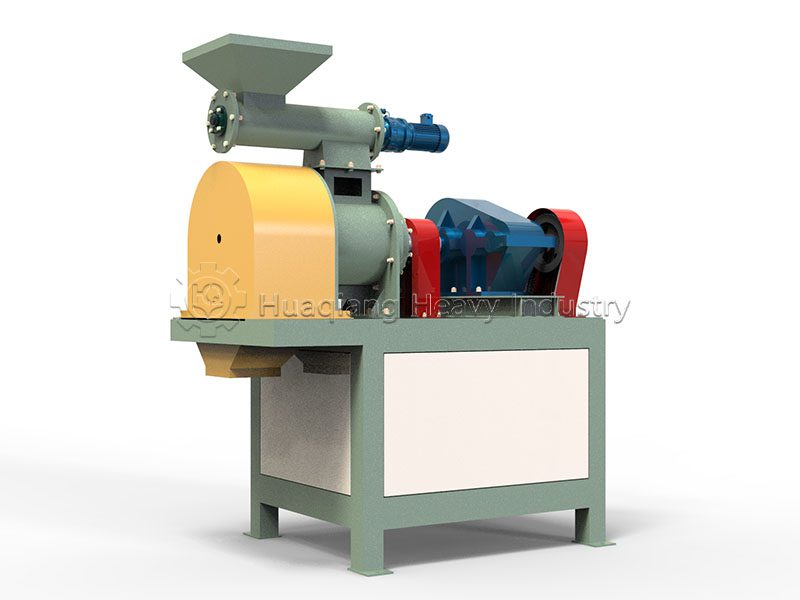
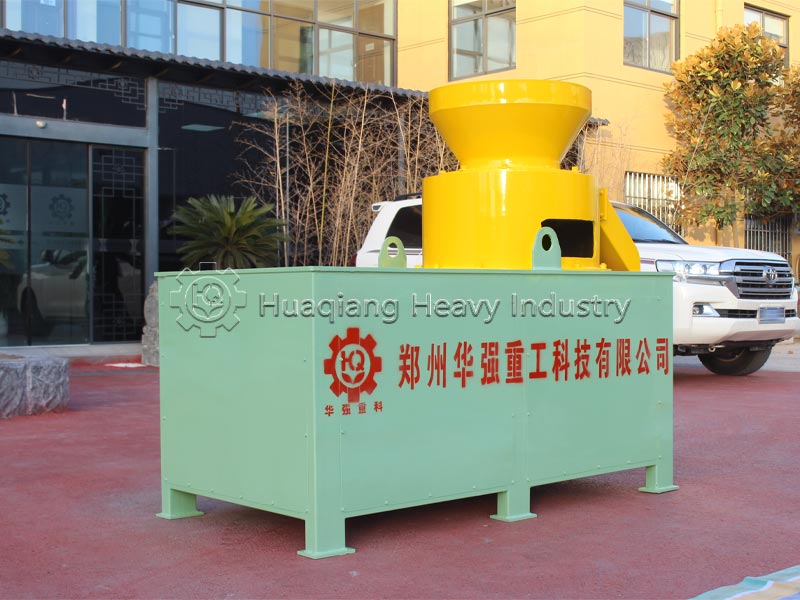
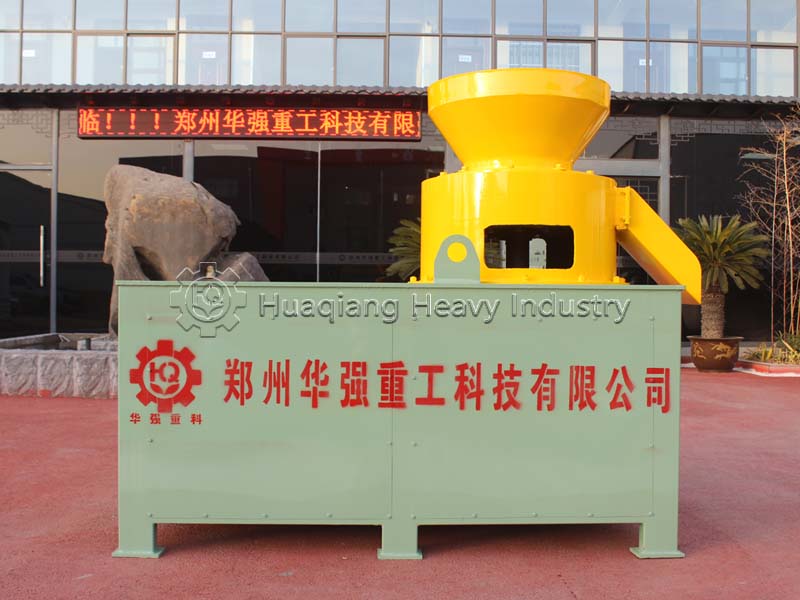
The ring die pelleting machine/dual-mold pelleting machine is one of the core granulation equipment in the fertilizer processing industry. It is a high-efficiency bio-fertilizer processing device integrating forced feeding, secondary mixing, and combined ring and flat die granulation.
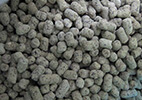
The ring die pelleting machine uses a combination of a ring die and multiple pressure rollers. Raw materials are squeezed from the inside of the die by the pressure rollers and discharged through the die holes. The ring structure ensures more uniform stress on the raw materials, resulting in high-density, uniformly shaped granules. Its production capacity is far higher than that of flat die pelleting machines, making it suitable for large-scale industrial production.
Technological Breakthrough: It not only possesses the high output and aesthetically pleasing granules of the ring die pelleting machine but also the strong adaptability of the flat die granulator to high-fiber, high-moisture materials.
Market Value: One machine is equivalent to a combination of a mixer, a ring die pelleting machine, and a flat die pelleting machine, significantly reducing users’ equipment procurement costs and factory space requirements.
Raw Materials for the Equipment
The dual-die pelleting machine supports the processing of various materials, including but not limited to the following categories:
1. Organic fertilizer raw materials: poultry and livestock manure, kitchen waste, sugar residue, sawdust, medicinal herb residue, etc.
2. Compound fertilizer raw materials: ammonium sulfate, ammonium nitrate, potassium chloride, and other chemical raw materials.
3. Others: biomass pellets (such as sawdust, wood chips), feed mixture powder, etc.
These raw materials typically require pretreatment, such as crushing, drying, or fermentation, to achieve the appropriate moisture content and fineness for granulation, thereby improving granulation efficiency and pellet quality.
Applications of the Equipment
The dual-die pelleting machine/ring die pelleting machine has a wide range of applications:
1. Organic Fertilizer and Bio-organic Fertilizer Production (Core Application)
Widely applicable to the direct granulation of organic materials such as livestock and poultry manure (chicken manure, pig manure, cow manure, sheep manure, etc.), urban sludge, domestic waste, sugar mill filter mud, paper mill sludge, distiller’s grains, soybean residue, straw, and peat moss. It can produce pure organic fertilizer, organic-inorganic compound fertilizer, and bio-organic fertilizer.
2. Compound Fertilizer and Fertilizer Production
Nitrogen, phosphorus, and potassium fertilizer powders can be added to organic materials for mixing and granulation.
3. Livestock Feed Processing
Used for pelleting livestock and poultry feed (chicken, duck, pig, cattle, sheep, etc.).
4. Biomass Fuel
Processing biomass fuel pellets such as sawdust and straw.
5. Chemical and Pharmaceutical
Dry or wet granulation of some chemical and pharmaceutical powders.
6. Carbon-based fertilizers can be used for granulation of mixtures of biochar powder and well-rotted organic fertilizer powder.
Equipment Structure
The dual-die pelleting machine/ring die pelleting machine mainly consists of the following core components:
1. Ring Die (Annular Mold): The most crucial working component, a ring-shaped steel die with numerous evenly distributed die holes on its sidewalls. The ring die is made of high-strength, wear-resistant alloy steel and undergoes special heat treatment. Die hole diameters can be selected from various specifications such as Φ5, Φ6, Φ7, and Φ8 according to user requirements. The compression ratio of the ring die directly affects the hardness and output of the granules.
2. Pressure Rollers (Rollers): Installed inside the ring die cavity, typically 2-4 rollers roll in contact with the ring die sidewalls. The pressure rollers are cast with manganese and tempered, providing corrosion resistance and wear resistance. The gap between the pressure rollers and the ring die needs to be controlled within 0.1-0.3mm.
3. Flat Die Module (Unique to Dual-Die Models): The dual-die granulator is additionally equipped with a flat die granulation module, forming a dual-die synergy with the ring die module. The flat die module is suitable for high-moisture, sticky materials and employs an extrusion granulation process.
4. Feeding and Mixing System
This machine integrates a feeder, mixer, and granulator into one unit. The feeder is equipped with a speed regulator to adjust the feed rate according to the material’s moisture content. It provides uniform feeding while simultaneously performing secondary mixing of the material.
5. Transmission System
Includes the motor, reducer, main shaft, gears, and other transmission components. Some large-scale equipment uses high-precision gear transmission.
6. Cutter Device
Mounted on the outside of the ring die, this device cuts the extruded strip-shaped material into granules. The cutter is a wear part and requires periodic replacement.
7. Frame and Housing
The supporting and protective structure of the entire machine, ensuring stable installation and smooth operation of all components.
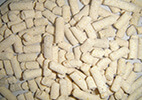
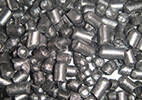
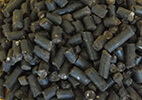
Equipment Working Principle
1. Ring Die Pelleting Machine Working Principle
The ring die pelleting machine works on the principle of ring die rotary extrusion molding: After the material enters the inner cavity of the ring die through the feed inlet, the centrifugal force generated by the high-speed rotation of the ring die carries the material into the wedge-shaped extrusion zone between the ring die and the pressure roller. The material is subjected to strong extrusion by the pressure roller and is extruded from the die holes on the side wall of the ring die. The strip-shaped material extruded from the die holes is cut into granules by the cutter. Under the same conditions, the amount of material extruded by the pressure roller each time is basically stable.
2. Working Principle of Dual-Die Pelleting Machine
The dual-die pelleting machine adds a flat die module to the ring die pelleting machine, achieving synergistic granulation:
After the material enters from the feeding system, either the flat die mode or the ring die mode can be selected according to the material characteristics:
Flat Die Mode: Relying on high-pressure extrusion, it is particularly suitable for materials with high coarse fiber content and low moisture content (15%-30%), which can bind and compact the fibers into high-density columnar particles.
Ring Die Mode: Utilizing centrifugal force and kneading action, it is more suitable for fermented materials with high moisture content (20%-50%), high viscosity, and good fineness, producing particles with better roundness.
The two modes can be flexibly switched according to production needs, eliminating the need to purchase two granulators with different processes.
Fermentation and Granulation Process of the Equipment
Fermentation Process of the Equipment
While the dual-die pelleting machine/ring die pelleting machine itself does not directly participate in the fermentation process, fermentation is a pre-processing step in organic fertilizer production lines.
1. Key Points of Fermentation Process
Organic waste (livestock manure, straw, etc.) must first undergo composting and fermentation.
During fermentation, a turning machine is used to periodically turn the compost pile to provide sufficient oxygen.
The fermentation system includes a feeding conveyor, mixer, dedicated turning machine, oxygen supply system, and automatic control system.
2. Impact of Fermentation on Granulation
The degree of fermentation directly affects the granulation effect.
The moisture content of the material after fermentation must be controlled within the range required by the equipment (20%-50%).
The advantage of the dual-mold granulator is that the wet material after fermentation can be directly fed into the machine for granulation without pre-drying.
3. Seamless Integration of Fermentation and Granulation
In a complete organic fertilizer production line, the fermentation system and the granulation system are closely integrated. After fermentation, the material is screened and crushed before directly entering the granulation process, reducing intermediate transfer links.
Granulation Process of the Equipment
1. Key Process Parameters
| Parameter | Control Range | Influence |
|---|---|---|
| Die Hole Diameter | Φ2-Φ20mm | Determines the diameter of finished pellets |
| Die Hole Length-Diameter Ratio (Compression Ratio) | Adjust according to material characteristics | Affects pellet density and pelleting rate |
| Ring Die Rotation Speed | Linear speed at inner diameter: 4-8m/s | Excessively high speed reduces pelleting rate; too low speed hinders forming |
| Die-Roller Gap | 0.1-0.3mm | Excessively large gap causes poor forming; too small gap easily leads to machine blockage |
| Material Moisture Content | 15-25% | Excess moisture causes die blockage; insufficient moisture results in failed forming |
| Pellet Temperature Rise | <30°C | Excess temperature rise destroys nutritional components of raw materials |
| Pelleting Rate | >95% | Core indicator to evaluate granulation performance |
The three factors directly affect the granulation effect: the aspect ratio of the die hole, the height of the die, and the rotational speed of the die. The die rotational speed must be designed reasonably; too high a speed will reduce the particle formation rate, while too low a speed will hinder particle formation.
2. Key Points of Granulation Process for Different Materials
| Material Type | Moisture Control Range | Special Requirements |
|---|---|---|
| Livestock & Poultry Manure | 20-25% | Fully ferment and decompose first, then crush before granulation |
| Crop Straw | 15-18% | Long fiber materials, required to be fully crushed |
| Compound Fertilizer | Adjust according to formula | Pay attention to chemical reaction and moisture of raw materials |
| Biomass Materials | 12-15% | Low inherent moisture, proper humidification is required |
| High-Moisture Materials | Dry to below 20% in advance | Drying equipment can be equipped for pretreatment |
Application of Equipment in Production Lines
Dual-die pelleting machines/ring die pelleting machines are typically used as core granulation equipment in organic fertilizer/compound fertilizer production lines, located after fermentation, crushing, and mixing processes, and before drying, cooling, and screening processes.
1. Typical Flow of an Organic Fertilizer Production Line
Raw material selection (animal manure, etc.) → Ingredient mixing → High-temperature microbial composting and fermentation → Semi-finished product screening and crushing → Dual-die/ring-die granulation → Drying → Cooling and screening → Metering and sealing → Finished product warehousing
2. Composition of Complete Equipment Sets
Complete production lines mainly consist of a fermentation system, a granulation system, a drying and cooling system, a deodorization and dust removal system, and a finished product packaging system. The fermentation system includes a feeding conveyor, a mixer, a dedicated turning machine, an oxygen supply system, and an automatic control system.
3. Unique Advantages of Dual-die Granulators
In the production line, dual-die pelleting machines integrate feeding, mixing, and granulation, reducing intermediate equipment. The dual-die modules can operate independently, switching as needed to avoid energy waste. The equipment supports continuous feeding and discharging, requiring no dedicated personnel; 1-2 people can complete the entire operation and maintenance process.
4. Construction Scale The construction scale of an organic fertilizer production line is generally 10,000-50,000 tons per year.
Equipment Operation Method
1. Installation and Preparation
Install the pellet mill stably.
Add gear oil to the gearbox—use 70# or 90# gear oil when the temperature is low, and 40# or 50# machine oil when the temperature is high.
Adjust the steering to ensure it is normal, and check for loose screws in all parts.
Adjust the gap between the pressure roller and the die to 0.1-0.3mm, so that the pressure roller is in a “partially rotating” state under the drive of the ring die.
2. No-load Test Run
The machine should be started under no-load conditions; it is strictly forbidden to start it with material.
Run it under no-load for 3-5 minutes, checking for abnormal noises from the motor and bearings, and whether the transmission components operate smoothly.
3. Load Operation
Starting sequence: ① Start the pellet mill → ② Start the feeder → ③ Feeding and Adjusting the Feeder Speed
For initial use of a new machine: First, use abrasive material with a high oil content, gradually adding oily material. Repeatedly press the granules to lubricate the die.
If you experience high die resistance, low output, or no output, repeatedly grind the die as described above.
When processing materials with high coarse fiber content, add approximately 5% water.
When processing compound fertilizers, pay attention to the chemical reaction and moisture content of the materials.
4. Shutdown
Shutdown sequence: ① Stop feeding → ② Turn off the feeder → ③ Turn off the granulator.
The feeder must be running under no-load conditions.
There should be no material accumulation inside the main unit. Ensure the current is at its minimum before shutting down.
Operation, Maintenance, and Troubleshooting
Operational Guidelines: Follow the sequence of “start the main unit first, then start the feeder, then add material” and “stop the material first, then stop the feeder, then shut down the machine.”
Daily Maintenance:
Pressure Roller Lubrication: Lubricate the rollers every shift during the first week of operation, and add high-temperature grease periodically thereafter.
Die Grinding: New dies need to be repeatedly ground with oil (sawdust + machine oil) to ensure smooth pores.
Common Problem Solutions:
No Particle Production/Clogging: This is usually due to improper die break-in or excessive moisture content. Clean the die pores and adjust the raw material ratio.
Particles Too Fine: Check the material’s adhesion; appropriately increase the moisture content or adjust the pressure roller gap (0.1-0.3mm).
Equipment Parameters
Organic Fertilizer Double Die Pellet Machine
| Model | HP-450 | HP-650 |
|---|---|---|
| Capacity (t/h) | 2-5 | 4-8 |
| Pelleting Rate (%) | >95% | >95% |
| Motor Power (Kw) | 30+1.5 | 55+3 |
| Overall Dimension (mm) | 2150*1350*2200 | 2500*1350*2535 |
Common Equipment Problems and Solutions
Common Equipment Problems
1. Machine Blockage
Causes:
* Improper die roller gap (too large or too small)
* Raw material moisture content too high or too low
* Raw material contains impurities (stones, iron blocks, metal)
* Fibers too long and entangled
* Insufficient lubrication of the die orifice (new machine or after die replacement)
* Feeding speed too fast, overloading the main unit
Die roller gap is one of the main causes of blockage in ring die pellet mills. If the die orifice length-to-diameter ratio is too small, the extrusion pressure on the raw material as it passes through the ring die orifice is smaller, resulting in looser pellets that are difficult to form; if the die orifice length-to-diameter ratio is too large, it easily leads to material slippage and subsequent blockage.
2. Pellet Quality Issues
| Fault Phenomenon | Possible Causes |
|---|---|
| Large amount of powder, loose pellets with low compactness | Improper material formula ratio, inappropriate moisture content |
| Rough pellet surface | Reduced smoothness of die holes, insufficient fineness of raw materials |
| Uneven pellet length | Worn cutter, improper installation position of cutter |
| Pellets fail to form | Excessively high moisture, raw materials not fully decomposed after fermentation |
| Over-hard pellets | Excessive length-diameter ratio of die holes, over-extrusion |
| Over-soft pellets | Too small length-diameter ratio of die holes, insufficient extrusion pressure |
3. Equipment malfunction
| Abnormal Phenomenon | Possible Causes |
|---|---|
| Low operating current (less than 50% of rated value) | Too high or too low moisture of raw materials, improper feeding speed |
| Excessive fluctuation of operating current | Uneven moisture of raw materials, die holes blocked by impurities |
| Abnormal noise / Vibration | Loose bolts, damaged bearings, unbalanced molds |
| Gearbox oil leakage | Aging oil seal, excessive oil level |
| Idle rotation between pressure roller and die plate | Improper gap adjustment, interruption of material supply |
Equipment Troubleshooting
1. Solutions for Machine Blockage
1. Solutions for Machine Blockage
| Fault Phenomenon | Solutions |
|---|---|
| Clogged die holes | Remove the mold and unclog each hole one by one; repeatedly grind with oil-containing abrasive materials |
| Improper gap between die and roller | Readjust the gap to 0.1-0.3mm |
| Excessively high raw material moisture | Adjust raw material moisture to 15-25% |
| Impurities contained in raw materials | Sieve raw materials to remove impurities before granulation |
| Overlong fiber | Crush raw materials to less than 30mm in advance |
| Excessively fast feeding speed | Adjust the rotating speed of the feeder to control feeding volume |
2. Particle quality adjustment
| Problem | Adjustment Measures |
|---|---|
| Excessive powder from pellets | Adjust material formula ratio and moisture content; check cutter sharpness |
| Pellets fail to form | Reduce raw material moisture; add binder; adjust die hole parameters |
| Over-hard pellets | Reduce die hole length-diameter ratio; lower extrusion pressure |
| Over-soft pellets | Increase die hole length-diameter ratio; add appropriate moisture |
| Uneven pellet size | Replace mold with uniform aperture; adjust cutter position |
3. Handling operational anomalies
| Abnormality | Treatment Measures |
|---|---|
| Low Operating Current | Adjust raw material moisture; match feeding speed with discharging rate |
| Severe Current Fluctuation | Sieve to remove impurities; adjust feeder speed; clean clogged die holes |
| Abnormal Noise & Vibration | Tighten loose bolts; inspect and replace damaged bearings |
| Oil Leakage | Replace oil seal; check oil level |
| No Pelletizing / No Discharge | Remove the mold and clean each hole individually; grind and lubricate die holes |
The dual-die pelleting machine is more than just a simple fertilizer machine; it’s a system solution integrating materials science, biology, and mechanical engineering. Its superior raw material adaptability and protection of core fertilizer properties make it the preferred model for organic fertilizer processing in the next 5-10 years.
Whether you’re building a new organic fertilizer/compound fertilizer/feed production line and need a complete equipment solution, upgrading an existing line and need equipment selection advice, or encountering difficulties granulating high-moisture, sticky, or coarse-fiber materials and need technical support—we are always ready to provide you with professional and sincere service.