
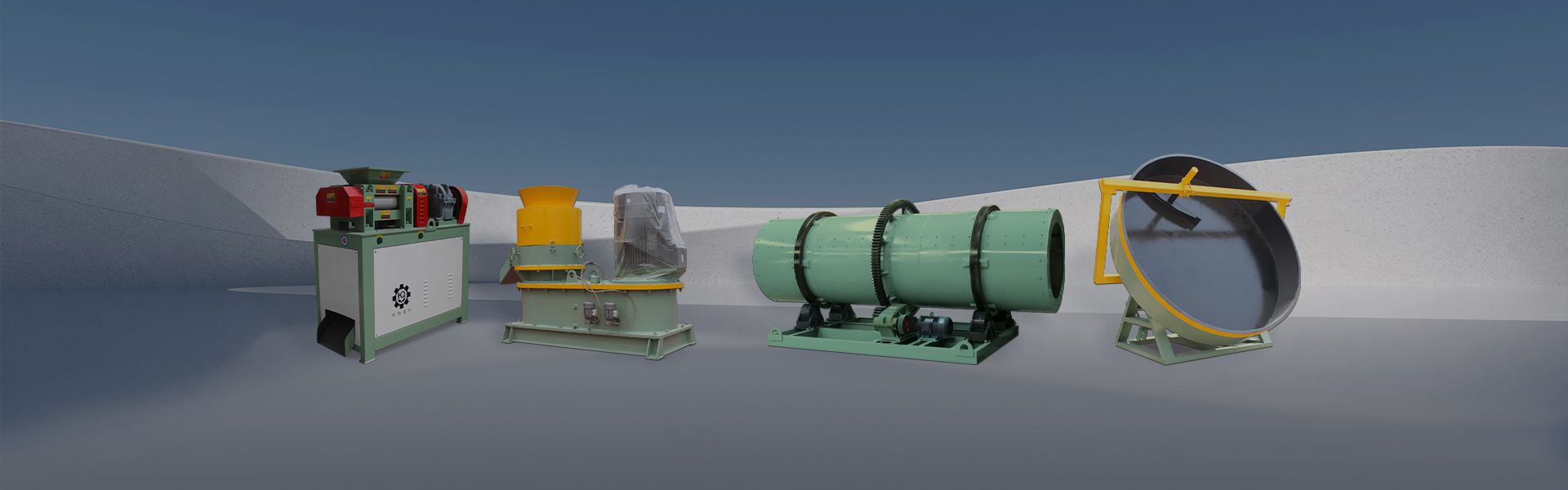
In the field of bio-organic fertilizer production, fermentation turning technology is widely recognized as the core factor determining fermentation quality. The effectiveness of this technology largely depends on the appropriate selection of turning equipment. Faced with a variety of large wheeled, chain-plate, and trough-type turning machines on the market, companies often fall into the misconception that “the more expensive, the better” or “the more functions, the better.” In fact, scientific equipment selection requires comprehensive consideration of four dimensions: fermentation process, raw material characteristics, production capacity, and site conditions, to achieve precise adaptation between technology and equipment.
Fermentation Process Determines Equipment Type
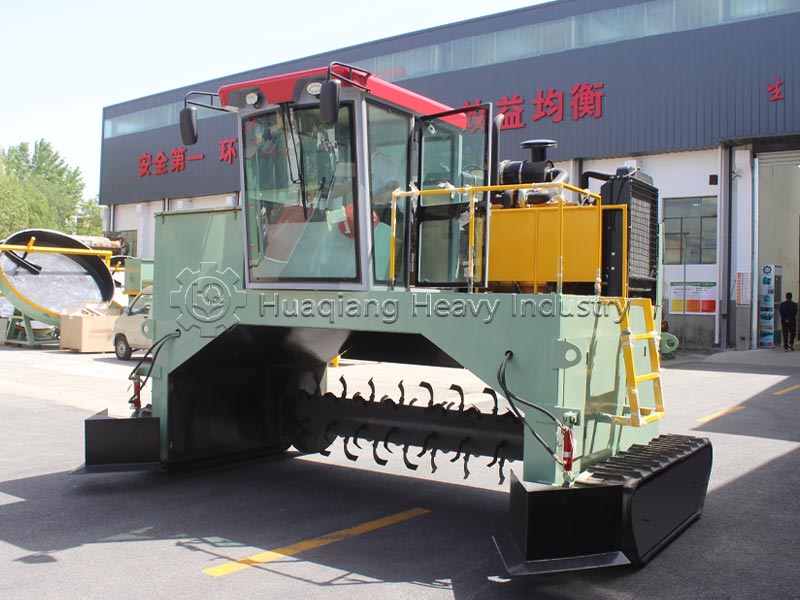
The selection of turning equipment must first conform to the overall design of the fermentation process. Winding fermentation, due to its low investment and high flexibility, is currently the most widely used process. In this process, the equipment needs to move between windrows, thus requiring large wheeled or chain-plate turning machines. The former, with its wide width and deep turning capabilities, meets the needs of large-scale production, while the latter, with its compact and flexible design, is suitable for small to medium-scale production.
Trough-type closed fermentation, however, is entirely different. It operates within a fixed fermentation tank, requiring the equipment to move precisely back and forth on a track while simultaneously employing a closed system to collect exhaust gases. In this scenario, the trough-type compost turner is the only option; its track-based design and standardized operating mode perfectly meet the stringent environmental and process stability requirements of trough fermentation.
Raw Material Characteristics Influence Blade Assembly Structure
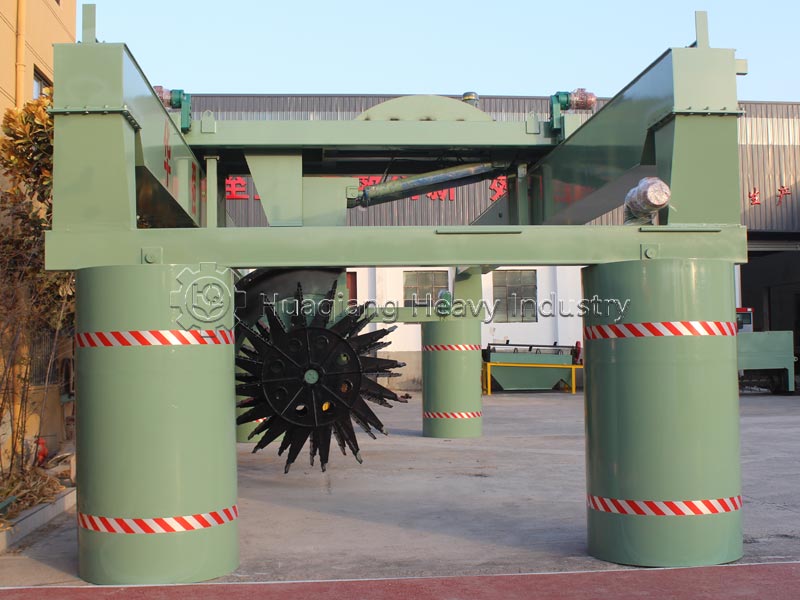
Different raw materials have different physical properties, necessitating different blade assembly designs for the compost turner. When processing highly moist and viscous raw materials, such as fresh livestock manure and urban sludge, the compost turner needs to address two core issues: preventing material from sticking to the blades and accelerating moisture evaporation through vigorous stirring. In this case, large wheel-type or trough-type compost turners with spiral blade assemblies have a clear advantage; their continuous spiral structure effectively cuts and disperses viscous materials, achieving efficient ventilation.
However, for high-fiber raw materials such as straw, medicinal herb residue, and mushroom residue, the challenge in fermentation lies in the loose material structure but excessively long fibers, limiting the contact area for microorganisms. In this case, chain-plate compost turners equipped with rake-tooth blade assemblies are more suitable. The rake teeth, during the turning process, can tear and cut the fibers to a certain extent, achieving the dual effect of turning and light crushing, significantly improving fermentation efficiency.
Production Capacity and Site Conditions Define Specifications
Production capacity directly determines the required equipment efficiency. Large-scale bases with an annual output of over 100,000 tons require equipment with a daily processing capacity of thousands of tons; large wheeled turners, with their operating capacity of hundreds of cubic meters per hour, are the ideal choice. Medium-sized enterprises with an annual output of 30,000 to 100,000 tons prioritize the stability of fermentation quality; the standardized operation mode of trough turners effectively ensures consistent quality between batches. Small production lines with an annual output of less than 30,000 tons should prioritize return on investment; chain-plate turners, with their low investment and simple operation and maintenance, are most suitable.
Site conditions are also crucial. For open, muddy sites, large-diameter wheeled compost turners are preferred due to their low ground pressure, effectively preventing vehicles from getting stuck. In areas with limited space, residential areas nearby, or high environmental requirements, a combination of trough-type compost turners and enclosed workshops is the only compliant option. For hardened concrete sites, there are no restrictions on equipment type.
In conclusion, selecting compost turners is not a simple performance comparison, but a comprehensive decision based on multiple practical conditions. Only when the equipment’s technical parameters are precisely matched with the needs of the production process, the characteristics of the raw materials, and the constraints of the site can the value of fermentation compost turner technology be fully realized, bringing efficient, stable, and environmentally friendly production returns to enterprises.
The comprehensive selection guide underscores that mastering fermentation composting technology means understanding not just the biological process, but also the precise matching of equipment to context. The choice of a large wheel compost turner for vast, open windrows is a classic application of fermentation composting turning technology for maximum throughput. A trough-type compost turner, on the other hand, applies the same biological principles within a controlled, enclosed system, representing a different branch of fermentation composting technology prioritized for environmental control and process standardization. For smaller, more flexible operations, a windrow composting machine (often a tractor-towed unit) provides an economical entry point into mechanized composting. Ultimately, all these machines are types of agriculture waste compost fermentation machines, each designed to accelerate the natural decomposition of organic matter. The key to successful implementation is to view the equipment as a component of a larger system. The decision between a large wheel compost turner for high-volume, open-air processing and a trough-type compost turner for a controlled, odor-sensitive environment must be based on a holistic assessment of raw material characteristics, production scale, site constraints, and environmental regulations. This precise adaptation of technology to need is what transforms the potential of fermentation composting technology into tangible, efficient, and sustainable production.