
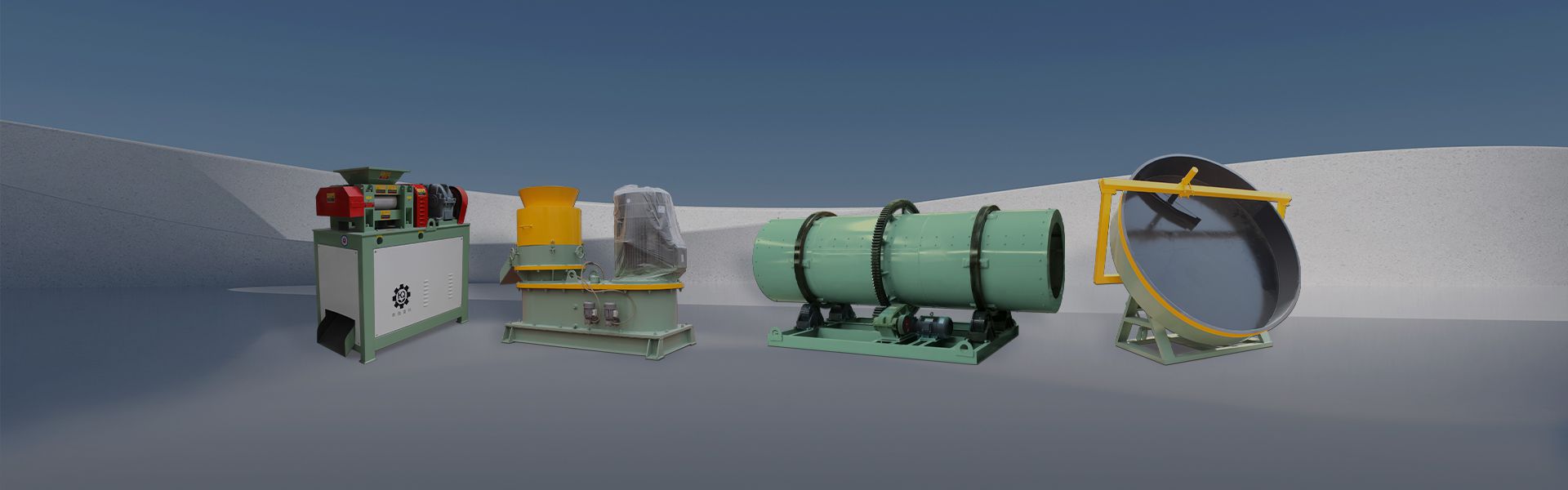
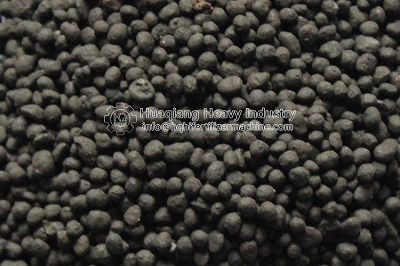
The ex-factory price difference between granular and powdered organic fertilizers is typically 150-250 yuan/ton. Taking common commercial organic fertilizers as an example: powdered fertilizers cost approximately 400-600 yuan/ton, while granular fertilizers cost approximately 600-850 yuan/ton; granular organic fertilizers with registration certificates can reach 800-1400 yuan/ton, while powdered fertilizers are mostly in the 400-800 yuan/ton range. The premium for granular fertilizers comes from their appearance, ease of application, and reduced transportation losses—powdered fertilizers are prone to dust and clumping, while granular fertilizers are applied evenly by machine with less loss, making them more attractive to orchard and cash crop growers. However, whether the premium can cover the increased costs of granulation and drying depends on your sales radius and channel positioning: for large-scale field sales, focus on cost accounting; for cash crops and retail, focus on the premium.
I. Powdered Fertilizer vs. Granular Fertilizer: Price and Application Scenarios
The price difference between the two is not “how much more profit granules make compared to powdered fertilizer”, but rather the different pricing logic for the same raw material in different sales channels.
| Comparison Item | Powdered Organic Fertilizer | Granular Organic Fertilizer |
|---|---|---|
| Typical Ex-factory Price | 400—600 RMB/ton | 600—850 RMB/ton |
| Registered Product Price Range | 400—800 RMB/ton | 800—1400 RMB/ton |
| Price Difference per Ton | — | +150—250 RMB/ton |
| Application Method | Manual broadcasting, high dust generation, uniformity relies heavily on manual operation | Machine sowing / fertilizer spreader, high uniformity, saves labor |
| Main Application Scenarios | Base fertilizer for field crops, returning to nearby fields, low-price high-volume sales | Economic crops such as orchards, tea gardens, vegetables; retail packaging |
| Transportation Loss | Prone to dust generation, susceptible to moisture and caking | Good particle flowability, low loss |
The essence of the price difference: The competitiveness of powdered fertilizer lies in its lower price per ton, while the competitiveness of granulated fertilizer lies in its application cost per hectare and its final marketability. Field farmers are sensitive to price per ton, and the convenience premium of granules is difficult to realize; orchard, tea plantation, and greenhouse vegetable growers value application efficiency and uniformity more, and are willing to pay more for granules.
II. Incremental Cost and Premium Calculation of Granulation + Drying
The “high price” of granulated fertilizer corresponds to a real incremental investment, not an arbitrary price increase. This can be calculated in two parts: one-time investment and one-ton operating cost.
Investment side: Granulation lines, based on the fermentation, crushing, screening, and packaging of powdered fertilizer lines, add granulators, dryers (wet route), coolers, and related supporting equipment. The equipment investment for granulation lines is typically 40%-60% higher than that for powdered fertilizer lines. A 10,000-ton/year powdered fertilizer line requires an investment of approximately 800,000-1.5 million yuan, while a granulation line requires the addition of granulation and drying systems. If a dry extrusion route (roller/flat die) is adopted, the dryer and hot air furnace can be eliminated, significantly reducing the investment difference.
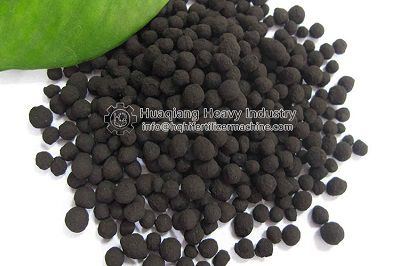
On the operational side: The processing cost per ton for wet granulation + drying increases by approximately 100-200 yuan, mainly due to granulation electricity consumption and drying fuel. Dry extrusion consumes approximately 25-35 kWh of electricity per ton, with operating costs of only 20-28 yuan/ton, saving more than 60% compared to the wet route. This is why the question of whether a pellet production line is cost-effective cannot be generalized—wet pellet lines benefit from a premium, while dry pellet lines benefit from cost savings.
Premium reconciliation: Roughly estimating based on a price difference of 150-250 yuan per ton and an increase in processing cost of 100-200 yuan per ton, the gross profit increase for wet pellet lines is typically 0-100 yuan/ton, while the gross profit increase for dry routes is much wider. However, this is only the paper price at the factory level. The real premium amplifier for granular fertilizer lies in the end-user channels: cash crop growers are willing to pay 10%-15% more for the appearance of granules, and the premium for functional granular fertilizers in retail packaging can reach 15%-25%.
III. Regional and Channel Differences: Where is the Granular Premium Easier to Realize?
The same bag of granular fertilizer commands completely different premiums when sold to field cooperatives versus orchard agricultural supply stores.
Cash crop areas are the main battleground for premium pricing. The organic fertilizer penetration rate for cash crops such as fruits, vegetables, tea, and coffee is about 34%, far higher than the 18% for field crops; the cash crop sector contributes over 60% of the organic fertilizer market demand. These planting scenarios are more sensitive to fertilization uniformity, labor costs, and fruit quality, and the convenience of granular fertilizer directly translates into willingness to pay.
Field crops focus on cost-effectiveness. The profit margin for corn, wheat, and rice cultivation is limited, and the logic of low-price, high-volume sales with powdered fertilizer still holds true. The penetration of granular fertilizer in field crops relies more on subsidies or large-scale mechanized sowing and broadcasting operations than on end-user premiums. Retail channels represent another layer of premium pricing. Small-packaged, functional (bio-based, slow-release) granular products target home gardening and high-end cash crops; the premium comes from brand and application experience, not the granulation process itself. If your sales radius is primarily local field crops, the premium payback period for granular production will be longer; only when the channel reaches cash crop areas and agricultural input retail networks does the pricing potential for granules truly open up.
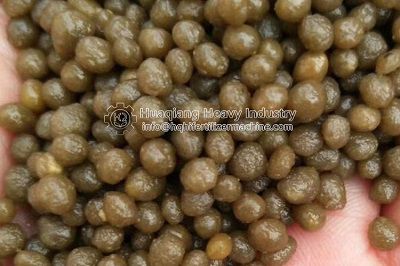
IV. FAQ: Frequently Asked Questions on Granular vs. Powdered Fertilizer Selection
Q1: Is it worthwhile for a small-scale organic fertilizer plant to establish a granular production line?
It depends on the channel, not the scale. If sales are mainly local field powdered fertilizer, the incremental investment and operating costs of a granular production line are difficult to recover with a price difference of 150-250 yuan/ton. However, if you can connect with orchards, tea gardens, or agricultural input retailers, the premium and repurchase rate of granules can support a small to medium-sized dry extrusion line (lower investment than wet + drying routes), making the business profitable by “saving on drying costs + earning channel premiums.”
Q2: Granular fertilizer is 150-250 yuan more expensive than powdered fertilizer. What does the extra money buy?
It buys application efficiency and appearance, not nutrients. Granular and powdered fertilizers adhere to the same standards for organic matter and nutrient content. The price difference corresponds to the processing costs of granulation and drying, as well as the reduction in dust, clogging, and labor costs during mechanized application. Cash crop growers are willing to pay more for “even application, no mess, and machine-friendly application,” while field crop growers are more concerned with the price per ton.
Q3: Is the premium for dry-extruded granules lower than that for disc granules?
It may be slightly lower in high-end retail channels, but it’s sufficient for field applications and cash crop base fertilizer. Dry-extruded granules are cylindrical/flattened, and their roundness is not as good as disc granules. Some retail products with extremely high appearance requirements may prefer spherical granules. However, in orchard base fertilizer and field mechanized application scenarios, granule shape has little impact on the selling price. The savings in drying investment and operating costs from the dry-process route are often more substantial than the “premium for disc appearance.”