
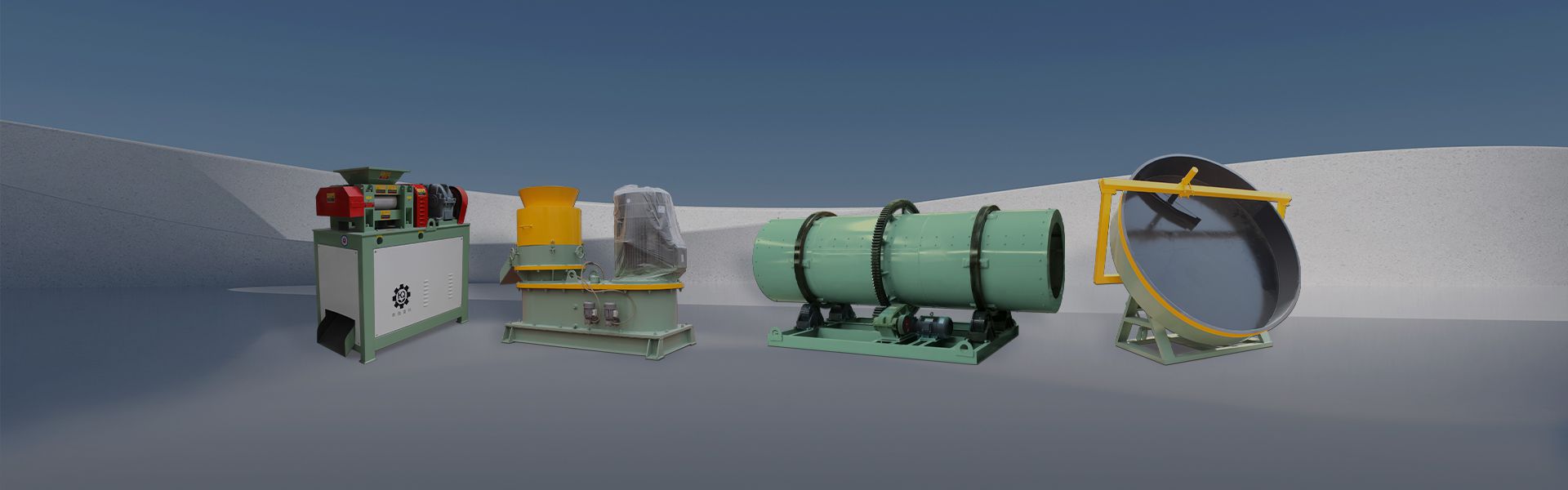
When selecting a composting system for the fermentation stage, first consider the daily processing capacity, then the trough size and moisture tolerance. Large wheel compost turners, windrow composting machines, and trough-type compost turners correspond to three different scale ranges. Choosing a system outside these ranges will either result in idle capacity or loss of uniformity. This is the most basic judgment logic when implementing fermentation composting turning technology in engineering projects.
Comparison of the Three Fermentation Systems
| Criteria | Windrow Composting Machine | Trough-type Compost Turner | Large-wheel Compost Turner |
|---|---|---|---|
| Daily Capacity | 5—50 tons | 50—300 tons | 300—2000 tons |
| Trough / Pile Dimensions | No trough, open-air windrow, width 2—4m | Trough width 3—6m, depth 0.8—1.8m | Trough width 6—12m, depth 1.5—3m |
| Turning Depth | 0.6—1.2m | 0.8—1.8m | 1.5—3m |
| Moisture Tolerance | 50%—65%, relatively dry materials | 55%—65%, controllable for sticky materials | 50%—65%, high moisture easily sticks to wheel disc |
| Uniformity | Depends on manual positioning, medium | Above 92%, no blind spots | High efficiency, scattering may cause stratification |
| Investment | 20k—50k RMB | 30k—150k RMB | From 150k—200k RMB, requires indoor use |
| Footprint / Facility | Open-air or under shed, large footprint | Requires fermentation trough, medium facility | Indoor facility, large span |
Small-Scale Windrow Composting: The Applicable Boundaries of Windrow Composting Machines
For projects with a daily processing capacity of less than 50 tons and ample space, windrow composting is the route with the lowest investment threshold. Windrow composting machines (including self-propelled and tractor-mounted compost windrow turners) move along the stack for composting, eliminating the need for troughs. Equipment costs between 20,000 and 50,000 RMB. The composting depth is 0.6–1.2m, and the stack width is 2–4m, suitable for materials with high fiber content such as sheep manure and cow manure, where the pile is not prone to collapse. The limitations are also clear: open-air windrows are greatly affected by rain and temperature, and the uniformity of turning depends on the operator’s positioning. Once the daily processing capacity exceeds 50 tons, the walking efficiency and turning quality of a single unit begin to lag behind, requiring multiple units or a change of route.
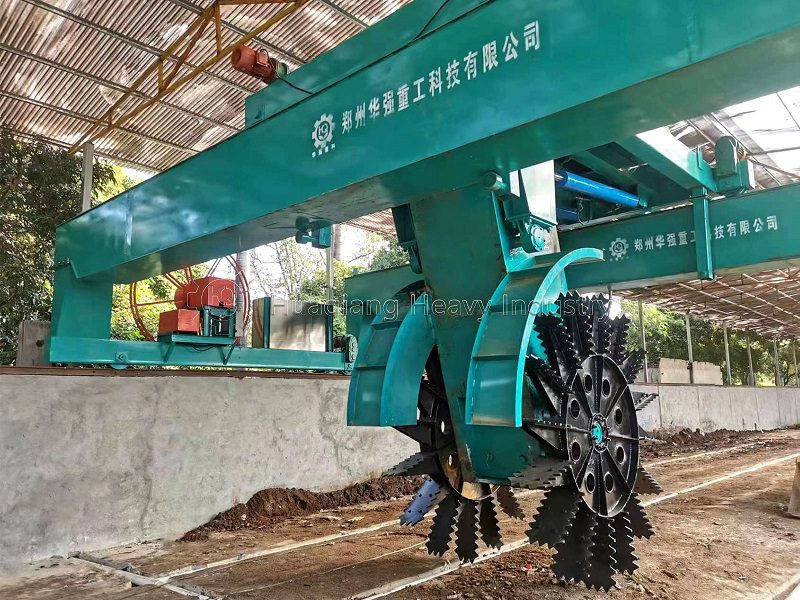
Medium-scale trough fermentation: The uniformity advantage of trough-type compost turners
Daily processing capacity of 50-300 tons is the main range for trough fermentation. Trough-type compost turners travel along tracks, with trough widths of 3-6m and depths of 0.8-1.8m. Turning uniformity can reach over 92%, and bottom materials can be stably turned to the surface. Temperature and moisture content distribution are more controllable than in windrows. Sticky materials (chicken manure, sludge) also perform better in trough systems than in windrows, as the trough walls constrain material spillage and edge leakage. Investment ranges from 30,000 to 150,000 RMB, requiring supporting fermentation tanks and transfer vehicles, with moderate plant requirements. When the trough depth exceeds 1.8m, the load on the cutter rollers and the stability of the trough-type compost turner begin to be strained, requiring an assessment of whether to enter the large wheel section.
Ten-Thousand-Ton-Level Large Wheel: The Efficiency of the Large Wheel Compost Turner
For projects with a daily processing capacity of over 300 tons and an annual production capacity of tens of thousands of tons, the single-unit coverage capacity of the large wheel compost turner is necessary to amortize the investment. With a large wheel diameter, the single compost trough width is 6-12m and the depth is 1.5-3m. One unit replaces the series operation of multiple trough-type machines, significantly reducing labor and scheduling costs. The trade-off is an investment starting at 150,000-200,000 RMB, and it must be an indoor operation, requiring a matching plant span and height. High-moisture materials (moisture content above 60%) tend to stick to the wheel, requiring washing or adjustment of the material’s moisture content before it enters the trough.
Selection Checklist
Answer the following four questions in order to narrow down your choices: ① Daily processing capacity range (5-50 / 50-300 / above 300) → ② Material viscosity and fiber content (high viscosity trough type, high fiber content can be palletized) → ③ Is the site open-air or indoor (large wheel type must be indoor) → ④ Can the investment budget cover the factory facilities? After answering these four questions, the boundaries between palletized, trough-type, and large wheel types will become clear. For detailed process parameters of the three systems, please refer to the product pages for trough-type, palletized, and large wheel-type compost turners.