
Q: What is bio-organic fertilizer? What is its essential difference from ordinary organic fertilizer?
A: According to the agricultural industry definition, bio-organic fertilizer refers to a type of fertilizer that combines the effects of microbial fertilizer and organic fertilizer, composed of specific functional microorganisms and organic materials mainly derived from animal and plant residues (such as livestock and poultry manure, crop straw, etc.) that have undergone harmless treatment and composting. Its core technical indicators require an effective live bacteria count (CFU) of not less than 0.2 billion/gram, organic matter (on a dry basis) of not less than 40%, and moisture content not exceeding 30%. Unlike ordinary organic fertilizer, which only pursues harmlessness and composting degree, the core value of bio-organic fertilizer lies in the activity of “functional bacteria”—these beneficial microorganisms (such as Bacillus subtilis, Bacillus licheniformis, etc.) can colonize and reproduce after being applied to the soil, playing multiple functions such as improving soil, inhibiting diseases, and promoting crop absorption.
Q: Why do the granulation and drying processes pose a severe challenge to the survival rate of microorganisms?
A: In the industrial production of bio-organic fertilizer, granulation and drying are the two stages that pose the greatest threat to the activity of functional bacteria. In traditional drum granulators, the material temperature often rises to 85-95 degrees Celsius during granulation and subsequent drying. Industrial drying typically uses temperatures reaching around 300℃, which can easily cause complete inactivation of functional bacteria—even with Bacillus species that can withstand temperatures up to 120℃, the loss rate of viable bacteria is still over 50%, sometimes even reaching 100%. Frictional heat during the crushing process, the extrusion pressure during granulation, and the high temperatures (65-100℃) during drying all severely affect the activity of microbial agents. Therefore, how to maximize the protection of functional bacteria while completing granulation is the core issue in the design of bio-organic fertilizer production processes.
Q: What are the specific temperature control thresholds? What are the consequences of excessively high or low temperatures?
A: Temperature is the most critical process parameter affecting the survival rate of microorganisms. Studies have shown that the ideal drying temperature for bio-organic fertilizer is between 40 and 60℃. When using a two-stage drying process, the first drying should be controlled at 55 to 60℃, and the second at 45 to 55℃. Low-temperature drying (45℃) results in higher microbial survival rates and enzyme activity, with less reduction in activity after drying. In the granulation stage, advanced low-temperature and mild granulation processes can precisely control the temperature between 45 and 65℃, ensuring a viable microbial survival rate of over 90% after granulation. During the fermentation stage, the pile temperature should be strictly controlled within the microbial tolerance range of 50 to 65℃ to avoid burning the microorganisms. Too low a temperature affects fermentation efficiency and granulation results, while too high a temperature directly leads to mass microbial death—this is a process balance point that requires precise balancing.
Q: How does humidity (moisture content) affect microbial survival? What are the control standards?
A: Moisture content is also a crucial variable determining microbial survival rate. During the fermentation stage, the moisture content of the raw materials should be controlled between 45% and 55%. In the granulation stage, the moisture content range suitable for bio-organic fertilizer granulation equipment is typically 20% to 35%. Excessive moisture content will lead to a decrease in the number of viable bacteria and a shortened shelf life of the fertilizer during storage. National standards require that the moisture content of finished bio-organic fertilizer products not exceed 30%. Therefore, the drying process must not only control the temperature but also ensure that the output moisture content meets the standard to balance the survival of the microorganisms and the shelf life of the product.
Q: What is the impact of pressure (granulation method) on the survival of the microorganisms? Which granulation processes are more beneficial to the microorganisms?
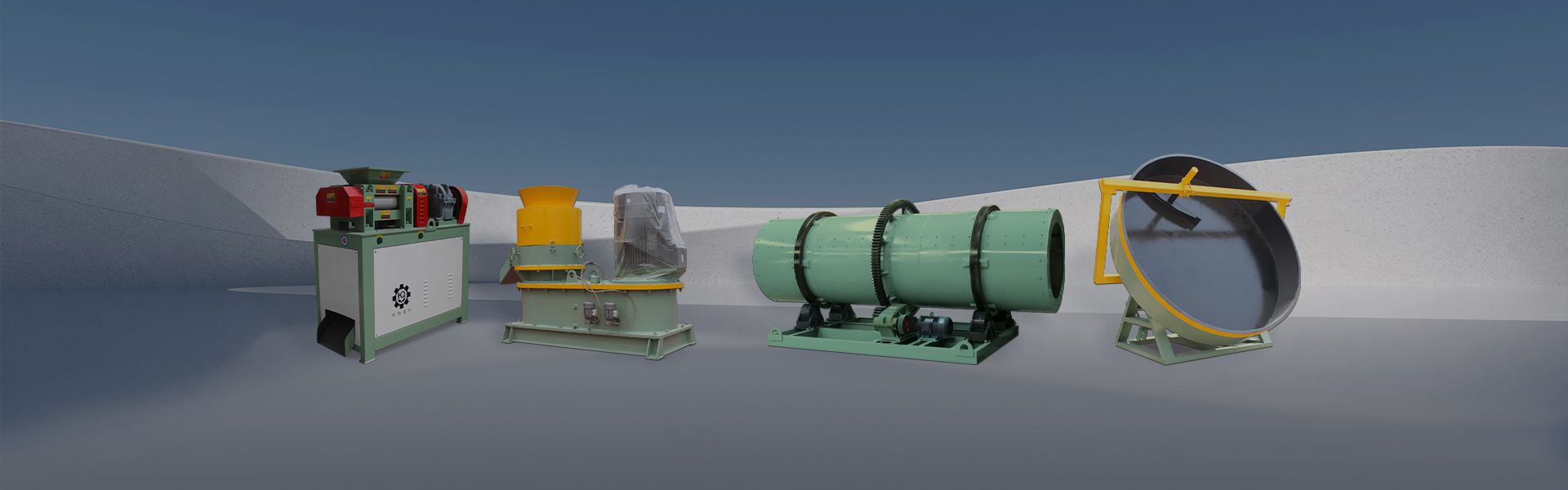
A: The granulation method directly determines the mechanical and thermal stresses that the microorganisms endure. Different compound granulation processes have a significant impact on the survival rate of specific microorganisms. Physical granulation processes—such as disc granulation and extrusion granulation—do not require high-temperature treatment and can directly add microorganisms to powdered organic matter without destroying their activity after granulation. In contrast, traditional high-temperature granulation processes cause more significant damage to the microorganisms. Advanced granulation equipment for bio-organic fertilizers employs a low-temperature granulation process combining agitator extrusion and rolling, eliminating the need for high-temperature drying. This ensures granule strength while preventing the inactivation of live bacteria. For granular bio-organic fertilizers, a mature solution is “granulation and drying first, then bacterial coating”—the organic material is granulated and dried first, then the bacterial solution is evenly sprayed onto the granule surface, covered with a protective film of live bacteria, and finally dried with cold air. This process completely avoids the risk of high-temperature lethality associated with “adding bacteria first and then drying.”
Q: What are the systematic strategies for ensuring the survival rate of microorganisms in bio-organic fertilizer production?
A: Ensuring the survival rate of microorganisms is a systematic project covering the entire process. At the equipment level, fermentation equipment equipped with multi-point temperature sensors and variable frequency speed control systems should be selected to ensure precise and controllable pile temperature. Low-temperature granulation equipment should be prioritized in the granulation stage, precisely controlling the temperature between 45 and 65°C. The drying stage must use a low-temperature, high-volume dryer, strictly controlling the hot air temperature within the range tolerated by the microorganisms (usually below 80°C) and shortening the material’s heating time. At the process level, a post-addition process of “granulation followed by microbial spraying” can be chosen to fundamentally avoid damage to the microbial strains caused by high temperatures. At the material level, parts in contact with the material should preferably be lined with 304 stainless steel or high-molecular-weight polyethylene to prevent heavy metal ions from carbon steel corrosion from contaminating the microbial agent. Only by incorporating the three major process variables of temperature, humidity, and pressure into a precise control system can the number of effective live bacteria in the finished bio-organic fertilizer be ensured to consistently meet standards, truly realizing the core value of microbial fertilizer.
Mastering the survival of functional microbes requires a holistic approach that integrates fermentation, granulation, and drying under precise control. A modern bio organic fertilizer production line begins with advanced fermentation composting turning technology, ensuring thorough aeration and temperature management to produce a stable, microbe‑rich compost. Subsequently, bio-organic fertilizer production technology employs low‑temperature granulation (45‑65°C) and post‑spraying of bacterial solutions, avoiding the thermal inactivation that plagues conventional processes. By combining real‑time monitoring of temperature, moisture, and pressure with corrosion‑resistant materials and gentle drying, the entire system guarantees that the final product consistently meets the ≥0.2 billion/g viable count standard. This integrated strategy transforms bio‑organic fertiliser production from a high‑risk operation into a reliable, scalable process — delivering the full agronomic benefits of live microbes while ensuring long shelf life and regulatory compliance.