
In the era of precision agriculture, NPK compound fertilizers have become indispensable “nutritional gold” for modern agriculture. The core technical system supporting this precise nutrient supply is the modern NPK fertilizer production line. This complex industrial system precisely combines the three basic nutrient elements—nitrogen (N), phosphorus (P), and potassium (K)—along with various medium and trace elements in scientific proportions, providing continuous nutritional power for global food production.
N
Nitrogen
15-30%
P
Phosphorus
5-20%
K
Potassium
10-30%
Core Mission of NPK Production Lines: Industrial Realization of Precise Formulations
The core value of NPK fertilizer production lines lies in transforming nutritional formulation theories from agricultural science into precise industrial manufacturing. Unlike traditional single-nutrient fertilizer production, NPK compound fertilizers require raw materials with different chemical properties to achieve uniform distribution at the microscopic level, ensuring each fertilizer granule contains nitrogen, phosphorus, and potassium elements in design proportions. Modern production lines achieve this scientific ideal through precise metering systems, efficient mixing technology, and advanced granulation processes.
A complete NPK fertilizer production line is not just a collection of mechanical equipment, but a perfect integration of chemical engineering, mechanical manufacturing, automation control, and agricultural science. It can quickly adjust formulations based on soil analysis data and crop needs, producing various compound fertilizers from general-purpose to specialized types.
Complete Production Process Flow
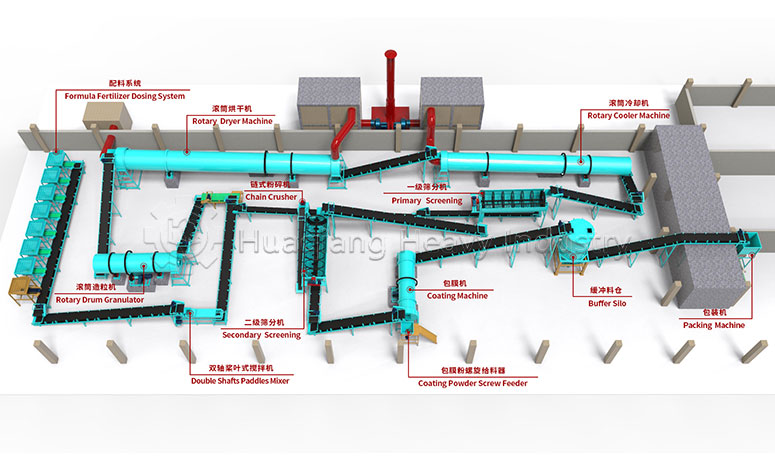
Raw Material Reception and Storage
Nitrogen sources (urea, ammonium sulfate, ammonium chloride, etc.), phosphorus sources (monoammonium phosphate, diammonium phosphate, superphosphate, etc.), potassium sources (potassium chloride, potassium sulfate, potassium nitrate, etc.), and medium/trace elements are stored separately in dedicated silos. Each silo is equipped with level indicators, temperature sensors, and humidity monitoring devices.
Raw Material Pretreatment
Various raw materials are crushed to uniform particle size through fertilizer crushers, with impurities and oversized particles removed via vibrating screens. For raw materials with excessive moisture content, hot air drying systems can be equipped for pre-drying, ensuring raw material moisture content below 2%.
Precision Batching System
The computer control system precisely measures various raw materials using loss-in-weight feeders or belt scales according to preset formulations. Measurement accuracy can reach ±0.5%, ensuring absolute formulation accuracy. This is a key link in producing high-quality NPK fertilizers.
Efficient Mixing and Homogenization
Metered raw materials enter double axis mixer or vertical high-efficiency mixers, achieving over 98% mixing uniformity within 3-8 minutes. Necessary binders, anti-caking agents, and functional additives are simultaneously added in preparation for the granulation process.
Granulation Forming Process
Uniformly mixed materials form granules through rotary drum granulators, disc granulators, or high-tower granulators. Steam or water can be added during granulation to promote agglomeration while precisely controlling granule size, hardness, and sphericity.
Drying and Cooling
Moist granules enter rotary dryers, removing excess moisture in hot air at 120-200°C, reducing moisture content to below 2%. Subsequently entering counter-flow coolers, granule temperature is reduced to near ambient temperature, preventing caking during storage.
Screening Grading and Coating
Dried and cooled granules are graded through multi-layer vibrating screens. Qualified products enter coating machines to add anti-caking agents or slow-release coatings, while non-conforming granules return to crushing or granulation processes, forming closed-loop circulation.
Finished Product Packaging and Palletizing
Final products complete weighing, bagging, sealing, and coding through fully automatic packaging lines. Modern production lines are equipped with robotic palletizing systems that automatically stack packaged products on pallets, achieving unmanned operation.
Quality Inspection and Control
Online near-infrared analyzers detect product nutrient content in real time, while laser particle size analyzers monitor granule size distribution. Samples are retained from each batch for laboratory analysis, ensuring quality meets national standards.
Intelligent Control System
The central control room centrally monitors the entire production process, with PLC systems automatically adjusting process parameters. Data acquisition systems record all production data, achieving full traceability from raw materials to finished products.
Core Equipment Configuration and Technical Features
Precision Batching System
Configuration: Multi-silo loss-in-weight feeders, micro-additive systems, online detection devices
Accuracy: ±0.5%, ensuring absolute formulation accuracy
Features: Automatic compensation, formula storage, quick changeover
Efficient Mixing Equipment
Types: Twin-shaft horizontal mixers, vertical disc mixers
Capacity: 2-10 cubic meters, processing capacity 5-30 tons/hour
Uniformity: ≥98%, ensuring uniform nutrient distribution
Granulation Forming System
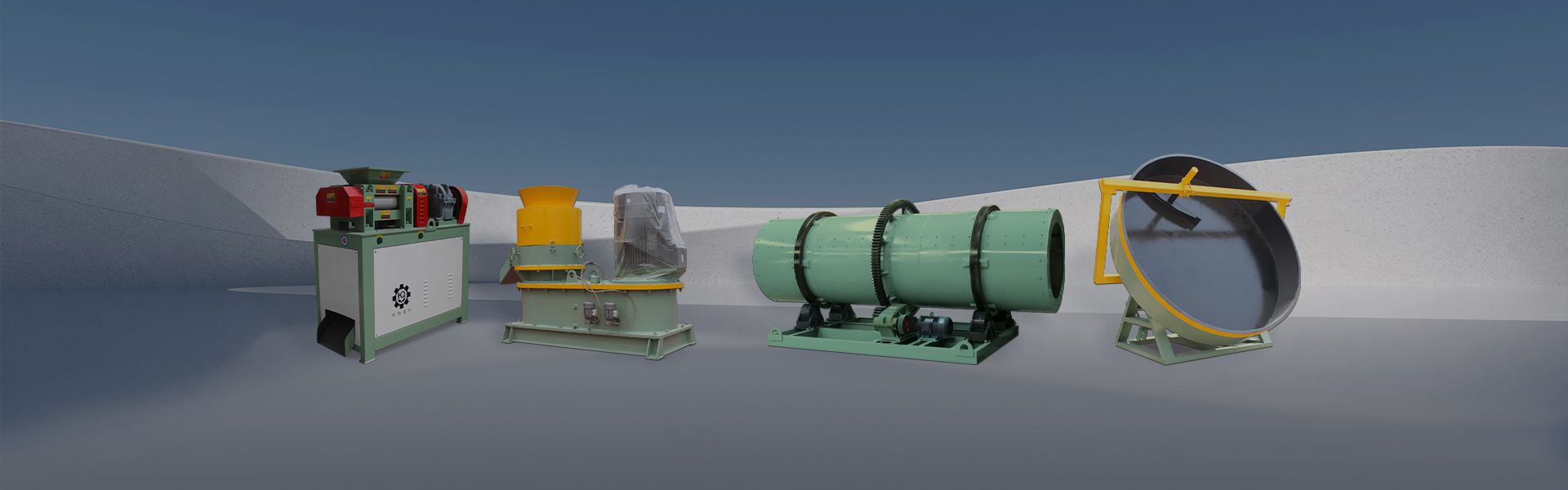
Optional Processes: Rotary drum granulation, disc granulation, high-tower granulation, extrusion granulation
Granule Range: 2-5mm, sphericity ≥0.85
Strength: 15-30N, not easily broken
Drying and Cooling Equipment
Dryers: Three-layer rotary dryers, thermal efficiency ≥85%
Coolers: Counter-flow coolers, high cooling efficiency
Heat Sources: Natural gas, biomass, steam multiple options
Screening and Coating Systems
Screening Machines: Three-layer vibrating screens, screening efficiency ≥95%
Coating Machines: Roller coating machines, uniform coating
Dust Removal Systems: Bag dust collectors, dust concentration ≤10mg/m³
Automated Packaging Lines
Packaging Speed: 600-1200 bags/hour
Weighing Accuracy: ±0.2%, automatic compensation
Functions: Automatic bag feeding, filling, sealing, coding, palletizing