
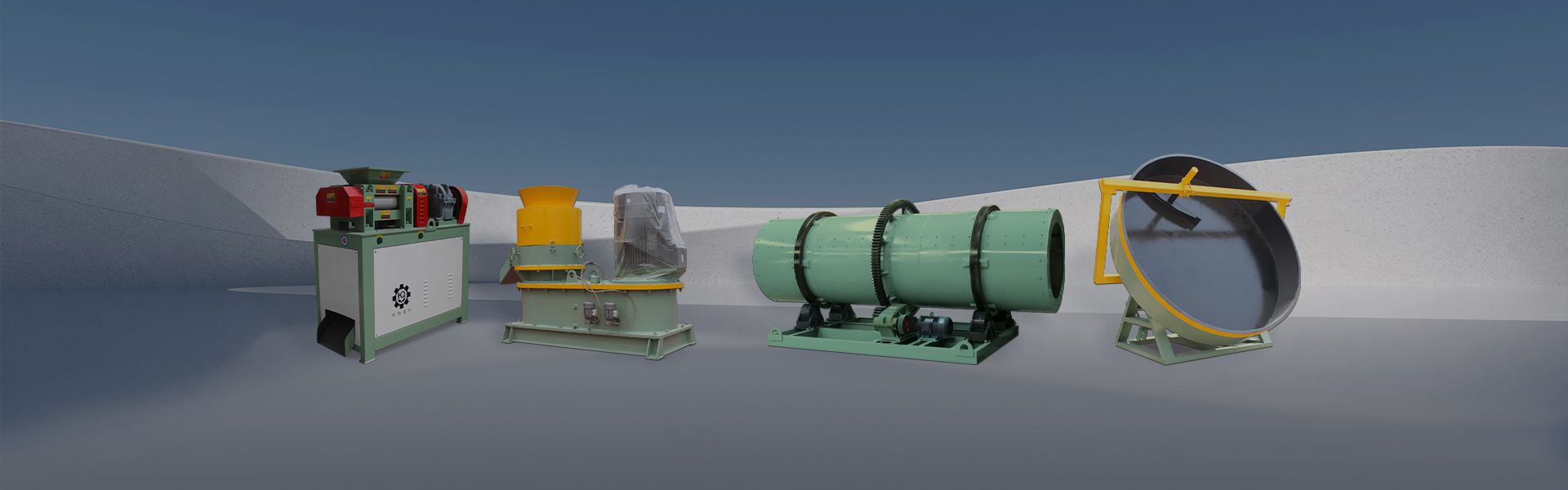
Amidst the global wave of accelerated digital transformation in manufacturing, the fertilizer production industry is also undergoing a profound revolution driven by intelligent technology. Through the deep integration of sensors, PLCs (Programmable Logic Controllers), the Internet of Things (IoT), big data, and other technologies with traditional production equipment, intelligent fertilizer production lines have not only achieved a leapfrog improvement in production efficiency but also demonstrated unprecedented potential in product quality control, resource optimization, and refined management, becoming a key engine for enterprises to build core competitiveness.
Production Process Automation: A Leap from “Human Control” to “Intelligent Control” The most significant feature of intelligent production lines is the realization of automated closed-loop control throughout the entire production process. By deploying high-precision sensor networks on key equipment such as fermentation chambers, granulators, and drying drums, the system can continuously and in real-time collect hundreds of process parameters, including temperature, humidity, pressure, and rotational speed.
This data is transmitted in real-time to the central PLC control system, where the system’s built-in intelligent algorithm model compares and analyzes it against preset process standard values. Once a deviation is detected, the system will automatically adjust: for example, when the fermentation temperature exceeds the optimal range, the ventilation and cooling equipment will automatically start; when the granulation rate fluctuates during granulation, the system can instantly fine-tune the binder flow rate or drum speed. Taking Zhengzhou Huaqiang Heavy Industry’s intelligent solution as an example, this technology achieves fully automated, unmanned operation from raw material pretreatment, batching and mixing, granulation and drying to screening and coating, increasing production efficiency by an average of over 30%, while reducing the need for manual labor in direct production by more than 50%, significantly reducing the uncertainty and labor intensity of manual operation.
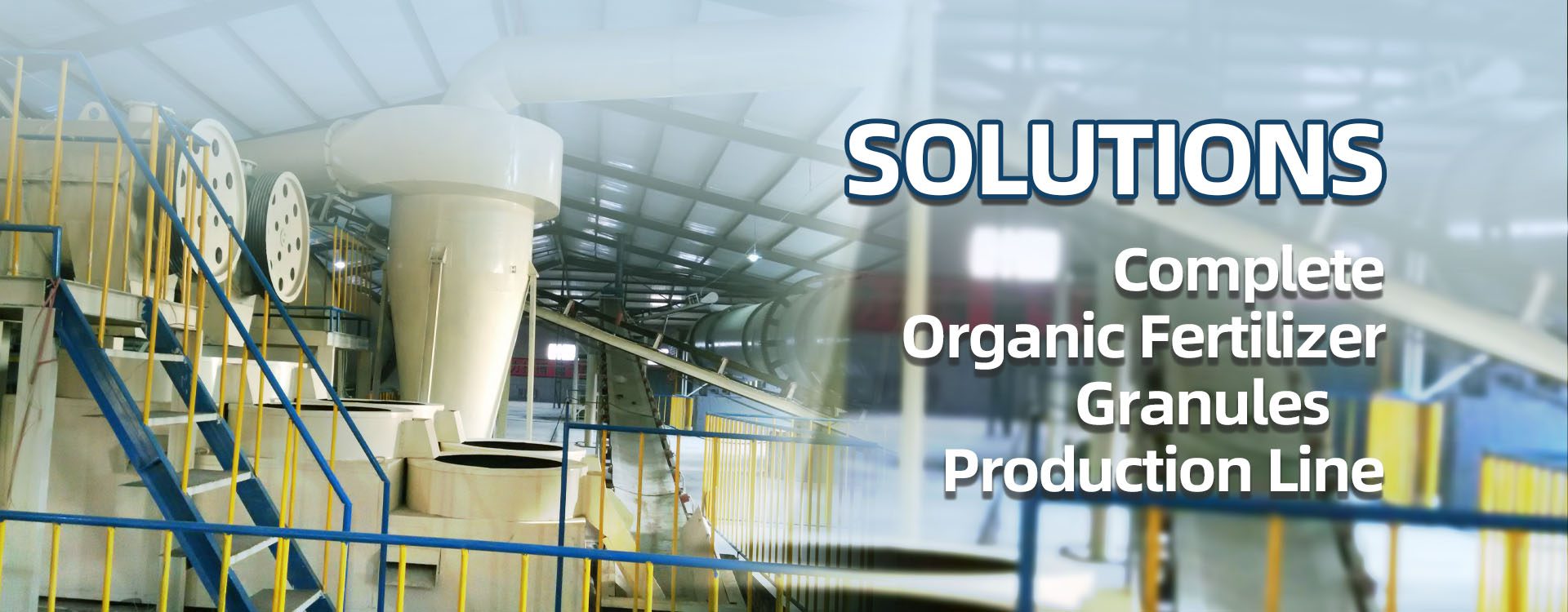
Precision Production: Ensuring Every Grain of Fertilizer Meets Standards
The stability and uniformity of product quality are the lifeline of fertilizer value. Intelligent technology implements “precision” in every detail of production.
Precise Batching: The intelligent batching system, through high-precision weighing modules and flow meters, achieves millisecond-level dynamic metering and dispensing of various raw materials such as urea, ammonium phosphate, and potash fertilizer, strictly controlling the ratio error within ±1%, ensuring absolute uniformity of nutrients from the source.
Online Quality Monitoring: The production line integrates online analysis equipment such as near-infrared spectrometers and machine vision inspection units, enabling real-time, non-destructive testing of particle size distribution, compressive strength, moisture content, and nutrient concentration. Defective products are automatically identified, sorted, and rejected, or returned to the previous process, ensuring a consistently high overall product pass rate of 98%, significantly reducing waste and customer complaints.
III. Internet of Things (IoT) and Big Data: Achieving Transparency and Optimized Management Across the Entire Chain
IoT technology connects isolated individual devices into a perceptible and interactive intelligent network.
Remote Monitoring and Maintenance: Managers can view production status, equipment load, energy consumption data, and video feeds in real time from anywhere in the world via computer or mobile terminal, fundamentally transforming the management model.
Predictive Maintenance and Intelligent Diagnosis: Through continuous analysis of equipment operating data, the system can predict potential faults in key components (such as bearings and motors) and issue early warnings, shifting from “passive maintenance” to “proactive maintenance.” When a fault occurs, the system can automatically push diagnostic reports and even support remote debugging by engineers, significantly reducing downtime.
Data-Driven Decision Making: Deeply mined production big data reveals hidden correlations between process parameters, raw material ratios, and final product quality and energy consumption. This guides enterprises to continuously optimize process routes, achieving refined management goals of energy conservation, consumption reduction, quality improvement, and efficiency enhancement.
Integrating Intelligence in Organic and NPK Fertilizer Production
The principles of intelligent automation can be applied across all fertilizer production types. In the organic fertilizer fermentation process, advanced fermentation composting turning technology can be enhanced with IoT sensors. Equipment like a large wheel compost turner, chain compost turner, or double screws compost turning machine—whether in a windrow composting machine system or trough-type aerobic fermentation composting technology—can be monitored and controlled to optimize temperature and aeration. The cured compost then feeds into the broader suite of equipments required for biofertilizer production, where granulation occurs.
For granulation, whether in a dedicated disc granulation production line for organics or the drum granulation process central to npk fertilizer manufacturing process, intelligent control systems manage key parameters. Precise batching, a cornerstone of NPK fertilizer production technology, is achieved with systems like a multiple silos single weigh static batching system. This integration of smart controls with core fertilizer granulation technology ensures that both organic and synthetic fertilizer lines achieve the highest levels of efficiency, consistency, and quality.
Thus, the digital transformation is not limited to one segment; it creates a seamless, data-driven ecosystem from the initial fermentation composting technology for organic fertilizer to the final packaging of NPK blends, setting a new standard for the entire industry.
Conclusion: Intelligentization is the Inevitable Path to the Future
Intelligent transformation is no longer an optional issue for fertilizer production enterprises, but a mandatory question concerning survival and development. It not only brings obvious improvements in efficiency and quality but also profoundly promotes innovation in production models and management thinking. Investing in intelligent production lines is an effective means to enhance market competitiveness in the short term, and in the long term, it is a strategic cornerstone for building sustainable development capabilities that are resource-saving, environmentally friendly, and inherently safe. Facing future agricultural demands and industry challenges, enterprises that embrace intelligentization first will undoubtedly seize the initiative and lead development in this industry upgrade.