
Premium WordPress theme for construction companies, contractors, builders, and a variety of other construction-related businesses.
-
28238 Kelsie Lane Apt. 451,
Port Annabelport
-
Call Us: (210) 451-123
(Sat - Thursday)
-
Monday - Friday
(10am - 05 pm)
Hydraulic Roller Granulator
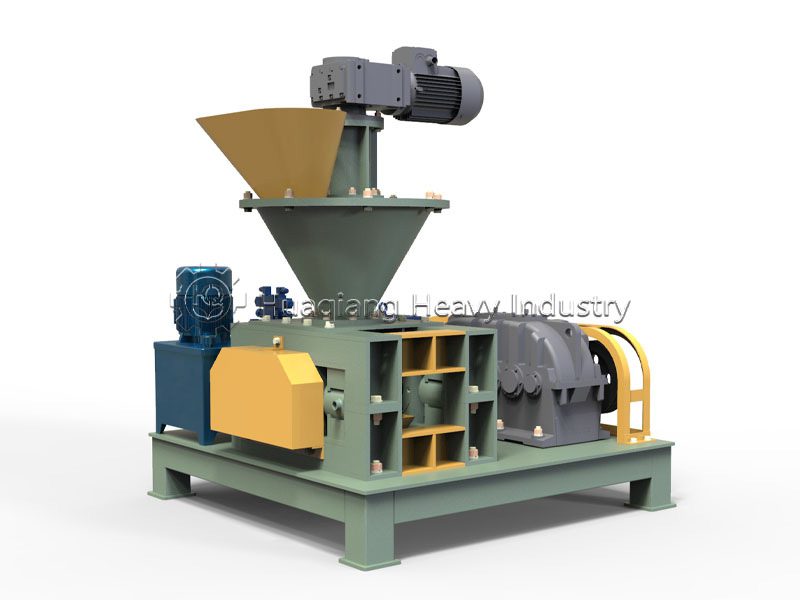
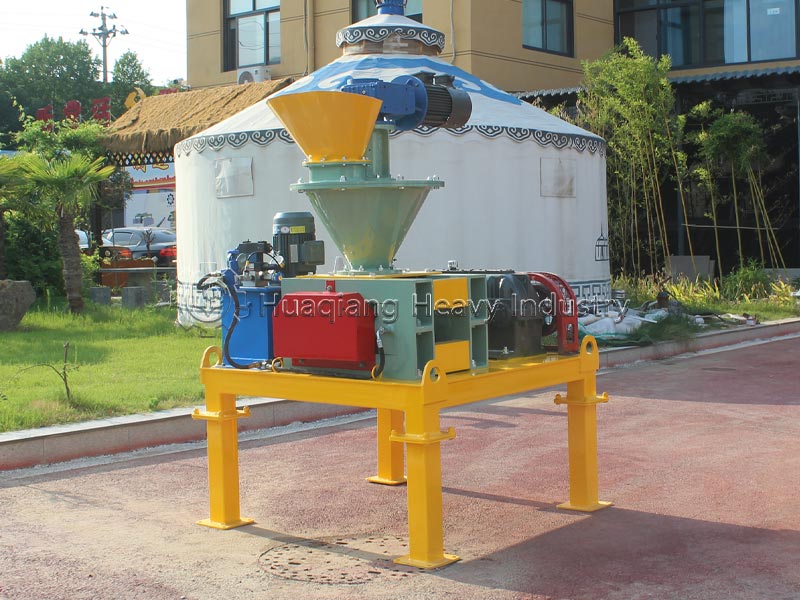
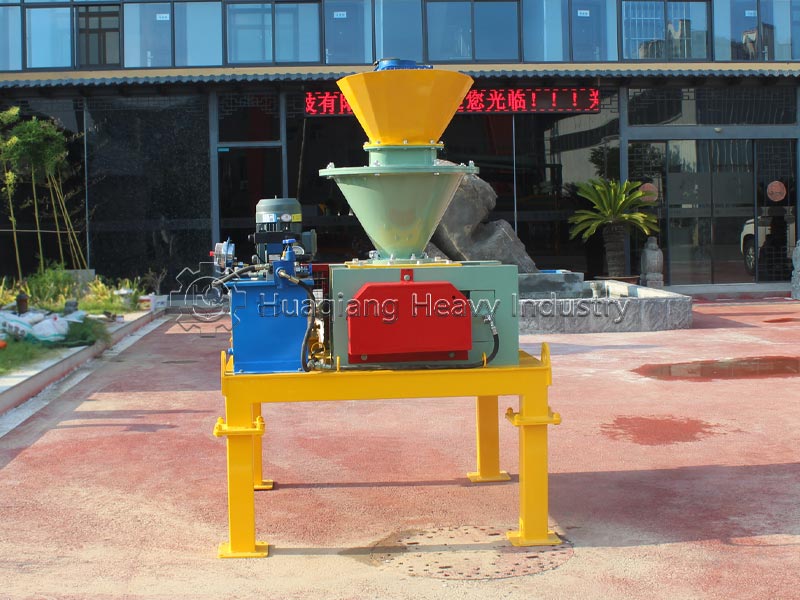
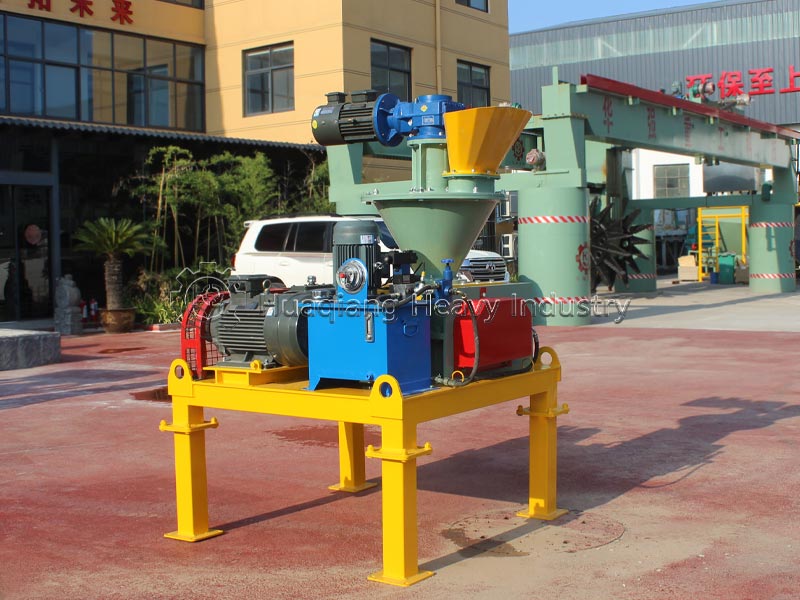
Equipment Overview
The hydraulic double-roller granulator (also known as a double-roller extrusion granulator, twin-roller granulator, or dry roller press granulator) is a high-efficiency granulation equipment that uses dry roller pressing technology to directly compress powdery materials with a moisture content of ≤5%-10% into granules. This equipment is a key component in compound fertilizer granulation and is widely used in fertilizers, pharmaceuticals, chemicals, feed, rare earths, metallurgy, coal, environmental protection, and many other fields.
Core Features:
1. Utilizes dry roller pressing technology, eliminating the need for binders and moisture, directly extruding and granulating dry powder materials.
2. Granulation at room temperature, eliminating the need for drying equipment, one-step forming.
3. Low investment, quick results, and good economic benefits.
4. Suitable for granulation of various materials such as compound fertilizers, organic fertilizers, chemical raw materials, and pharmaceutical intermediates.
Technological Evolution: Double-roller granulation technology originated from the principle of roller presses and was first applied to grinding systems in the cement industry. With technological advancements, double-roller extrusion granulation technology has gradually been applied to fertilizers, chemicals, pharmaceuticals, and other fields. The hydraulic double-roll granulator adds a hydraulic system to the traditional double-roll granulator, which can realize precise adjustment of the roll gap and overload protection, greatly improving the automation level and operational stability of the equipment.
Equipment Structure and Composition
The hydraulic double-roller granulator mainly consists of the following core components:
1. Roller Assembly (Double Rollers): The core actuating component of the equipment, consisting of a pair of opposing rotating pressure rollers with matching die holes on the roller surfaces. The roller surfaces are made of wear-resistant alloy material, precision-machined to form uniform textures, and particle sizes can be customized according to requirements. The roller skin is made of high-chromium manganese-tungsten alloy steel, integrally forged, and undergoes multiple heat treatment processes, achieving a surface hardness stable above HRC60.
2. Hydraulic System: Equipped with an independent hydraulic system, the pressure roller extrusion pressure is precisely controlled through the hydraulic device. An automatic pressure stabilization design is adopted, using a hydraulic pump to compensate for the roller gap pressure in real time, ensuring stable and accurate forming pressure.
3. Transmission System: Composed of a motor, reducer, etc., driving the double rollers to rotate relative to each other.
4. Feeding System (Feed Control Mechanism): Adopting a variable frequency speed control design, it can precisely control the material feed rate, and in conjunction with a guide device, ensures that the material is evenly distributed between the rollers.
5. Crushing and Shaping System: Crushes the extruded flaky material into granules that meet the required specifications.
6. Screening System: Screens the crushed granules; qualified granules are collected, while unqualified fine powder is returned to the feeding system for regranulation.
1. Roller Assembly (Double Rollers): The core actuating component of the equipment, consisting of a pair of opposing rotating pressure rollers with matching die holes on the roller surfaces. The roller surfaces are made of wear-resistant alloy material, precision-machined to form uniform textures, and particle sizes can be customized according to requirements. The roller skin is made of high-chromium manganese-tungsten alloy steel, integrally forged, and undergoes multiple heat treatment processes, achieving a surface hardness stable above HRC60.
2. Hydraulic System: Equipped with an independent hydraulic system, the pressure roller extrusion pressure is precisely controlled through the hydraulic device. An automatic pressure stabilization design is adopted, using a hydraulic pump to compensate for the roller gap pressure in real time, ensuring stable and accurate forming pressure.
3. Transmission System: Composed of a motor, reducer, etc., driving the double rollers to rotate relative to each other.
4. Feeding System (Feed Control Mechanism): Adopting a variable frequency speed control design, it can precisely control the material feed rate, and in conjunction with a guide device, ensures that the material is evenly distributed between the rollers.
5. Crushing and Shaping System: Crushes the extruded flaky material into granules that meet the required specifications.
6. Screening System: Screens the crushed granules; qualified granules are collected, while unqualified fine powder is returned to the feeding system for regranulation.
Equipment Working Principle
The hydraulic double-roller granulator adopts a purely physical, high-pressure dry extrusion molding principle. The entire process involves no chemical reactions, no high temperatures, and no additives. Its core relies on molecular compression deformation to achieve powder forming. The complete workflow consists of four stages:
1. Quantitative Feeding Stage: Dry powdered material is forcibly and evenly fed into the double-roller extrusion working area via a screw feeder. Frequency conversion control precisely matches the feeding speed with the roller speed, ensuring full and uniform material filling.
2. High-Pressure Extrusion Molding Stage: The hydraulic system drives the movable roller to fit against the fixed roller, forming a constant high-pressure extrusion zone. The double rollers rotate in opposite directions, drawing material into the roller gap. Under ultra-high pressure, the material expels internal air, causing plastic deformation and tightly adhering to the roller surface and die cavity, pressing into uniform sheet and strip-shaped blanks.
3. Crushing and Shaping Stage: After the formed blanks detach from the rollers, they enter the crushing and granulation mechanism. High-speed toothed rollers break down and shape the large blanks into uniformly sized solid particles.
4. Screening and Recirculation Stage: The shaped granules enter a vibrating screen for screening. Granules that meet the standards are discharged as finished products. Fine powder and broken materials are automatically returned to the feeding system for secondary extrusion granulation, achieving closed-loop production with no waste.
The entire process changes the material’s form solely through physical pressure, fully preserving the material’s original physicochemical properties. The resulting granules have high density, good strength, and good storage resistance, representing the most mature technology principle for dry powder granulation.
1. Quantitative Feeding Stage: Dry powdered material is forcibly and evenly fed into the double-roller extrusion working area via a screw feeder. Frequency conversion control precisely matches the feeding speed with the roller speed, ensuring full and uniform material filling.
2. High-Pressure Extrusion Molding Stage: The hydraulic system drives the movable roller to fit against the fixed roller, forming a constant high-pressure extrusion zone. The double rollers rotate in opposite directions, drawing material into the roller gap. Under ultra-high pressure, the material expels internal air, causing plastic deformation and tightly adhering to the roller surface and die cavity, pressing into uniform sheet and strip-shaped blanks.
3. Crushing and Shaping Stage: After the formed blanks detach from the rollers, they enter the crushing and granulation mechanism. High-speed toothed rollers break down and shape the large blanks into uniformly sized solid particles.
4. Screening and Recirculation Stage: The shaped granules enter a vibrating screen for screening. Granules that meet the standards are discharged as finished products. Fine powder and broken materials are automatically returned to the feeding system for secondary extrusion granulation, achieving closed-loop production with no waste.
The entire process changes the material’s form solely through physical pressure, fully preserving the material’s original physicochemical properties. The resulting granules have high density, good strength, and good storage resistance, representing the most mature technology principle for dry powder granulation.
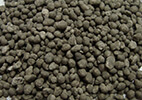
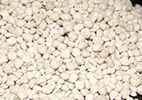

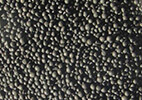
Compatible Raw Material Range
The equipment is suitable for dry powder, fine crystalline, and non-sticky/weakly sticky materials. It has extremely low requirements for material moisture content. The core compatibility parameter is: material moisture content ≤5%. No drying is required; granulation can be performed directly. Compatible material categories cover multiple industries:
1. Organic Fertilizer/Bio-fertilizer Raw Materials: Chicken manure, sheep manure, cow manure, straw powder, mushroom residue, biogas residue, humic acid, peat, organic fertilizer powder, bio-fertilizer, amino acid powder, and other fermented dry powder materials.
2. Chemical Raw Materials: Compound fertilizer powder, urea powder, potash fertilizer, phosphate fertilizer, magnesium sulfate, ammonium sulfate, inorganic salts, chemical waste residue, powder additives, dye auxiliaries, etc.
3. Mining/Building Material Raw Materials: Mineral powder, iron powder, coal powder, lime powder, bentonite, kaolin, fluorite powder, metallurgical powder, tailings powder, and other industrial powders.
4. Feed/Supplement Raw Materials: Feed additives, premix powders, veterinary drug powders, grain processing tailings, etc.
Material Contraindications: High moisture content (>8%), high viscosity, and large particle/lumpy materials must be pre-treated and crushed before use to avoid clogging and roller sticking.
Application Scope of the Equipment
1. Main Application Areas
| Application Field | Specific Materials | Product Form |
|---|---|---|
| Compound Fertilizer | Ammonium bicarbonate, urea, ammonium chloride, ammonium phosphate, potassium chloride, potassium sulfate, potassium nitrate, monoammonium phosphate, diammonium phosphate (DAP), ammonium sulfate (AS), ammonium bicarbonate, etc. | Spherical / Irregular compound fertilizer pellets |
| Organic Fertilizer | Composted organic materials, raw materials for bio-organic fertilizer | Organic fertilizer pellets |
| Pharmaceutical & Chemical Industry | Capsule filling pellets, antioxidants, bleaches, catalysts, pesticides, oxides, etc. | Pharmaceutical / Chemical pellets |
| Rare Earth & Metallurgy | Rare earth fertilizer, metallurgical additives, steelmaking additives | Metallurgical pellets |
| Animal Feed | Feed additives, premix feed | Feed pellets |
| Environmental Protection | Snow melting agent, dust removal agent, desulfurized gypsum, phosphogypsum | Environmental protection pellets |
| Industrial Powder | White carbon black, zinc oxide, lead oxide, calcium chloride, potassium carbonate, cryolite, aluminum fluoride, molecular sieve, graphite, carbon black, etc. | Formed industrial pellets |
| Recycled Dust | Dust from foundry plants, lead/zinc/aluminum dust, converter dust, filter dust, grinding dust | Pellets for recycling & reuse |
2. Typical Applicable Bill of Materials
| Material Category | Specific Materials |
|---|---|
| Nitrogen Fertilizers | Urea, ammonium chloride, ammonium sulfate, ammonium nitrate, ammonium bicarbonate |
| Phosphate Fertilizers | Monoammonium Phosphate (MAP), Diammonium Phosphate (DAP), calcium superphosphate, triple superphosphate |
| Potassium Fertilizers | Muriate of Potash (MOP), Sulphate of Potash (SOP), Russian red potash |
| Compound Fertilizers | NPK compound fertilizer, organic-inorganic compound fertilizer, magnetic fertilizer, rare earth fertilizer |
| Chemical Raw Materials | White carbon black, zinc oxide, lead oxide, calcium chloride, potassium carbonate, cryolite, aluminum fluoride, molecular sieve |
| Pharmaceutical Intermediates | Capsule filling pellets, catalysts, pesticide technical materials |
| Environmental Protection Materials | Snow melting agent, desulfurized gypsum, phosphogypsum, dust removal agent, activated carbon |
| Industrial Recycled Materials | Foundry dust, lead-zinc-aluminum dust, converter dust, graphite, carbon black |
Granulation Process
The hydraulic roller granulator adopts a dry closed-loop granulation process, which is simple, has fewer steps, and is low in cost. Unlike wet granulation, which involves drying, dehydration, and adding binders, the complete process chain is as follows:
Raw material crushing and screening → Dry powder batching and mixing → Hydraulic roller high-pressure extrusion → Material blank crushing and shaping → Finished particle screening → Qualified particle discharge and packaging → Fine powder return for secondary granulation
Core advantages of the process: No need for water addition and stirring, no need for drying equipment, no need for binders; the process flow is shortened by more than 50%, energy consumption is reduced by 40%, the footprint is small, and production costs are significantly reduced; the finished particle size is infinitely adjustable from 1-8mm, the particles are uniform, and the strength is controllable, meeting different needs such as industrial feeding, agricultural spreading, warehousing, and sales.
Equipment Operation Method
I. Pre-Start Preparation
Equipment Inspection
1. Thoroughly inspect all connecting bolts, ensuring they are all tightened securely and without looseness or missing bolts.
2. Check the hydraulic system oil level; the oil level must be within the standard range, with no oil shortage or overflow.
3. Check the gear oil level of the reducer, ensuring sufficient oil to meet the equipment’s lubrication requirements.
4. Check the roller surface condition, ensuring it is clean, free of material residue, debris, and wear.
Hydraulic System Preparation
1. Start the hydraulic pump and observe the equipment instruments to check if the hydraulic system operating pressure is stable and normal.
2. Based on the characteristics of the production material, precisely adjust the hydraulic system pressure to the process setting value.
3. Thoroughly inspect the hydraulic pipelines, joints, valves, etc., checking for leaks, pressure drops, loose pipelines, and other potential faults.
Roller Gap Adjustment
1. Adjust the roller gap appropriately according to the characteristics of the production material and the finished product particle size requirements.
2. Debug and calibrate the double rollers, ensuring the parallelism of the two rollers meets the standard, the overall gap is uniform, and there is no offset or gap deviation. No-load Trial Run
1. Start the equipment motor and carefully verify that the rotation direction meets the standard operating requirements. If the direction is abnormal, stop the machine immediately for adjustment.
2. Run the equipment continuously under no-load for 5-10 minutes, listening to the operating sound and observing the vibration throughout. No abnormal noise or vibration indicates normal operation.
3. Monitor the operating temperature of each bearing to ensure a stable temperature rise within the normal range, without overheating.
II. Start-up Sequence
Standard Start-up Procedure
① Start the dust removal system → ② Start the hydraulic system → ③ Start the crusher/screening machine → ④ Start the main motor → ⑤ Start the feeder → ⑥ Gradually add material and fine-tune the operating conditions
Precautions
It is strictly forbidden to start the main equipment with material on it. The principle of starting the main equipment under no-load conditions before adding material must be followed to avoid overloading and damaging the equipment.
III. In-Process Adjustments
Hydraulic Pressure Adjustment: During production, the hydraulic system pressure is dynamically adjusted according to material characteristics and finished particle strength requirements:
1. Higher pressure: Higher finished particle strength, but equipment energy consumption increases accordingly;
2. Lower pressure: Finished particle strength decreases slightly, but equipment production capacity increases accordingly.
Feeding Speed Adjustment: Maintain a uniform and stable feeding speed throughout the process, strictly avoiding sudden changes in feeding speed, material interruption, or accumulation, ensuring continuous and stable production and uniform finished product quality.
Roller Gap Adjustment: Finely adjust the roller gap according to the material forming effect and finished particle uniformity to ensure that the forming quality meets standards.
Crushing Particle Size Adjustment: Precisely control the crushing particle size of the material by adjusting the crusher’s operating speed and changing to different aperture screens to meet production standards.
Temperature Monitoring: Monitor the equipment bearing temperature and hydraulic oil temperature in real time throughout production. If an abnormal temperature rise is detected, stop the machine immediately to troubleshoot the problem. IV. Shutdown Sequence
Standard Shutdown Procedure
① Stop feeding → ② Wait for all material to be completely emptied from the machine → ③ Turn off the main unit → ④ Turn off the crusher/screening machine → ⑤ Turn off the hydraulic system → ⑥ Turn off the dust removal system
Precautions
After the equipment stops, promptly clean any residual material from the roller surface to prevent it from drying and sticking, affecting subsequent operation and forming accuracy.
V. Roller Replacement Operation
1. Pressure Relief Operation: Release the hydraulic system pressure to ensure no pressure residue remains and guarantee operational safety.
2. Disassembly and Fixing: Remove the roller fixing bolts and properly store the bolts and accessories to prevent loss.
3. Old Roller Removal: Use specialized lifting equipment to smoothly lift and remove the old roller. Handle with care during the operation to avoid damage from impacts.
4. New Roller Installation: Align and install the new roller, precisely adjusting the parallelism of the two rollers and the roller gap to ensure installation meets standards.
5. Debugging and Trial Run: Repressurize the hydraulic system and start the equipment for a no-load trial run. Productioncan only commence after verifying that the equipment is operating normally.
Common Equipment Problems and Solutions
| Problem Phenomenon | Possible Causes | Solutions |
|---|---|---|
| Output drop / No pellets discharged | Severely worn ball grooves on roller shell or excessively high material moisture | Replace roller shell; reduce raw material moisture content |
| Pellets are fragile and easy to break | Insufficient extrusion pressure or improper material formula ratio | Increase hydraulic system pressure; check the adhesion property of raw materials |
| Excessively high motor load | Overfeeding or foreign objects stuck in the gap | Reduce feeding volume; clear foreign matter in the double roller gap |
| Unstable pressure of hydraulic station | Accumulator failure or air trapped inside hydraulic oil circuit | Fill nitrogen or replace accumulator; vent air and replenish hydraulic oil |
Application Scenarios of the Equipment in Production Lines
The hydraulic double-roll granulator is the core forming equipment in a powder deep processing production line. It can be used independently or integrated into a complete production line, and is widely compatible with various standardized production lines:
1. Organic Fertilizer Production Line: Equipped with fermentation, crushing, screening, and packaging equipment, it achieves fully automated mass production of dry organic fertilizer granules.
2. Compound Fertilizer/Chemical Fertilizer Production Line: Suitable for forming powdered fertilizers and inorganic salt powders, replacing traditional wet granulation and reducing production costs.
3. Mining Powder Granulation Production Line: Extrudes and forms tailings powder, mineral powder, and coal powder, improving material utilization and achieving solid waste recycling.
4. Feed/Veterinary Drug Additive Production Line: Forms powdered additives, facilitating storage, transportation, and precise feeding.
5. Industrial Solid Waste Treatment Production Line: Extrudes and granulates various industrial dry powder waste residues, achieving resource utilization of solid waste and meeting environmental standards.
Product Advantages
1. Dry Forming, No Drying Required
No binders or wetting agents are needed; dry powder is directly granulated. This eliminates complex processes like drying and cooling, reducing the time from material input to finished product to just 1-2 hours.
2. Significant Energy Saving and Consumption Reduction
Extrusion granulation is performed at room temperature, eliminating the need for fuel oil or natural gas drying. Unit energy consumption is reduced by over 40%, saving over 30% compared to traditional granulation equipment. Energy consumption is 15% lower than traditional models.
3. Excellent Granule Quality
High granule density and strength (compressive strength ≥20N/granule), preventing breakage and pulverization. Effectively solves the problem of powder dust pollution.
4. High Return on Investment
Eliminating the drying process results in a low return material ratio (approximately 15% of the total extruder feed), simplifying the process. Operating costs are extremely low, requiring no coal or natural gas.
5. Controllable Pressure, Strong Adaptability
Hydraulic automatic pressure stabilization technology allows for precise adjustment of extrusion pressure, adapting to materials with varying hardness. Equipped with intelligent overload protection, effectively preventing equipment jamming and damage.
6. High Production Efficiency: The hydraulic transmission system offers fast response and high transmission efficiency. Compared to mechanical granulators of the same specifications, production efficiency can be increased by 20%-30%.
7. Green and Environmentally Friendly: Extrusion granulation consumes only electricity, with no waste emissions. The fully enclosed operation design, coupled with sealing devices, reduces dust leakage.
8. Compact Structure and Convenient Maintenance: Compact structure, convenient maintenance, simple operation, and short process flow. Rollers are removable and replaceable, with annual maintenance costs of only 3000-5000 yuan.