
Premium WordPress theme for construction companies, contractors, builders, and a variety of other construction-related businesses.
-
28238 Kelsie Lane Apt. 451,
Port Annabelport
-
Call Us: (210) 451-123
(Sat - Thursday)
-
Monday - Friday
(10am - 05 pm)
Straw Crusher
Equipment Introduction
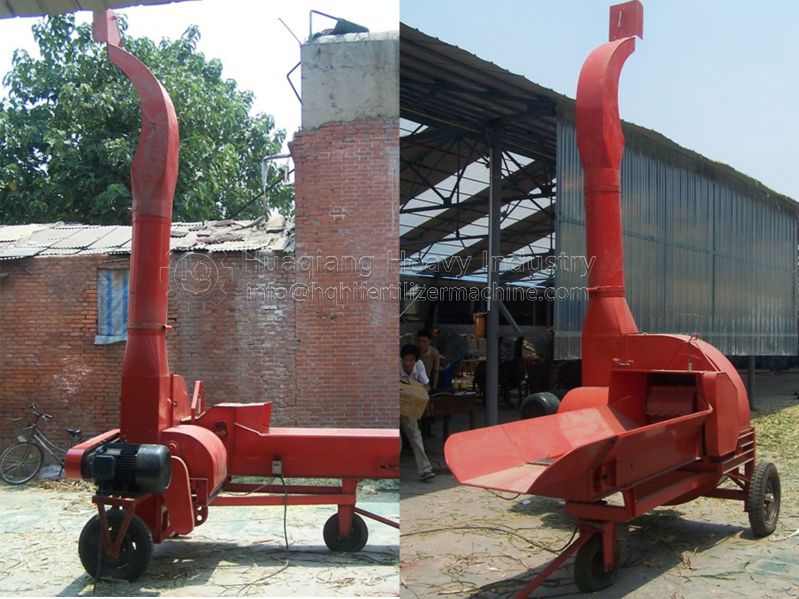
Straw crushers are mechanical devices that process plant straw (such as corn stalks, wheat straw, cotton stalks, etc.) into finely shredded materials through high-speed cutting, impact, and airflow grinding. They are core equipment in mechanized agricultural production and comprehensive utilization of biomass resources. They aim to solve the problems of large volume, difficulty in composting, and difficulty in transporting crop straw, transforming it into a usable resource.
Based on the method of movement, they can be divided into stationary and mobile types; based on structure, they can be divided into hammer mill type, chopping type, and disc type.
Equipment Structure and Components:
- Feeding Device: A hopper or conveyor belt responsible for introducing material into the crushing chamber.
- Cutting and Crushing System: Composed of a main shaft, rotor disc, hammers (or blades), and bottom cutters (fixed cutters).
- Screening Device: Located at the bottom or circumference of the crushing chamber, controlling the size of the finished product particle size.
- Power and Transmission: An electric motor or diesel engine drives the main shaft via a belt or coupling.
- Discharge System: Includes a blower (optional), collection pipes, or a conveyor gantry, achieving negative pressure discharge to prevent dust overflow.
Working Principle of the Equipment:
- Pre-shearing: After entering the machine, the material is first sheared by the rotating blades and bottom cutter.
- High-speed impact: The sheared material is continuously impacted by high-speed rotating hammers within the crushing chamber.
- Friction grinding: The material undergoes high-speed friction between the hammers, screen plates, and liners, further refining it.
- Airflow screening: Fine material that meets the screen aperture size is discharged under the suction of the fan or gravity, while material that does not meet the size standard continues to be recycled and crushed.
Applications of the Equipment
Straw crushers have a wide range of applications, spanning multiple industries:
- Feed Processing: Crushed straw can be used in livestock farms to make silage, ammoniation, micro-silage, or pellets. The processed forage is soft, finely ground, and palatable, improving the feed intake and digestibility of ruminants such as cattle and sheep. Suitable for large, medium, and small-scale farms and family farms.
- Organic Fertilizer Production: Straw crushers are core equipment in organic fertilizer production lines, chopping and crushing straw, branches, and other organic fertilizer raw materials. The crushed straw powder is uniform in texture, fluffy, and fine, and can be mixed with livestock and poultry manure for fermentation to produce organic fertilizer.
- Biomass Energy: Crushed straw can be processed into energy-saving and environmentally friendly pellet fuel by a briquetting machine for use in power plants. It can also be used in straw power generation and ethanol refining.
- Industrial Raw Materials: It can be used in the paper, engineered wood, and particleboard industries.
- Edible Fungus Cultivation: Crushed corn cobs and other raw materials can be used for cultivating edible fungi such as oyster mushrooms. 6. Other Industries: Straw crushers are also widely used in the chemical, building materials, pharmaceutical, health care, and mosquito coil industries. The crushing range includes sawdust, shavings, branches, wood chips, and various agricultural crop straws.
Raw Material Requirements for the Equipment
The straw crusher can process the following types of raw materials:
| Raw Material Category | Specific Materials |
|---|---|
| Gramineous Straw | Corn straw, wheat straw, rice straw, sorghum stalk, millet straw |
| Leguminous Straw | Soybean stalk, peanut vine, sweet potato vine, bean straw |
| Cotton & Hemp Straw | Cotton stalk, hemp stalk, pepper vine |
| Wood Fiber | Branches, leaves, bark, wood chips, sawdust |
| Other Materials | Dry green weeds, soybean cake, rice husk, bagasse, garden waste |
Raw Material Requirements:
- Moisture Content: Generally ≤10%–15% (some models can handle materials with higher moisture content);
- Feed Size: Depending on the model, whole bundles or branches with a diameter of 1–20 cm can be directly fed in;
- Impurity Control: Avoid mixing in hard objects such as stones and metal to prevent damage to the blades.
Equipment Operation and Maintenance Methods
- No-load Start: After starting, observe whether the rotation direction is correct. Feeding can only begin after the speed stabilizes.
- Uniform Feeding: Feeding hard objects such as iron blocks, stones, and wood blocks is strictly prohibited to prevent damage to the blades or penetration of the machine casing.
- Lubrication and Maintenance: Add grease to the bearings every 8-10 hours of operation; regularly check the belt tension.
- Wear Inspection: Regularly check the wear condition of the hammer blades. If one end is worn, it can be turned around for use. If severely worn, the entire set should be replaced to prevent vibration.
Common Equipment Problems and Solutions
| Fault Category | Fault Phenomenon | Root Cause | Solutions |
|---|---|---|---|
| Crushing Quality Problem | Poor crushing quality | Too fast feeding speed | Select the 3rd‑gear of the tractor |
| Poor crushing quality | Too high machine ground clearance | Adjust the position of ground clearance bracket or pull‑rod length | |
| Poor crushing quality | Low rotor speed | Adjust pulley transmission ratio; keep rotor speed at 1800‑2000rpm | |
| Poor crushing quality | Worn & aged hammer blades | Tighten belts and replace worn blades timely | |
| Abnormal Vibration | Severe machine vibration | Misalignment between motor rotor and crusher rotor | Adjust motor position; add gaskets under motor base |
| Severe machine vibration | Crusher rotor out‑of‑balance | Add gaskets under bearing seat; install adjustable iron blocks | |
| Severe machine vibration | Uneven weight & wear of hammer blades | Match hammer sets; weight difference ≤5g for paired blades | |
| Severe machine vibration | Loose anchor bolts or poor foundation | Tighten anchor bolts; install shock absorbers | |
| Severe machine vibration | Broken hammer blades or foreign objects inside chamber | Inspect regularly; replace paired worn hammers | |
| Severe machine vibration | Blade loss | Install new blades timely | |
| Bearing Failure | Overheated bearing | Insufficient or deteriorated lubricant | Replenish qualified grease timely |
| Overheated bearing | Over‑tight V‑belt | Replace V‑belt with proper length | |
| Overheated bearing | Damaged bearing | Replace bearing immediately | |
| Overheated bearing | Shaft torsion & interference | Check & correct drive shaft; eliminate torsion interference | |
| Blockage Problem | Crusher blockage | Excessive feeding speed & overload | Reduce feeding rate; install feeder to control feed volume |
| Crusher blockage | Blocked discharge pipe or mismatched conveyor | Clean outlet; replace matched conveying equipment | |
| Crusher blockage | Broken & aged hammer blades | Replace broken & severely aged hammer blades | |
| Crusher blockage | Damaged screen mesh | Inspect and replace screen mesh regularly | |
| Transmission Belt Fault | Crusher blockage | Excessive material moisture content | Control moisture; dry materials before crushing |
| Severe belt wear | Inconsistent belt length | Replace belts; length tolerance ≤5mm for one‑group belts | |
| Severe belt wear | Uneven tension; pulleys misaligned | Adjust tension; align driving & driven pulleys |
Application of equipment in production lines
In organic fertilizer and biomass pellet production lines, straw crushers are usually located in the raw material pretreatment section:
Straw collection → Pretreatment (cutting/flattening) → [Straw crusher] → Ingredient mixing → Fermentation/granulation → Finished product
Core role:
- Particle size control: crush the long straw to 1-50mm (or finer) to meet the particle size requirements for subsequent fermentation or granulation;
- Increase in specific surface area: The specific surface area of the material after crushing is significantly increased, which is beneficial to microbial decomposition and fermentation reactions;
- Mixing uniformity: Fine powdery materials are mixed more evenly with livestock and poultry manure, fungi and other auxiliary materials to improve fermentation efficiency;
- Suitable for multiple processes: The crushed straw can be directly used in various downstream processes such as feed processing, organic fertilizer fermentation, and biomass pellet pressing.
Target Users of the Equipment
The main target users of straw crushers include:
- Feed processing enterprises: to crush straw and process it into roughage or compound feed for cattle and sheep;
- Livestock farms/farmers: for self-production and self-use, reducing feed costs;
- Organic fertilizer production enterprises: as front-end crushing equipment in organic fertilizer production lines;
- Biomass energy enterprises: to provide raw materials for biomass pellet mills and briquetting machines;
- Edible mushroom cultivation bases: to prepare raw materials for edible mushroom culture media;
- Wood-based panel/paper mills: to provide wood fiber raw materials;
- Landscaping/municipal departments: to handle garden pruning waste;
- Rural cooperatives/family farms: for comprehensive utilization such as straw return to the field and straw charcoal processing.
Straw crushers are key equipment for the resource utilization of agricultural waste. Through a combination of cutting, hammering, and grinding, they efficiently convert various types of straw into feed, fertilizer, fuel, or industrial raw materials. When selecting a model, factors such as raw material characteristics, production capacity requirements, power conditions, and downstream processes should be comprehensively considered. A standardized daily maintenance system should also be established to ensure the long-term stable operation of the equipment.