
Premium WordPress theme for construction companies, contractors, builders, and a variety of other construction-related businesses.
-
28238 Kelsie Lane Apt. 451,
Port Annabelport
-
Call Us: (210) 451-123
(Sat - Thursday)
-
Monday - Friday
(10am - 05 pm)
Horizontal crusher
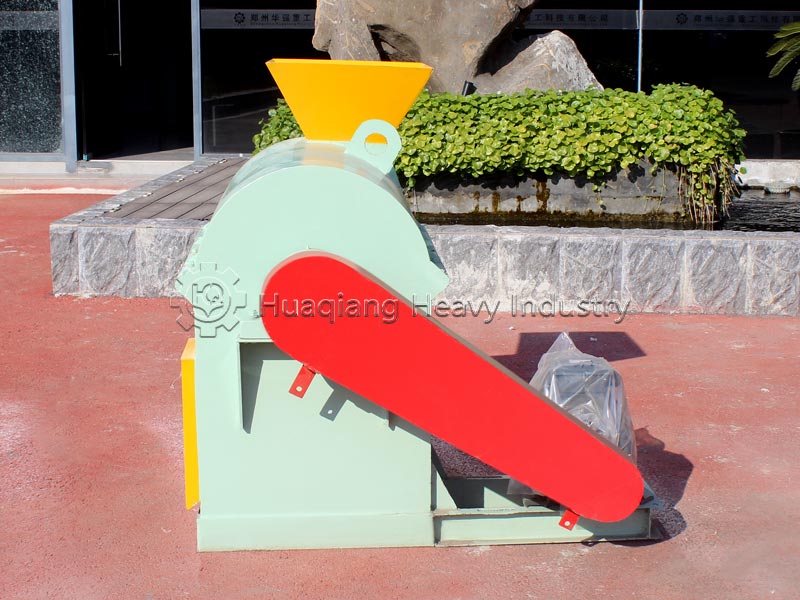
Equipment Introduction
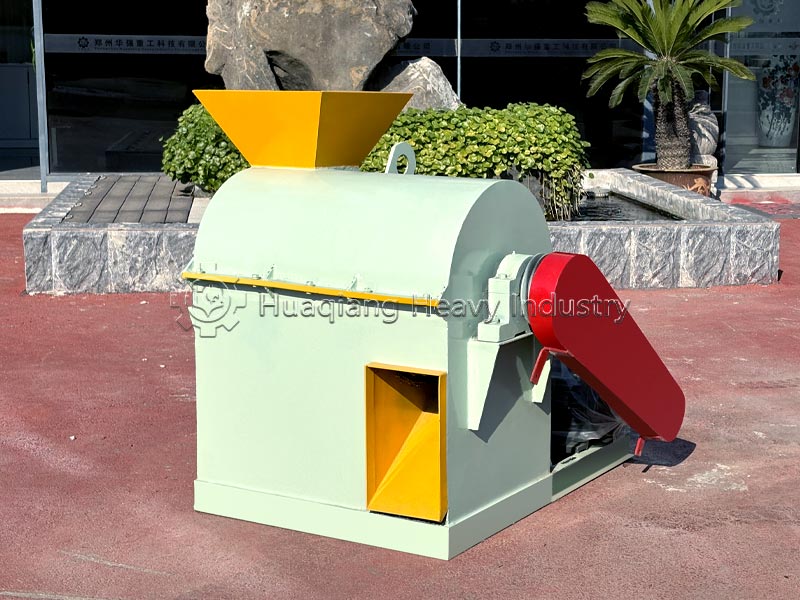
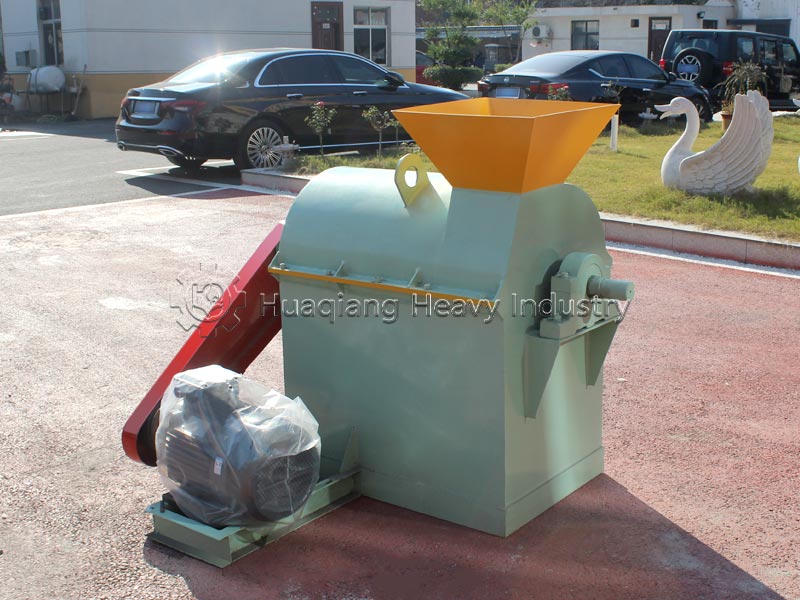
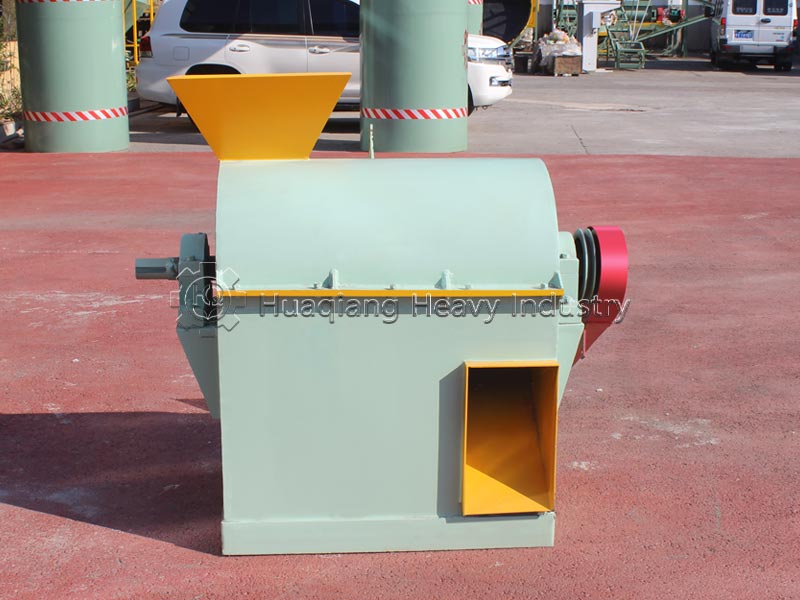
The horizontal crusher is a horizontally axially arranged continuous crushing equipment. Unlike vertical crushers, its main shaft is horizontally installed, and the overall structure has a flat layout, resulting in strong operational stability, low vibration, smooth feeding, and less clogging. The equipment is suitable for various dry and wet materials, offering excellent compatibility. It is a versatile core device for industrial pretreatment, material refinement, and solid waste resource utilization, widely replacing traditional vertical crushing equipment. It solves the pain points of vertical equipment such as wet material clogging, uneven output, and cumbersome maintenance, possessing core advantages such as high cost-effectiveness, simple operation, and low failure rate.
Equipment Structure
The machine features a modular design with a simple and well-organized core, comprising seven main components:
- Feeding Mechanism: Open feed hopper and quantitative feeding device ensure uniform material feeding;
- Crushing Main Unit Housing: Thickened steel plate welded cylinder with a detachable inspection door for easy internal maintenance;
- Rotor Assembly: Horizontal main shaft, rotor frame, hammers/blades, and bushings, forming the core crushing motion component;
- Fixed Tooth Plate/Fixed Blade: Installed on the inner wall of the cylinder, forming a shearing and crushing gap with the moving blades;
- Transmission Mechanism: Coupling, pulley, and drive motor ensure stable power transmission;
- Screening and Discharge Mechanism: Bottom screen and discharge channel control the discharge particle size;
- Protection and Electrical Control System: Safety guard, emergency stop switch, and frequency converter control cabinet.
Applications of the equipment
It covers general industrial fields such as light industry, heavy industry, environmental protection, agriculture and forestry, and is mainly used for the pre-processing of materials through crushing. Applications include organic fertilizer production, straw and timber processing, municipal solid waste crushing, small-scale fine ore crushing, chemical raw material dispersing, food and pharmaceutical material coarse crushing, and construction waste crushing. It can be adapted to both continuous production line operation and stand-alone independent operation modes.
Raw Materials for the Equipment
The equipment is suitable for a wide range of conventional dry and wet mixed materials, including:
- Biomass materials: straw, branches, sawdust, rice husks, forage;
- Soft solid waste: fermented organic fertilizer, sludge, household waste, waste fabrics;
- Brittle materials: coal gangue, small ore pieces, gypsum, agglomerated chemical raw materials;
- Agricultural and by-product materials: medicinal herbs, agglomerated grains, fruit and vegetable residues. The equipment is suitable for raw material moisture content of 15%-25%, and can process semi-wet materials without easily causing adhesion and clogging.
Working Principle of the Equipment
The working principle of a horizontal pulverizer varies depending on the type, but mainly includes the following:
(I) Impact Crushing Principle: The material is evenly fed into the crushing chamber by the feeding system and subjected to strong impact from the high-speed rotating crushing disc (or hammers). Simultaneously, under centrifugal force, the material collides with the crushing tooth ring and is crushed by a combination of shearing, friction, and collision forces.
Models with grading function: The crushed material moves with the airflow to the grading zone, where a frequency-controlled grading wheel separates coarse and fine materials. Products meeting the fineness requirements are collected by the airflow into a cyclone collector and dust collector; unqualified coarse materials are returned to the crushing zone for secondary crushing.
(II) Hammer Mill Crushing Principle: The material is evenly and appropriately fed into the crushing chamber through the feed inlet. The crushing chamber contains high-speed rotating hammers, and the upper body is equipped with toothed plates. The material is rapidly crushed into powder under the strong impact, tearing, and rubbing action of the hammers. Due to centrifugal force and the negative pressure in the lower chamber of the crusher, finely crushed material falls through the sieve holes into the lower chamber and is then sucked away by the fan.
(III) Blade Crushing Principle: Material enters the crushing chamber from the hopper and is crushed by the impact and shearing action of rotating and fixed blades. Under the action of centrifugal force, the material automatically flows to the outlet.
(IV) Chain Crushing Principle: A high-strength, wear-resistant, hard alloy chain with synchronous rotation speed is used. Material collides with the high-speed rotating chain inside the casing. After impact, compression, and crushing, the material further impacts the inner wall of the casing, undergoing multiple impacts to become powder or fine particles.
Equipment operation and maintenance methods
| Category | Operation Link | Key Points & Maintenance Requirements |
|---|---|---|
| Installation & Commissioning | Foundation Installation | Install on a horizontal concrete foundation and fix with anchor bolts; ensure the main unit is perpendicular to the horizontal plane |
| Commissioning Inspection | Check all bolts for tightness, ensure the main door is closed securely, and confirm no foreign objects remain inside the chamber before test run | |
| Daily Operation | Pre‑start Inspection | Check lubrication condition, chain tension, belt condition, and wear of hammer blades; remove foreign materials and confirm safety guards are in place |
| Running Process | Feed materials uniformly; monitor current, temperature, vibration and abnormal noise; stop immediately if jam, odor or overheating occurs | |
| Shutdown & Cleaning | Stop feeding first, then shut down the machine; clean residual materials inside the chamber and check wearing parts after the equipment cools down | |
| Lubrication & Maintenance | Bearing Lubrication | Add lithium‑based grease before each shift; the filling volume should be 1/3 to 1/2 of the bearing cavity |
| Routine Inspection | Check bolt tightness, belt tension, screen condition, and sealing performance; replace worn parts in time | |
| Wearing Parts Replacement | Inspect hammer blades, chains, blades and liners regularly; replace severely worn parts to maintain crushing efficiency and safety | |
| Periodic Maintenance | Equipment Maintenance | Perform weekly, monthly and quarterly maintenance; clean the machine body, inspect rotor balance, and replenish lubricants according to the maintenance schedule |
Equipment Applications in Production Lines
- Application in Organic Fertilizer Production Lines
The horizontal crusher is a core piece of equipment in the organic fertilizer production process, located between “raw material collection” and “fermentation and maturation.” Industry data shows that production lines equipped with horizontal crushers improve the uniformity of finished organic fertilizer by 40% and shorten the fermentation cycle by 15%.
Livestock and Poultry Manure Treatment: Crushes lumps (5-10cm in diameter) in manure to 1-2cm, increasing the contact area with microorganisms. A built-in magnetic separator adsorbs iron impurities, preventing damage to subsequent fermentation equipment. When processing chicken manure with a moisture content of 60%-70%, the hourly capacity can reach 5-10 tons.
Coarse Fiber Material Treatment: Crushes corn stalks to 3-5cm, disrupting the lignin structure and increasing microbial degradation efficiency by 30%. Compared to chain crushers, the blockage rate is reduced by 60% when processing straw mixed with soil.
Mixing and Conditioning: Utilizing a ribbon mixing structure, the material forms an up-and-down circulating convection within the cylinder, achieving a mixing uniformity (coefficient of variation) ≤5%.
- Integrated Crushing and Mixing Operation: This integrated crushing and mixing process saves 30% on equipment investment and reduces floor space by 20 square meters compared to the traditional “crush first, then mix” process.
- Application in Compound Fertilizer and Chemical Fertilizer Production Lines: The horizontal chain crusher is an indispensable advanced crushing equipment in the compound fertilizer industry. It is especially suitable for crushing various lumpy fertilizers and other medium-hardness materials. It effectively solves the long-standing problem of fertilizers being unable to be crushed due to moisture absorption, overcomes the disadvantage of materials sticking to the inner wall of the machine casing, and makes the crushing operation continuous.
- Application in Feed Production Lines: The horizontal crusher can be used for fine crushing in pet and aquatic feed processing, as well as coarse crushing in compound feed and flour processing. It is suitable for crushing feed for livestock and poultry such as pigs, cattle, sheep, rabbits, chickens, ducks, and geese.
Common Equipment Problems and Solutions
| Fault Category | Fault Phenomenon | Root Cause | Solutions |
|---|---|---|---|
| Bearing Problems | Bearing Overheating | Too much or too little lubricant | Adjust grease filling to 2/3 of bearing housing |
| Bearing Overheating | Lubricant deterioration | Replace deteriorated grease in time | |
| Bearing Overheating | Misalignment between bearing and motor shaft | Add gaskets to ensure shaft concentricity | |
| Bearing Overheating | Unbalanced rotor | Re‑balance the rotor | |
| Bearing Overheating | Over‑tight belt | Adjust belt tension properly | |
| Bearing Overheating | Damaged bearing | Replace bearing timely | |
| Vibration Problems | Severe equipment vibration | Improper hammer arrangement & excessive weight deviation | Install hammers symmetrically; weight deviation ≤5g |
| Severe equipment vibration | Bent main shaft or damaged bearing | Replace main shaft or bearing | |
| Severe equipment vibration | Loose anchor bolts | Tighten anchor bolts | |
| Blockage Problems | Crusher blockage | Excessive feeding speed | Reduce feed rate or install feeder for control |
| Crusher blockage | Excessively high material moisture | Dry materials or select special model for wet materials | |
| Crusher blockage | Poor discharge flow | Clean discharge outlet | |
| Crusher blockage | Severely worn hammers | Replace hammer blades | |
| Output Problems | Reduced output | Worn hammers | Install new hammer blades |
| Reduced output | Slipping or loose V‑belt | Adjust or replace V‑belt | |
| Reduced output | Insufficient motor speed | Check motor and power supply | |
| Particle‑size Problems | Unsuitable discharge particle size | Worn hammer / cutter blades | Replace hammer or cutter blades |
| Unsuitable discharge particle size | Damaged screen mesh or incorrect aperture | Replace screen or adjust aperture | |
| Unsuitable discharge particle size | Abnormal equipment rotating speed | Check and adjust equipment speed | |
| Feeding Problems | Material back‑flow at inlet | Deflector plate opposite to feeding direction | Adjust direction of deflector plate |
| Material back‑flow at inlet | Poor discharge | Clean discharge pipeline | |
| Startup Problems | Failure to start or sudden shutdown | Tripped safety limit switch | Check whether limit switch works normally |
| Failure to start or sudden shutdown | Faulty electrical components | Inspect and replace electrical parts | |
| Failure to start or sudden shutdown | Overload protection triggered | Check overload cause and reset |